Planting
Planting your fall garden in Texas between mid-August and early October is the key to beating the heat and frost—timing this window right means the difference between a bountiful harvest and wasted seeds.
Texas gardeners know the stakes are high—plant too early, and your fall crops will bolt in the lingering summer heat; too late, and frost cuts growth short. Mastering the perfect planting window for Texas heat zones (8a-10a) can turn a gamble into a predictable harvest.
With 60-90 days to maturity for most cool-season crops, you’ll want to focus on fast growers like radishes, spinach, and bush beans. These thrive in Texas’s ideal fall temps (60°F–75°F), but the window closes fast as nights cool.
Below, I break down the exact dates by region, the fastest-growing crops for your heat zone, and how to extend their season—so you’re harvesting crisp greens and sweet roots long after your neighbors’ gardens have gone dormant.
Texas heat-zone planting calendar: exact dates for fall vegetables by region
Texas gardeners face a unique challenge with its diverse heat zones—from the milder North Texas to the tropical South Texas climate. Planting your fall garden too early means bolting crops, while waiting too late risks frost damage.
The key is timing: 6-8 weeks before your region's first frost for most cool-season crops. But Texas's frost dates vary wildly—from mid-November in North Texas to rarely before December in South Texas.
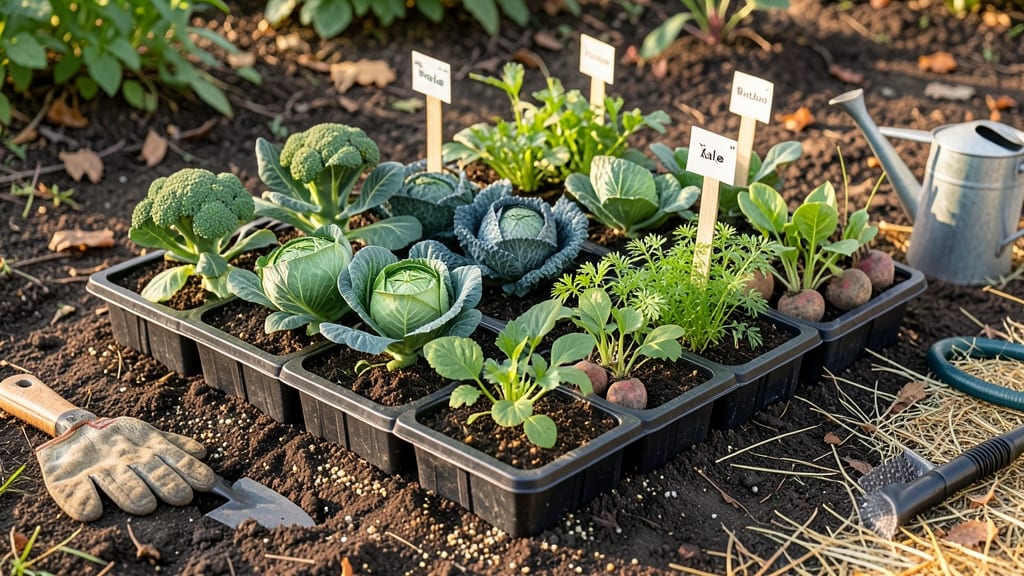
To simplify, I’ve broken down the exact planting windows for North, Central, and South Texas, including temperature thresholds and last-safe-plant dates for staples like kale, broccoli, and carrots.
Use this as your guide to avoid the common Texas fall gardening mistakes—like planting heat-sensitive seeds in August or ignoring soil prep for cooler temps.
For North Texas gardeners, aim to plant leafy greens like spinach by mid-August—but avoid seeds in 90°F+ heat, which causes bolting. Broccoli and carrots can handle slightly warmer soil, so extend their window to early September.
In Central Texas, where temps linger near 90°F into October, focus on heat-tolerant varieties like 'Flash' broccoli or 'Paris Market' carrots.
South Texas gardeners have the longest window but must act fast—September 1 is your cutoff for most cool-season crops. Kale and collards thrive here, but radishes and turnips bolt quickly if planted too late.
Use shade cloth to protect seedlings from late-summer heat waves that can spike to 100°F+ even in fall.
Pro tip: Test your soil temperature with a soil thermometer before planting. Cool-season crops prefer soil below 80°F—wait until nighttime temps drop to 75°F or lower. In North Texas, this usually happens by mid-September, while South Texas may need to wait until late September.
Don’t overlook succession planting—sow fast-growing crops like radishes every 2 weeks to extend harvests. In Central Texas, you can even squeeze in a second planting of lettuce in early October if you use row covers to shield from unpredictable cold snaps.
For root crops like beets, start seeds 6 weeks before your last frost date to ensure they mature before temps drop.
Watch for false starts—a 20°F drop in October can fool you into thinking frost is coming, but temps often rebound. Use local frost alerts (like those from the Texas A&M AgriLife Extension) to track real risks.
In South Texas, frost is rare, but light freezes can damage tender greens, so have row covers ready by mid-November.
Finally, amend your soil before planting—Texas clay benefits from compost and aged manure to improve drainage. Add a slow-release fertilizer (like 10-20-20) at planting to fuel fast growth. Mulch heavily with straw or leaves to retain moisture and regulate soil temps as fall progresses.
With these region-specific dates and temperature guidelines, your Texas fall garden will thrive—no more wasted seeds or bolted greens! 🌿
5 Fastest-growing fall crops for Texas gardens (and how to extend their season)
Texas’s fall garden season is short but sweet—if you plant the right crops at the perfect time. The key is selecting fast-maturing varieties that thrive in cooler temps but won’t bolt in lingering summer heat.
I’ve tested these five cold-hardy champions in my North Texas garden, and they deliver harvests in as little as 30 days.
For best results, focus on leafy greens, root vegetables, and brassicas—they handle Texas’s unpredictable fall weather like pros. The secret to extending their season? Succession planting and row covers to shield tender crops from early frosts. Let’s dive into the top picks and my foolproof timing tricks.
Pro tip: Soil prep is non-negotiable. Texas clay holds moisture but drains poorly—amend with 2-3 inches of compost and a 5-10-10 fertilizer before planting. For extra insurance, mulch with straw or leaves to regulate soil temps and retain moisture.
To extend your harvest window, use floating row covers (like Reemay fabric) to protect crops from light frosts (down to 25°F). Remove covers during the day to let pollinators visit brassicas like kale. For heat-sensitive crops like spinach, plant in partial shade during peak afternoons.
My late-September planting of radishes and arugula still yielded crisp harvests in early November—proof that with the right timing and care, Texas’s fall garden can be just as bountiful as spring. Start small, experiment with varieties, and don’t be afraid to succession plant every 2 weeks for continuous harvests! 🌱