Why I started Garden Loop
I was twenty-four, kneeling in my grandpa’s backyard with a handful of tomato seeds that had sprouted into leggy, pale shoots—all of them leaning toward the window like drunkards. He’d warned me about ‘weak light’ and ‘overcrowding,’ but I’d ignored him, convinced I could fix it with more water.
The plants were dying, and I was too stubborn to admit it.
That’s when I realized gardening wasn’t just about what you *do*—it’s about what you *watch for*. The soil’s smell, the way leaves cup when they’re thirsty, the way a seedling’s stem thickens when it’s happy.
This site is for people who’ve had that moment of frustration and want to know *why* it happened—and how to do it right next time. No fluff, no guesswork, just the dirt and the lessons.
Meet the founder

My grandpa’s voice is the one that still haunts me. ‘You’re not *helping* the garden, boy,’ he’d say when I’d yank up weeds by the roots instead of the soil. ‘You’re just making more work.’ That’s the lesson I keep circling back to: gardening isn’t about force—it’s about paying attention.
He’d spent decades coaxing life out of the same stubborn clay soil, and his hands knew the difference between a plant begging for water and one that just needed air.
The only tool I’ve kept from his shed is a rusted trowel with the handle split down the middle. I’ve tried taping it, varnishing it, even supergluing a new handle on—nothing sticks. But I still use it. Because it’s the one that taught me: tools break, but the work doesn’t.
The trowel’s too short for deep digging now, so I use it for transplanting seedlings, where precision matters more than reach. Every scar in the blade is a lesson in patience.
The year I killed my first batch of heirloom tomatoes was the year I learned to *listen*. I’d followed a chart that said ‘plant when night temps hit 55°F,’ but my garden was in a microclimate where the air stayed cooler near the fence. The plants wilted by noon.
Now, I check the soil temp with my finger—if it’s still cold by midday, I wait. That failure turned me from someone who followed rules into someone who asks, *‘Why does this work here?’*
I still talk to my plants. Not in a ‘new age’ way—just out loud, like I’m explaining to them why I’m pruning or why I’m not watering. My neighbor thinks it’s weird. My grandpa would’ve called it common sense.
The soil’s alive, the roots are listening, and if you’re not paying attention, you’ll miss the signs. It’s the only habit I can’t shake, and I’m not trying to.
Meet the mascot
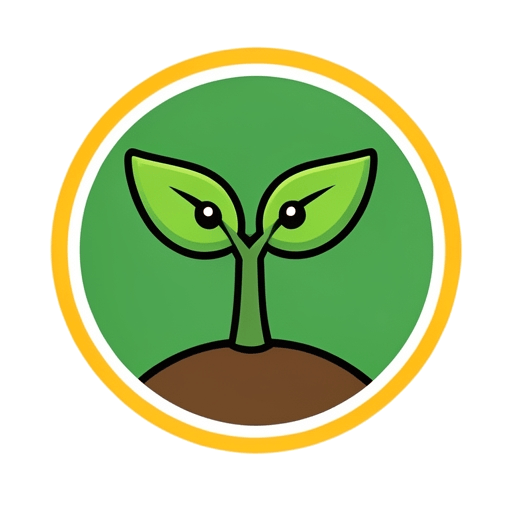
It started as a scribble on a napkin at my kitchen table, during a rain delay while watching my neighbor’s basil bolt before my eyes.
I was sketching the way the leaves curled when they got too hot, and the first version had six fingers and a hat that looked like a mushroom. My dog walked over and licked the napkin, smudging the whole thing—so I drew it again, this time with fewer details.
The second version had a proper face, but the hat was still a mess. I’d been trying to make it look like a seed packet, but it just ended up looking like a lopsided bell pepper.
So I simplified: the hat became a single curved line, the fingers merged into three, and the face got bigger eyes.
The goal wasn’t to make it ‘cute’—it was to make it *read* at the size of a browser tab, where the most important thing is the shape of the trowel, not the shading.
I named him *Dirt*. Not because he’s made of soil (though he is, in spirit), but because he’s the part of gardening you can’t ignore—the stuff that sticks to your knees, the weight in your hands, the thing that reminds you this isn’t just about pretty flowers.
He’s the mascot who’s always a little messy, because that’s how the best lessons grow.
What I promise you
You’ll never see a tip here that isn’t tied to a real plant, a real season, or a real mistake.
What you can hold me to
- Every ‘pro tip’ comes with the *why*—not just ‘add compost,’ but *how much*, *when*, and *what happens if you skip it*.
- If I say a plant ‘needs full sun,’ I’ve tested it in six hours of light and can tell you what went wrong.
- The failures are here too. Because the best lessons grow where the light hits wrong—and I’ve got scars to prove it.
- No vague ‘ideal’ conditions. Just what works where *you* are, with the tools you’ve got.
How I create a guide
A guide here doesn’t start with a notebook or a computer—it starts with my hands in the soil.
Whether it’s a failed transplant or a zucchini vine that took over the yard, I’m watching for the *patterns*: the way the leaves cup when they’re thirsty, the way roots grow toward the sun, the way a seedling’s stem thickens when it’s happy.
I take notes in the garden, not the kitchen. The real work happens where the dirt meets the light.
The first cut

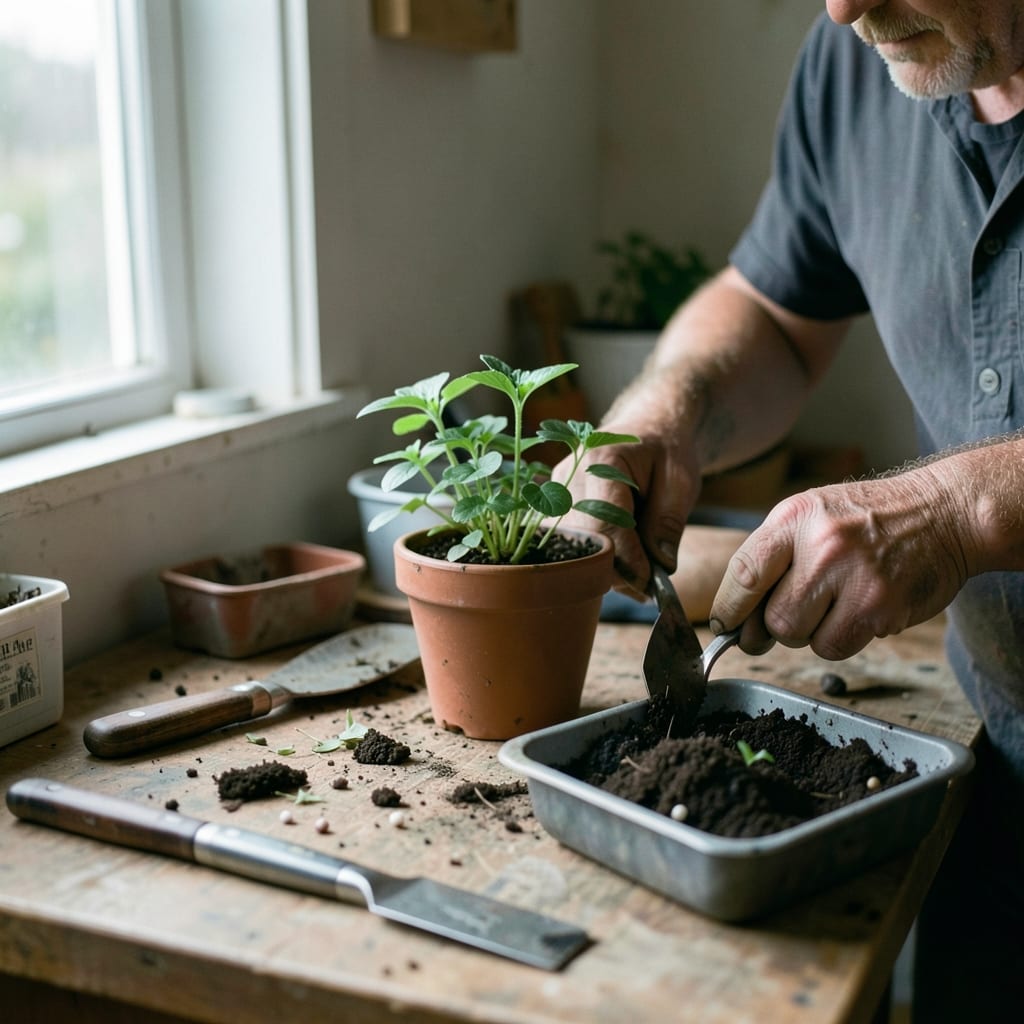
This is where the trowel meets the soil for the first time. I’m not digging deep—I’m testing. A shallow cut, just enough to see the color of the dirt and feel its texture.
If it’s too dry, the edges will crumble; if it’s too wet, the soil will stick like glue. I watch for the way the roots resist or give way. A healthy root system will have fine hairs clinging to the sides of the cut, like spider silk.
If there’s nothing there, or if the roots are brown and mushy, that’s your warning: the plant’s been overwatered or smothered.
I time it: a proper cut should take no more than 10 seconds per plant, and the soil should close over the roots within 30 seconds after replanting. If it’s taking longer, the soil’s too compacted. I stop and loosen it with my fingers first. And if the trowel’s sticking?
That’s not dirt—it’s clay. I’ll need to mix in sand or compost next time.
The second look
Now I’m not digging—I’m *listening*. I press my thumb into the soil around the base of the plant. If it springs back slowly, the roots have room to breathe. If it stays indented, the soil’s too dense.
I check the leaves: if they’re yellowing at the edges but the soil’s still damp, it’s not a water problem—it’s too much nitrogen. I’ll adjust the next feeding. And if the stems are soft and hollow-sounding when I tap them? That’s rot. I’ll pull it before it spreads.
This is where most gardeners skip the step. They see green leaves and call it a win.
But the real work is in the *details*: the way a healthy basil stem feels firm but yields slightly under pressure, the way a tomato vine’s new growth should be a deep, glossy green, not pale and leggy. I don’t rush it.
A second look takes longer than the first cut, but it’s the difference between a plant that survives and one that thrives.
How a page gets onto this site
The notes go into a pocket notebook first—scrawled in the garden, with soil still under my nails. I don’t type them until the season’s over, when the lessons have settled.
Then I rewrite it from scratch, cutting anything that doesn’t have a *specific* answer: no ‘dig deeper’ without telling you how far, no ‘wait until the soil’s warm’ without explaining what ‘warm’ feels like. If a tip doesn’t have a ‘before’ and an ‘after,’ it’s not staying.
Some pages get rewritten months later because I forgot a detail. Like the time I swore ‘morning sun is best for seedlings’—until I tested it in a shady corner and realized it’s not the *time* of day, but the *angle* of the light that matters.
The best guides aren’t written in one sitting. They’re built from the dirt up.
Write to me
I love hearing about the plants that outsmarted you, the soil that refused to cooperate, or the one time your neighbor’s tomatoes actually beat yours.
Send me your stories—the triumphs, the disasters, and the ‘what even is this plant?’ moments. (Yes, I’ve gotten emails about ‘weeds’ that turned out to be rare wildflowers. No judgment.)
If you’ve got a question that stumps you, ask it. If you’ve got a tip that saved your garden, share it. And if you just want to argue about whether marigolds really keep pests away, bring it on. The contact page is where the real conversations start.
The guides are grouped by category: Advice, Aphids, Blooming, Companion Plants, Light Requirements and Pests.