
Container Gardens
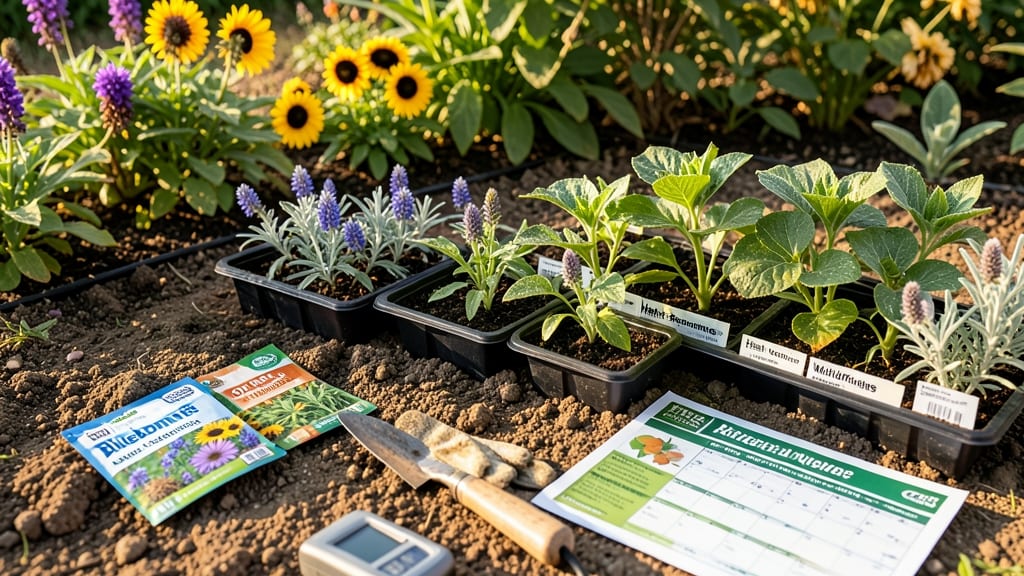
To plant gardens in Texas, timing varies by region and plant type: North Texas gardeners should start cool-season vegetables in September-October and warm-season plants in March-April, while South Texas can plant warm-season crops year-round and cool-season varieties in November-February. Central Texas follows similar timing but accounts for shorter winters.
Texas's diverse climate means your planting schedule should align with your specific region's frost dates and heat tolerance.
For example, North Texas's cooler winters allow for a longer cool-season window, while South Texas's mild winters enable year-round gardening for heat-loving plants. 🌱 I recommend checking your local USDA hardiness zone and tracking first/last frost dates—these are your best guides for successful planting.
The key is matching plant varieties to your area's natural growing seasons, whether that means early spring starts in Central Texas or staggered plantings in North Texas to avoid summer heat stress.
For vegetables like tomatoes and peppers, warm-season crops thrive when soil temperatures consistently reach 60°F or higher, which typically happens in April for North Texas but can be as early as February in South Texas.
Cool-season crops like lettuce and spinach, on the other hand, prefer temperatures below 75°F and do best when planted in fall or early spring. Understanding these temperature thresholds helps prevent common mistakes like planting too early when frost is still a risk or too late when summer heat arrives.
💡 In This Article
- Texas Planting Zones and Microclimates Explained
- Best Planting Calendar for Texas Vegetables and Flowers
Texas planting zones and microclimates explained
Texas spans 10 USDA hardiness zones (6a through 9b), creating dramatic planting variations. North Texas (zones 7a-8a) experiences cooler winters with average lows of 10-20°F, while South Texas (zones 8b-10a) rarely drops below 25°F and can grow warm-season crops year-round.
The transition zone (Central Texas, 8a-9a) gets 100-150 frost-free days, making it ideal for extended growing seasons with proper planning. 🌡️
Microclimates add complexity—urban areas like Dallas (zone 8a) can be 5-10°F warmer than rural areas just 30 miles away due to concrete heat absorption. Coastal regions (e.g., Corpus Christi) benefit from ocean breezes that moderate temperatures, while West Texas (zone 7b) faces extreme heat swings.
To find your exact zone, use the USDA Plant Hardiness Zone Map and overlay it with your local first/last frost dates, available from Texas A&M AgriLife Extension.
Frost dates are your planting calendar anchors. North Texas typically sees its last spring frost around March 15-April 1, while South Texas rarely experiences frost. Central Texas falls in between with last frost dates between March 1-April 15.
For cool-season crops, aim to plant 6-8 weeks before first frost (usually September-October in North Texas) to ensure harvest before winter chill sets in.
Heat tolerance varies dramatically between plant types. Warm-season crops like tomatoes and peppers need soil temperatures above 60°F to thrive, while cool-season crops like broccoli and kale can handle 40-60°F ranges. The 100°F+ summers in many Texas regions mean afternoon shade and mulching become essential for heat-sensitive varieties. 🌿
Elevation plays a hidden role—every 1,000 feet gain drops temperatures by about 3.5°F. Hill Country regions (e.g., Austin) experience cooler nights than flatlands, creating microclimates where some plants can thrive when they wouldn't survive in nearby lowland areas.
This is why gardeners in the same city might have different planting success rates based on their specific elevation and exposure.
For accurate planning, combine zone data with your local weather patterns. Check 3-5 years of historical frost dates to account for climate variability.
Many Texas gardeners use Texas A&M's Frost/Freeze Forecast to make final planting decisions each year, as these forecasts account for current atmospheric conditions that static zone maps don't capture. 📊