
Size
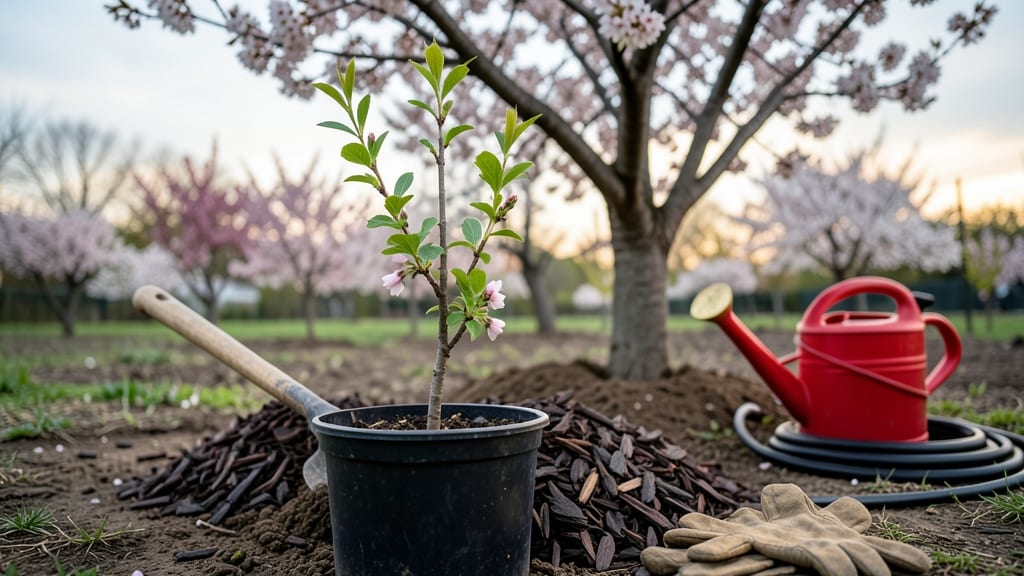
To grow sakura trees in a garden, you'll need full sun exposure (6+ hours daily) and well-drained soil, with 15-25 feet spacing between mature trees. Plant in early spring or fall for strong root development, and prune annually to maintain their shape and flowering potential.
Sakura trees thrive when given plenty of space to spread their elegant canopies—think of them as nature's delicate ballerinas needing room to perform. 🌸 The 15-25 feet spacing isn't just about aesthetics; it prevents root competition and fungal diseases that can develop in crowded conditions.
For soil, these trees prefer slightly acidic to neutral pH (6.0-7.0), so amending heavy clay with compost or sand helps improve drainage.
I've found that planting in early spring or fall gives roots time to establish before extreme summer heat or winter freezes, which is especially important in colder climates where sakura trees struggle to recover from transplant shock.
When it comes to pruning, timing matters just as much as technique. Most sakura varieties bloom on old wood, so prune right after flowering to shape the tree without sacrificing next year's blossoms.
For young trees, focus on removing crossing branches to improve airflow—this reduces disease risk and encourages stronger growth. In my own garden, I've learned that pairing sakura trees with companion plants like azaleas or Japanese maples creates stunning seasonal interest while maintaining the right spacing dynamics.
💡 In This Article
- Sakura Tree Sunlight and Soil Requirements Explained
- Sakura Tree Spacing and Pruning Best Practices
Sakura tree sunlight and soil requirements explained
Sakura trees, or Prunus serrulata, are sun worshippers that demand at least 6 hours of direct sunlight daily to produce their iconic blossoms. While they can tolerate partial shade (especially in hot climates), too much shade leads to sparse flowering and leggy growth. The reason?
These trees rely on sunlight to trigger photosynthesis and hormone production for blooming. In my experience, trees in full sun develop stronger branches and more vibrant pink or white flowers, while those in shade may produce only 30-50% of their potential blooms. 🌸
The ideal soil for sakura trees is well-draining and slightly acidic to neutral (pH 6.0-7.0), mimicking their native Japanese forest floors. Heavy clay soils can suffocate roots, causing rot, so amending with organic matter (compost or leaf mold) improves aeration.
For clay-heavy gardens, I recommend mixing in 20-30% sand or perlite to create a loamy texture. The roots also need oxygen—waterlogged conditions trigger anaerobic bacteria that produce toxic compounds, stunting growth within weeks.
Seasonal timing for planting is critical because sakura trees establish roots slowly. Planting in early spring (March-April) gives roots time to grow before summer heat, while fall planting (September-October) allows them to develop a strong root system before winter dormancy.
In colder zones (USDA 5-6), fall planting is riskier—young trees may not survive freezing temperatures. To test soil readiness, dig a hole and check if water drains within 2-3 hours; if not, raise the planting area or install drainage pipes.
Here's what happens when requirements aren't met: Trees in low light develop weak stems that snap in storms, while those in poor drainage suffer from root rot, visible as yellowing leaves and blackened bark. The good news?
Sakura trees are adaptable—once established, they can handle drought conditions better than many ornamental trees, making them low-maintenance once planted correctly. For container growing, use a fast-draining mix with 50% potting soil and 50% perlite to prevent root suffocation.
Consider these soil amendments for different conditions:
- Clay soil: Mix in 3 inches of compost and 1 inch of coarse sand to the top 12 inches of soil
- Sandy soil: Add 30% peat moss or coconut coir to retain moisture
- Acidic soil (pH < 6.0): Sprinkle lime (calcium carbonate) at 5 lbs per 100 sq ft and retest pH after 3 months
For visual impact, plant sakura trees where they'll receive morning sun and afternoon shade—this prevents leaf scorch while maintaining bloom production. In my garden, I've noticed that trees planted near east-facing walls receive gentle morning light that enhances flower color intensity without midday heat stress. 💫