
Vegetables
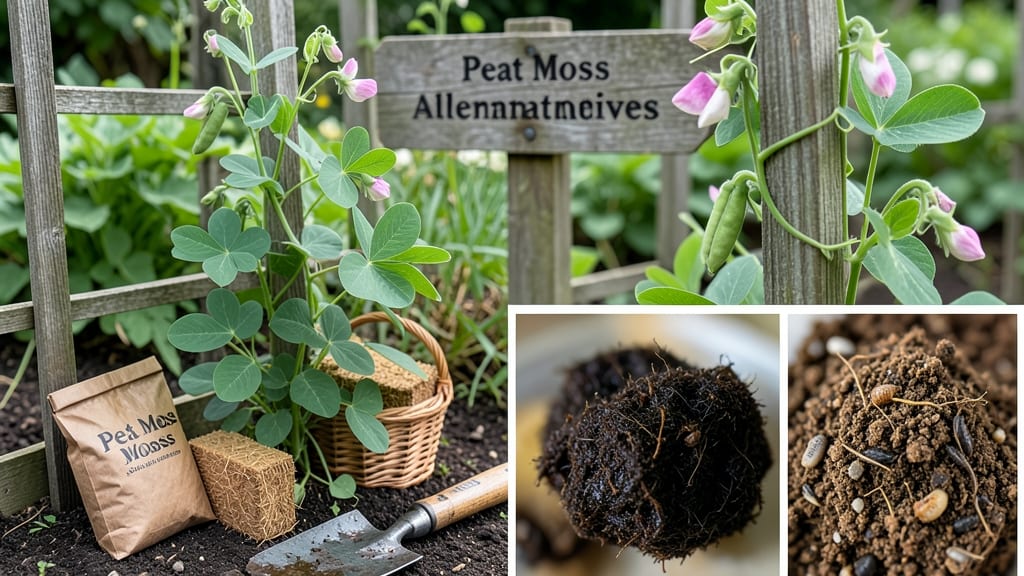
Peat moss is bad for vegetable gardens because it harms ecosystems by depleting carbon-rich wetlands and releasing stored CO2 when harvested, while better organic alternatives like coconut coir or compost improve soil health sustainably.
Peat moss may seem like a reliable soil amendment, but its environmental cost is steep.
Harvesting it destroys vital wetlands that act as natural carbon sinks, releasing decades of stored CO2 into the atmosphere. 🌱 These ecosystems take centuries to regenerate, and the process often involves clear-cutting, which disrupts local water cycles and biodiversity.
For vegetable gardens, this means not just harming the planet but also risking long-term soil degradation—peat moss breaks down quickly, leaving your plants without the nutrients they need over time.
Instead of peat moss, gardeners can use renewable alternatives like coconut coir, which mimics peat's moisture retention without the ecological damage. Compost and worm castings also enrich soil with nutrients while supporting microbial life. These options improve soil structure and fertility, ensuring your vegetable garden thrives sustainably.
💡 In This Article
- Environmental Harm of Peat Moss in Gardening
- Best Peat-Free Soil Amendments for Vegetable Gardens
Environmental harm of peat moss in gardening
Peat moss forms over centuries in bogs and wetlands, where partially decomposed plant matter accumulates in waterlogged, oxygen-poor conditions. These ecosystems store vast amounts of carbon—up to 20 times more per acre than forests—and act as natural flood buffers.
When harvested, this process releases 400 million tons of CO2 annually, equivalent to the emissions of 70 million cars. The peat extraction also permanently alters water tables, drying out wetlands that support rare species like carnivorous plants and migratory birds.
The regeneration rate of peatlands is painfully slow—some estimates suggest it takes 1,000 years to form just 1 inch of peat. Once harvested, these areas often become barren, eroded landscapes that fail to support plant life.
For vegetable gardeners, this means your soil amendment comes with a hidden cost: the destruction of habitats that took millennia to develop. The acidity of peat moss (pH 3.5-4.5) also disrupts soil microbiomes, creating an imbalance that harms beneficial fungi and bacteria crucial for plant nutrition.
Peat moss's short-term benefits—like moisture retention—come at a long-term price. After just 3-5 years in soil, it breaks down into a structureless, nutrient-poor mass that compacts easily. This creates a cycle where gardeners must keep replenishing it, perpetuating the demand for more extraction.
The environmental toll is particularly ironic because vegetable gardens, which rely on healthy soil ecosystems, end up contributing to the very problems they're trying to solve—degraded land and climate change.
Consider this: A single 1 cubic yard bag of peat moss requires harvesting from 10 square feet of wetland. That same space could be left to regenerate, supporting biodiversity while storing carbon. The alternative?
Materials like coconut coir, which requires 1/10th the water to produce and comes from agricultural waste, or compost made from yard trimmings that would otherwise go to landfills. These options don't just perform better—they close the loop on sustainability.
What makes peat moss especially problematic is its global supply chain. Most commercial peat comes from Northern Europe and Canada, where large-scale operations clear-cut entire bogs using heavy machinery. The resulting scars on the landscape take generations to heal, if ever.
For gardeners who prioritize ethical sourcing, peat moss represents a non-renewable resource with no clear path to sustainability—unlike alternatives that can be produced locally and continuously.
Even the texture of peat moss—often praised for its light, fluffy structure—is misleading. This property comes from its high organic content, which decomposes rapidly when mixed with soil. Within 1-2 growing seasons, its structure collapses, leaving behind a dense, waterlogged mess that suffocates plant roots.
The environmental cost of maintaining this temporary improvement far outweighs any short-term convenience.