
Planting
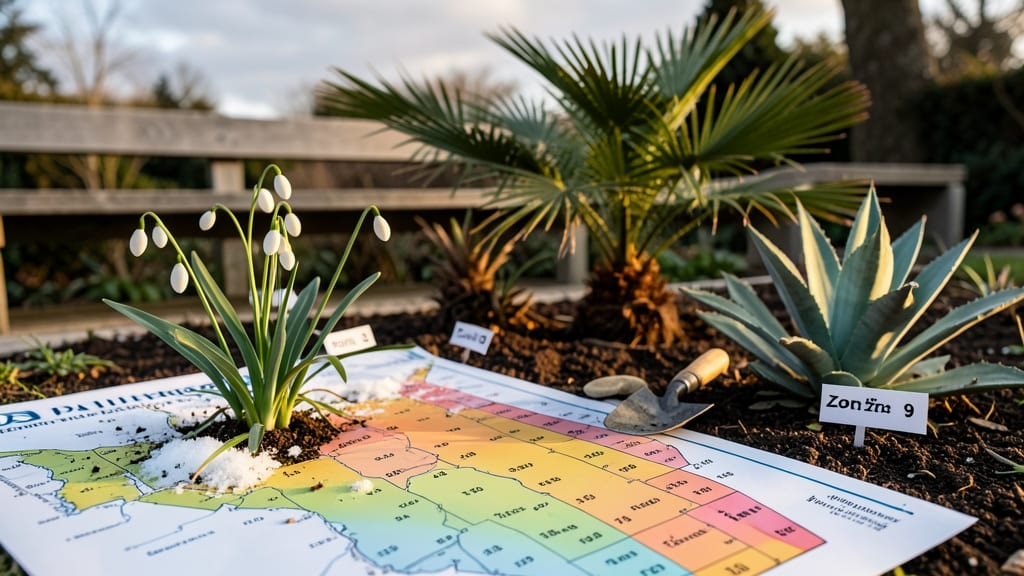
Plant gardening zones help you select the right plants for your climate by organizing locations into numbered regions based on average winter lows (like Zone 5 or Zone 8). The USDA Plant Hardiness Zone Map shows which plants will survive your area's frost levels.
These climate-based zones are determined by the USDA using 10°F temperature increments to create a nationwide grid. 🌡️ For example, Zone 5 endures -15°F to -10°F winters, while Zone 8 stays above 10°F. The map accounts for microclimates—areas where local conditions (like urban heat islands or mountain slopes) create slightly different growing conditions than the general zone suggests.
Many gardeners also adjust their selections by choosing plants that thrive in zones one level higher or lower for added flexibility.
To find your specific zone, visit the USDA interactive map and enter your ZIP code. The map will show your primary zone plus any sub-zones (like 7a or 7b), helping you pick plants that match your local frost patterns.
Always check plant tags for their recommended zones—some species tolerate a wider range than others.
💡 In This Article
- How USDA Plant Hardiness Zones Classify Climates
- Practical Guide to Finding and Using Your Plant Zone
How USDA plant hardiness zones classify climates
The USDA Plant Hardiness Zone System divides North America into 13 numbered zones based on the average annual minimum winter temperature—the coldest temperature expected to occur in any given area over a 30-year period.
Each zone represents a 10°F range, with Zone 1 enduring temperatures below -50°F and Zone 13 staying above 60°F. This system helps gardeners predict which plants will survive winter's harshest conditions in their specific location.
The science behind these zones involves analyzing historical temperature data collected from thousands of weather stations across the country.
For example, Zone 5 (common in the Midwest) experiences winter lows between -20°F and -10°F, while Zone 8 (typical in the Southeast) rarely drops below 10°F. These temperature thresholds determine whether a plant like a peony (Zone 3-8) or a bougainvillea (Zone 9-11) will thrive or perish in your area. 🌡️
Elevation plays a critical role in zone classification. Areas at higher altitudes often experience colder temperatures than nearby lowlands, creating "microclimates" that can shift zones by one or more levels.
For instance, a garden at 5,000 feet elevation in Colorado might fall into Zone 4, while a valley just 1,000 feet lower could be Zone 6. This is why gardeners in mountainous regions often adjust their plant selections upward by one or two zones to account for the chill factor.
Climate change is also causing these zones to shift gradually. Since the USDA last updated its map in 2012, many areas have warmed by 1-3°F, pushing some regions into higher zones. For example, parts of the Northeast that were once Zone 5b are now experiencing Zone 6a conditions.
The USDA periodically revises its map to reflect these changes, ensuring gardeners have the most accurate data for their planting decisions.
Beyond temperature, the system accounts for microclimates—localized areas where conditions differ from the general zone. A south-facing wall might create a Zone 7 microclimate in an otherwise Zone 5 area, allowing gardeners to grow plants that wouldn't survive in exposed locations.
Urban heat islands, where pavement and buildings trap warmth, can also elevate temperatures by 5-10°F, making cities slightly more hospitable to tender plants than their rural counterparts.
Understanding these nuances helps gardeners make informed choices. For example, a rose bush labeled for Zone 4-9 might struggle in a Zone 4 area with harsh winters but thrive in a sheltered microclimate.
By matching plants to their zone ranges—and accounting for local variations—you maximize the chances of success in your garden. 🌱