
Tools
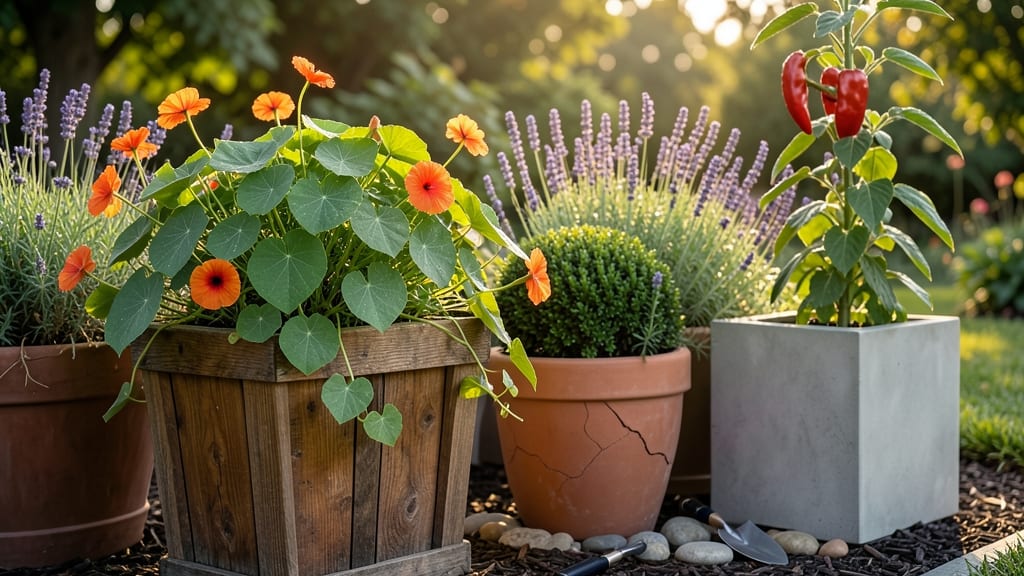
Large garden planters crossword clues often use terms like 'vat,' 'trough,' or 'tub' to describe oversized containers for plants, while garden-specific words like 'bed' or 'box' also appear frequently. Wordplay clues may include 'big pot' or 'container' to fit standard crossword lengths.
Crossword puzzles love garden-related terms because they're both practical and evocative. 🌱 The words 'vat' and 'trough' often appear in clues because they evoke large, sturdy containers—think of the old wooden vats used in vineyards or the troughs that once held livestock feed.
Meanwhile, 'bed' refers to raised garden beds, a common feature in horticulture that's easy to visualize. These answers typically fit 3-5 letters, making them perfect for crossword grids.
What's interesting is how clues play with word lengths and garden terminology. For example, 'vat' might be hinted at with 'big pot' or 'container,' while 'trough' could be suggested by 'channel' or 'ditch' in a clever twist.
I've noticed that many puzzles use these terms because they're both familiar and versatile enough to fit various clue structures.
💡 In This Article
- Common Crossword Answers for Large Garden Containers
- Wordplay Tips for Solving Garden Planter Clues
Common crossword answers for large garden containers
Crossword puzzles frequently use terms like 'vat,' 'trough,' and 'tub' because these words perfectly describe large containers while fitting standard crossword grid lengths (typically 3-5 letters).
The term 'vat' originates from medieval times when it referred to a large wooden or metal container, often used for holding liquids like wine or beer—but in gardening, it evolved to describe oversized plant pots.
A 'trough' originally meant a long, narrow container for feeding livestock, now repurposed for garden planters, especially for herbs or shallow-rooted plants.
Garden-specific terms like 'bed' and 'box' appear often because they're universally recognized in horticulture. A 'bed' refers to raised garden beds (usually 3-4 feet wide for easy reach) filled with soil and plants, while 'box' describes a rectangular planter box, often made of wood or metal.
These terms fit crossword lengths perfectly—'bed' is 3 letters, 'box' is 3 letters, and 'vat' or 'trough' are 4 letters. The word 'tub' (3 letters) is another common answer, especially when clues hint at 'big pot' or 'container.'
What makes these terms ideal for crosswords is their dual meaning—both practical and poetic. For example, a 'vat' might be described as a 'big pot' or 'container,' while a 'trough' could be hinted at with 'channel' or 'ditch' in wordplay.
The historical roots of these words add depth to the clues, making them richer for solvers. A 'vat,' for instance, might evoke images of winemaking or industrial storage, while a 'trough' could remind solvers of rural farm settings—both are vivid mental pictures that help unlock the answer.
Crossword constructors also love these terms because they’re versatile. A 'bed' can refer to a garden bed or a flower bed, while a 'box' might describe a planter box or a decorative garden box. This flexibility allows clues to be creative without being misleading.
For example, a clue like 'Garden feature, not a bed' might lead to 'box,' while 'Large container for plants' could point to 'vat' or 'trough.' The key is recognizing how these words function in both gardening and everyday language.
Here’s a quick breakdown of the most common answers and their typical crossword lengths:
- Vat: 4 letters – Large container, often wooden or metal
- Trough: 6 letters – Long, narrow container, historically for livestock
- Tub: 3 letters – Simple, round container, versatile for clues
- Bed: 3 letters – Raised garden bed, common in horticulture
- Box: 3 letters – Rectangular planter, often decorative
These terms are so ingrained in crossword culture that solvers often recognize them instantly, even if the clue is phrased creatively. For example, 'Big pot' almost always leads to 'vat' or 'tub,' while 'Garden feature' might point to 'bed' or 'box.'
Understanding these historical and practical roots can make solving garden-related clues much easier—especially when the wordplay feels tricky at first glance.