
Light Requirements
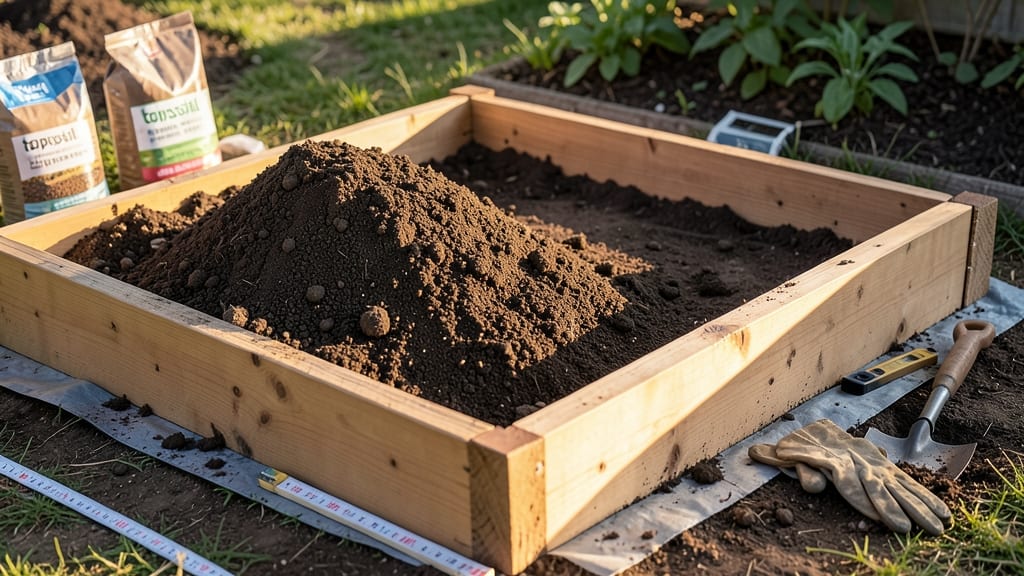
To determine how much soil for a raised garden bed, multiply length, width, and depth (in feet) to get cubic feet, then adjust based on plant needs—root vegetables need 12-18 inches, most veggies 6-12 inches, and shallow plants 4-6 inches. A standard 4x8-foot bed at 12 inches deep holds about 32 cubic feet of soil.
Figuring out soil volume starts with simple math, but real-world factors make it more nuanced.
For example, a 4x8-foot bed filled to 12 inches depth needs 32 cubic feet of soil, but if you're planting carrots, you might want to go deeper to 18 inches for proper root development. 🌱 The key is balancing your plant types—herbs like basil thrive in just 6 inches of soil, while potatoes need the full 18 inches to grow well.
Pro tip: always account for a 2-3 inch buffer at the top for mulch or compost.
Most gardeners buy soil in 2 cubic foot bags, so for that 32 cubic feet bed, you'd need about 16 bags—but check the bag's actual volume, as some brands overfill. Sandy soil drains faster but compacts quickly, while loamy soil retains moisture better but may require less volume overall.
If your bed has a sloped or curved shape, break it into rectangles or triangles to calculate each section separately, then add the totals.
💡 In This Article
- Calculating Soil Volume for Raised Garden Beds
- Best Soil Depths for Different Raised Garden Plants
Calculating soil volume for raised garden beds
The foundation of your raised bed math lies in the simple formula: length × width × depth (all in feet). For a standard 4x8-foot bed filled to 12 inches (which is 1 foot), the calculation is straightforward—4 × 8 × 1 = 32 cubic feet of soil.
This is your baseline, but real-world adjustments come into play.
For instance, if you're building a circular bed with a 6-foot diameter, you'd first calculate the radius (3 feet), then use the formula for a cylinder: π × radius² × depth (π × 3² × 1 ≈ 28 cubic feet).
The shape matters because irregular beds require breaking the space into geometric sections for accuracy.
Soil type dramatically impacts volume needs. Sandy soil, which drains quickly but compacts less, may require 10-15% more volume to maintain proper aeration and moisture retention.
Conversely, loamy soil—the gold standard for gardens—holds moisture and nutrients better, so you might need 5-10% less due to its higher organic matter content. A bag labeled as containing 2 cubic feet might actually deliver only 1.8 cubic feet after settling, so always overestimate by 10-15% when ordering.
For example, a 4x8-foot bed at 18 inches depth (1.5 feet) would theoretically need 48 cubic feet, but with settling and adjustments, 55-60 cubic feet is safer.
Depth isn't just about volume—it's about plant health. Shallow-rooted plants like lettuce or strawberries thrive in 4-6 inches of soil, while tomatoes need 12-18 inches to support their vines and fruit.
The top 2-3 inches of soil should always be reserved for mulch or compost, as this layer decomposes and integrates into the bed over time. If you're growing potatoes, which need 18-24 inches of soil to develop properly, your bed's depth becomes a critical factor in yield.
This is why many gardeners opt for two-tiered beds—one layer for root crops and another for shallower plants.
Drainage and aeration are often overlooked but critical. Compacted soil reduces oxygen flow to roots, stunting growth, while poor drainage can lead to root rot.
To mitigate this, mix in coarse sand or perlite (about 10-20% of the total volume) for sandy soils, or compost and peat moss (about 20-30%) for clay-heavy soils.
For example, a 4x8-foot bed at 12 inches with 20% compost would require 6.4 cubic feet of compost mixed into the 32 cubic feet of base soil. This adjustment ensures your plants get the ideal balance of nutrients, moisture, and airflow.
Pro tip: Use a soil moisture meter to check drainage after filling your bed. If water pools after 15-20 minutes, your soil is too dense—amend it with sand or vermiculite. If water drains too quickly (within 5 minutes), add peat moss or coconut coir to retain moisture.
These small tweaks can mean the difference between a thriving garden and one that struggles. 🌱
For those who prefer visual aids, sketch your bed's dimensions and divide it into rectangular or triangular sections if it's irregular. Label each section with its calculated volume, then sum them up. This method ensures you account for every inch of growing space without over- or under-purchasing soil.
For example, a L-shaped bed might be split into two rectangles: one 4x6 feet and another 2x6 feet, each calculated separately before combining.
Finally, consider amendments upfront. If your base soil is poor, plan for 30-50% amendments (like compost or worm castings) in the total volume.
For instance, a 4x8-foot bed at 12 inches with 40% compost would need 12.8 cubic feet of compost mixed into the 32 cubic feet of base soil. This upfront planning saves time and ensures your plants have the nutrients they need from day one. 💫