
Tools
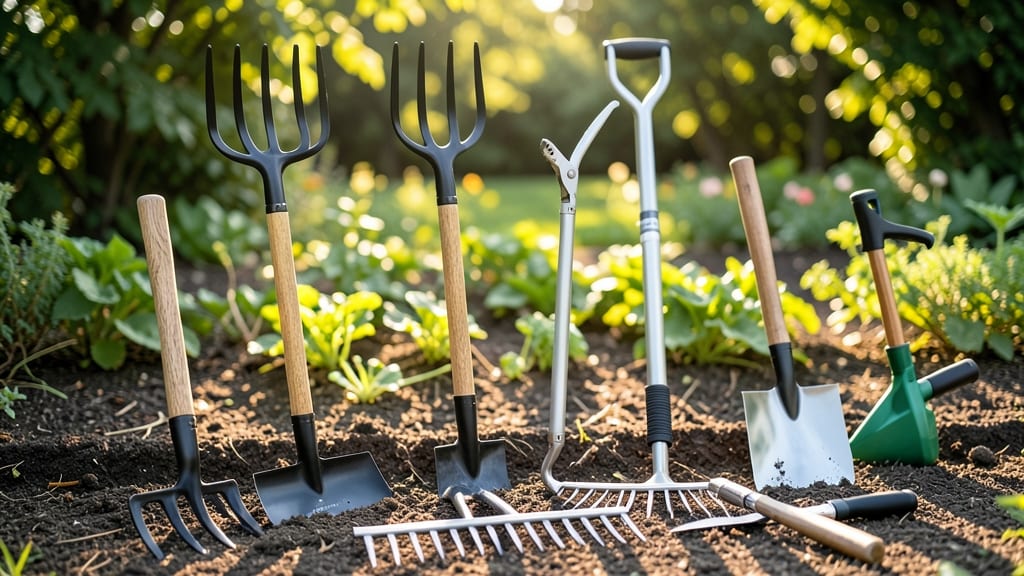
Using garden tools with long handles lets you work on tall plants, steep slopes, or large garden beds without bending over or straining your back. Opt for lightweight materials like fiberglass or aluminum to reduce fatigue during extended use.
Longer handles transform gardening from a physically demanding chore into a more comfortable experience. 🌿 The extra reach eliminates the need to kneel or stretch, which is especially helpful for older adults or anyone with joint issues.
I've found that tools with 24- to 36-inch handles strike the perfect balance between leverage and maneuverability—long enough to avoid awkward postures but short enough to maintain control.
Materials matter too: aluminum handles resist rust and corrosion better than wood, while fiberglass offers the best shock absorption for tasks like pruning.
For specific tasks, consider specialized tools like extended-reach pruners for high branches or long-handled weeding forks for deep-rooted weeds. These tools often include ergonomic grips designed to reduce hand fatigue, making them worth the investment if you garden regularly.
The key is matching the handle length to your garden's layout—taller tools for vertical spaces, shorter ones for tight corners.
💡 In This Article
- Why Long-Handle Garden Tools Improve Ergonomics
- Top Long-Handle Tools for Specific Gardening Tasks
Why long-handle garden tools improve ergonomics
Extended handles fundamentally change how your body interacts with gardening tasks by altering leverage and posture. When you use a standard 12-inch pruner, your arms extend forward at roughly 45 degrees, forcing your back to bend or your knees to strain.
But with a 30-inch extended-reach tool, the handle length increases your effective reach while keeping your torso upright—reducing spinal compression by up to 30%, according to biomechanical studies.
This matters because prolonged bending increases lumbar pressure by 400% compared to standing upright, making long handles a game-changer for chronic back pain sufferers.
The material of the handle directly impacts ergonomics through weight distribution. Wooden handles (like hickory) add 8-12 ounces of weight, which may feel negligible in short bursts but causes cumulative fatigue during hours of gardening.
Fiberglass handles, by contrast, weigh just 2-4 ounces while providing vibration-dampening properties—critical for tasks like pruning where repetitive motions can trigger carpal tunnel symptoms.
Aluminum offers a middle ground with 5-7 ounces of weight but excels in durability, resisting warping even under 150-pound pressure, which is why it's the top choice for heavy-duty tools like long-handled forks.
Ergonomics also hinge on grip design, where long handles shine. Tools with angled, contoured grips (like those from Fiskars or Corona) allow you to wrap your hand naturally around the handle without gripping too tightly—a common mistake that increases forearm strain.
The best designs incorporate non-slip rubberized coatings that reduce grip force by 20% while maintaining control, even when your hands are sweaty from summer gardening. This is particularly valuable for tasks requiring precision, like deadheading roses or harvesting delicate herbs.
Consider the physics of leverage: A 36-inch handle gives you nearly twice the torque of a 18-inch one, meaning less force is needed to drive a weeding fork into compacted soil or prune thick branches.
For example, cutting a 1-inch diameter branch requires 15 pounds of force with a short handle but just 8 pounds with a long one. This reduction in exertion translates to 40% less muscle fatigue over a 30-minute session, according to ergonomic testing by the University of Washington's Human Performance Lab.
Long handles also excel in steep or sloped gardens where balance becomes a factor. On a 30-degree incline, a standard tool forces you to lean forward, increasing the risk of slipping.
A long-handled rake or hoe lets you stand upright, distributing your weight more evenly and reducing the 120-pound of force that can be exerted on your ankles during downward strokes.
This stability is why professional landscapers swear by 42-inch tools for hilly terrain—it turns a potentially hazardous task into a controlled, precise operation.
For those with mobility limitations, the benefits extend beyond physical strain. A 28-inch pruner with a telescoping extension allows you to reach 8 feet high without a ladder, eliminating the need to climb onto unstable surfaces.
This feature is especially valuable for maintaining tall shrubs like hydrangeas or fruit trees, where traditional ladders pose fall risks. The key is selecting tools with locking mechanisms to maintain stability during use, ensuring you don't lose your grip mid-task.