
Tools
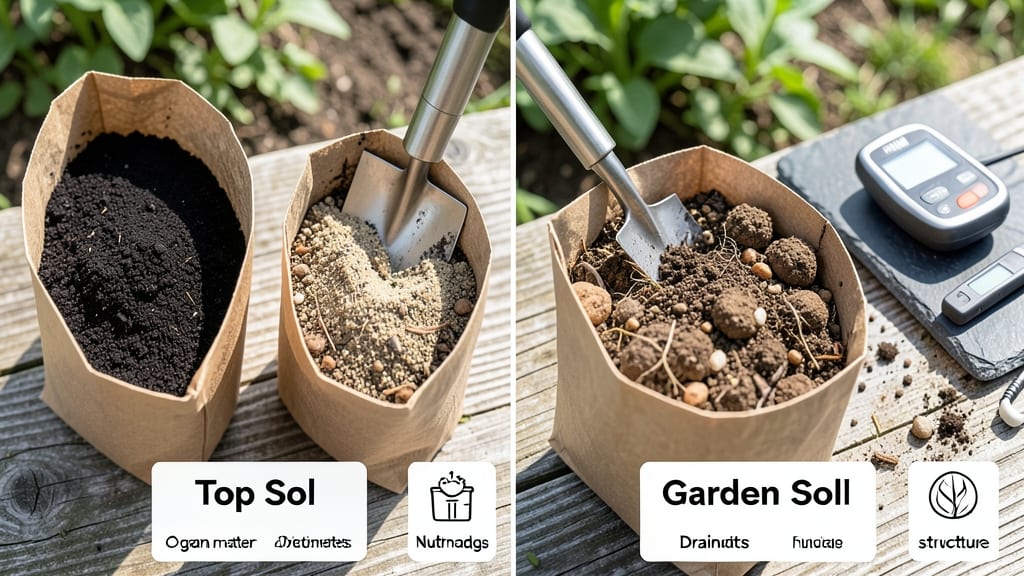
Top soil and garden soil are not the same: top soil is the nutrient-rich uppermost layer of earth, naturally packed with organic matter for root growth, while garden soil blends top soil with compost, sand, or other amendments to create a tailored growing medium for specific plants.
Top soil is what nature provides—the raw, organic-rich layer that forms over centuries from decomposed plants and minerals. 🌱 It's perfect for leveling new garden beds or establishing lawns because it supports deep root systems naturally.
Garden soil, on the other hand, is a custom mix designed for specific needs, like improving drainage or adding nutrients for potted plants. Think of top soil as the foundation and garden soil as the specialized toolkit for your plants' unique requirements.
For example, if you're planting a vegetable garden, you might blend top soil with compost and perlite to create a lighter, more nutrient-dense mix. This tailored approach ensures your plants get exactly what they need to thrive, whether that's better aeration or higher nutrient levels.
The key difference lies in their purpose: top soil builds the groundwork, while garden soil fine-tunes it for optimal growth.
💡 In This Article
- Composition and Nutrient Differences Between Top Soil and Garden Soil
- Best Uses for Top Soil vs. Garden Soil in Your Yard
Composition and nutrient differences between top soil and garden soil
Top soil forms naturally over centuries through the decomposition of organic matter like leaves, plants, and animal remains, combined with mineral particles from weathered rocks. This layer typically contains 5-10% organic matter by volume, along with essential nutrients like nitrogen, phosphorus, and potassium.
The texture is usually loamy—meaning it balances sand, silt, and clay—creating a crumbly structure that holds moisture while allowing drainage. For comparison, garden soil often contains 20-30% organic matter due to added compost or peat moss, giving it a darker, richer appearance and softer texture.
The nutrient density of top soil varies by location, but it generally provides a steady supply of micronutrients like iron, calcium, and magnesium. Its pH typically ranges between 6.0 and 7.5, making it slightly acidic to neutral—ideal for most plants.
Garden soil, however, can be engineered to have a more consistent pH (often 6.0-7.0) and higher nutrient availability by blending in amendments like lime (to raise pH) or sulfur (to lower it).
This customization is why garden soil is often preferred for container gardening or high-yield vegetable plots where precise growing conditions matter.
One key difference lies in the particle structure. Top soil's natural composition often includes larger mineral fragments that improve drainage but may lack the fine, nutrient-rich particles found in garden soil blends.
For instance, a bag of garden soil might include sand for grit, perlite for aeration, and worm castings for quick nutrients, creating a more uniform and fertile medium.
This engineered approach ensures plants get immediate access to nutrients, whereas top soil relies on gradual decomposition to release nutrients over time.
Consider the texture: top soil feels slightly gritty due to its mineral content, while garden soil often has a smoother, almost silky feel when mixed with compost.
This tactile difference reflects their intended use—top soil is built for durability and root penetration, while garden soil prioritizes nutrient delivery and moisture retention.
For example, planting a blueberry bush (which thrives in acidic soil) would require garden soil amended with pine bark fines to lower the pH, whereas a lawn can often thrive with just top soil because grasses have lower nutrient demands.
Another critical factor is microbial activity. Top soil contains diverse soil microbes that break down organic matter naturally, but garden soil often has a higher concentration of beneficial bacteria and fungi due to added organic amendments. This boosts plant growth by improving nutrient uptake and suppressing harmful pathogens.
For instance, mycorrhizal fungi in garden soil can increase root surface area by up to 500%, helping plants absorb water and nutrients more efficiently than they would in pure top soil.
Finally, the cost and availability differ significantly. Top soil is typically cheaper and easier to source in bulk, making it ideal for large-scale projects like leveling a yard or establishing a new lawn.
Garden soil, however, requires careful mixing and may include premium amendments, increasing its cost but delivering targeted benefits for specific plants. Understanding these differences helps you choose the right soil for your project—whether you're building a foundation or fine-tuning a growing environment.