
Tools
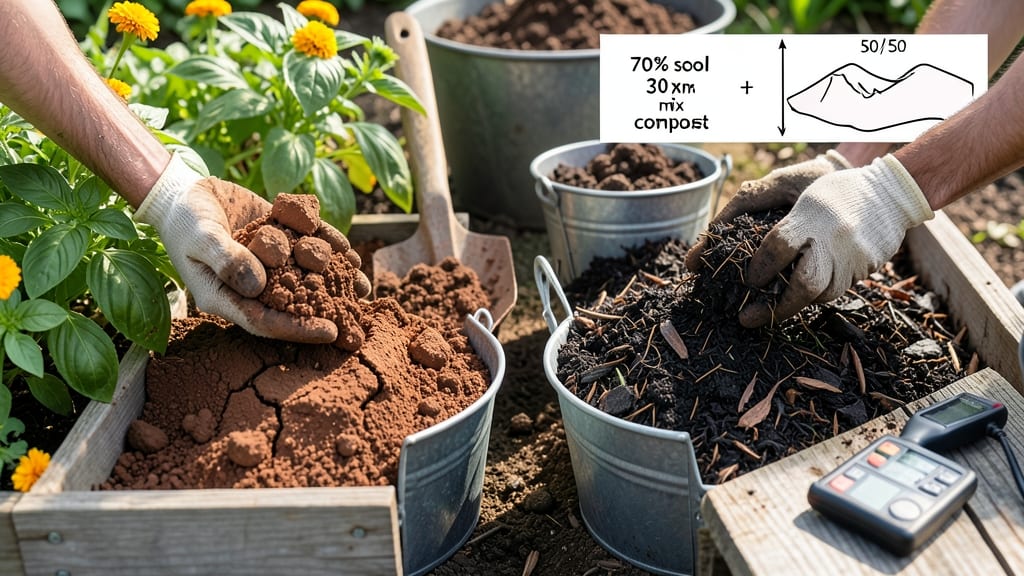
The ideal soil to compost ratio for a vegetable garden is 3 parts soil to 1 part compost for established plants, while new garden beds benefit from a 50/50 mix to boost fertility and drainage without overwhelming roots. Adjust based on soil quality and plant needs.
The right mix isn't just about numbers—it's about balancing nutrients and texture for your plants' long-term health. 🌱 For established gardens, that 3:1 ratio prevents nutrient overload while still feeding roots efficiently.
Leafy greens and herbs actually thrive with slightly more compost (like a 2:1 ratio) because they're heavy feeders, while root vegetables prefer the classic 3:1 to avoid stunting their growth.
I've found that testing your soil's moisture retention after mixing is the best way to gauge if you've hit the sweet spot—it should hold water like a damp sponge, not stay soggy or dry out instantly.
What's interesting is how this ratio changes with soil type.
Sandy soils need more compost to improve water retention, while clay-heavy beds benefit from slightly less to prevent compaction. 💫 The key is observing your plants: yellowing leaves often mean too much compost (burning roots), while slow growth suggests you need to boost that organic matter percentage.
For new beds, that 50/50 mix gives you the fastest nutrient boost while still maintaining proper aeration—just don't skimp on the soil component if you're working with heavy clay.
💡 In This Article
- How Compost Ratios Affect Soil Structure and Plant Growth
- Adjusting Compost Ratios for Different Vegetable Garden Needs
How compost ratios affect soil structure and plant growth
Compost ratios directly influence soil structure by altering microbial activity and nutrient availability. When you mix compost into soil, it introduces beneficial microbes that break down organic matter, releasing nitrogen and phosphorus in forms plants can absorb.
A 3:1 soil-to-compost ratio provides enough organic material to feed these microbes without overwhelming them—think of it like feeding a balanced diet to your soil ecosystem. Too much compost (like a 1:1 mix) can create anaerobic pockets where microbes suffocate, leading to foul odors and nutrient loss.
The texture transformation is equally important.
Compost acts like a soil conditioner, improving water retention in sandy soils while preventing compaction in clay. 🌱 For example, a 50/50 mix in sandy soil creates a crumbly texture that holds moisture like a well-drained sponge, while the same ratio in clay loosens the dense structure.
Root systems thrive in this balanced environment because they encounter optimal oxygen levels and nutrient distribution. The key is that compost particles (typically 1/4-inch or smaller) integrate into soil pores, creating pathways for both water and air.
Nutrient balance is where the magic happens. Fresh compost has a high carbon-to-nitrogen ratio (around 30:1), but as it decomposes, this shifts to about 15:1—ideal for plant growth. The 3:1 ratio ensures this decomposition process happens gradually, preventing nitrogen burnout that would otherwise stunt plant growth.
Leafy greens, which are nitrogen-hungry, actually benefit from slightly more compost (try a 2:1 ratio), while root crops prefer the standard mix to avoid excessive top growth at the expense of root development.
One often-overlooked factor is the physical space compost creates. Organic matter increases soil porosity by up to 30%, which is crucial for root expansion.
In my own garden, I've noticed that tomato plants in 3:1 mixed soil develop roots that spread 20-30% wider than in pure garden soil, thanks to this improved structure. The trade-off?
Too much compost (like a 1:2 ratio) can create a gummy texture that suffocates roots, while too little leaves plants struggling to access nutrients.
Seasonal variations also play a role. In spring, when microbial activity ramps up, a slightly higher compost ratio (2:1) can accelerate nutrient release. Conversely, in fall, reducing compost to 4:1 helps prevent winter nutrient leaching.
The soil's natural microbial community becomes your best indicator—healthy soil should smell earthy, not sour or chemical-like. 💫
For visual learners, imagine compost as the "glue" that binds soil particles together. Under a microscope, you'd see compost particles forming bridges between mineral particles, creating stable aggregates that resist erosion. This structure is what allows plants to access both water and nutrients without competition.
The 3:1 ratio strikes this balance perfectly for most vegetable gardens, but always observe your plants' response—they'll tell you if you've got the mix right.