
Tools
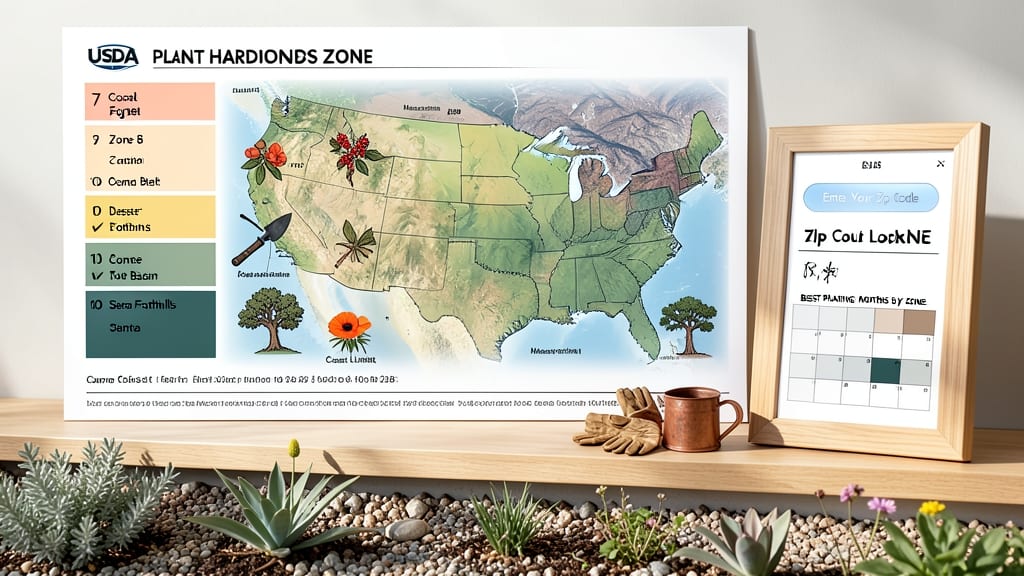
California gardening zones by zip code range from Zone 5 in high mountain areas to Zone 11 along deserts and coastlines, with local conditions like elevation or fog creating variations of 2-5 degrees. Always cross-check with tools like the USDA Plant Hardiness Zone Viewer or consult nearby nurseries for precise planting guidance.
California's diverse geography means your exact zip code might not match the standard USDA zone map. For example, coastal areas like Santa Barbara often experience Zone 10 conditions due to ocean breezes, while inland deserts near Palm Springs can hit Zone 11 with extreme heat.
Urban areas like Los Angeles may see pockets of Zone 9 in shaded valleys but Zone 10 in sun-exposed spots. 🌵 The key is understanding how your specific microclimate—whether it's a heat island, fog belt, or mountain slope—shifts the baseline zone.
I always recommend testing soil temperatures in spring to fine-tune plant selections.
For the most accurate results, combine digital tools with on-the-ground observations. The USDA Plant Hardiness Zone Viewer gives a starting point, but apps like Gardenate or Sunset Climate Zones factor in California-specific conditions.
Pro tip: Ask your local nursery about frost dates and summer heat spikes—these often reveal hidden zone shifts. For instance, San Francisco might officially be Zone 9b, but coastal fog can delay spring planting by weeks.
💡 In This Article
- How California’s Microclimates Affect Plant Hardiness Zones
- Best Tools for Finding Your Exact California Zip Code Gardening Zone
How California’s microclimates affect plant hardiness zones
California’s gardening zones aren’t just about latitude—they’re shaped by dramatic elevation changes and local weather patterns. Take Death Valley, which sits at 282 feet below sea level and experiences Zone 11 conditions, while nearby Mount Whitney at 14,505 feet plummets to Zone 5.
This vertical shift happens because temperature drops 3.5°F per 1,000 feet of elevation gain. Coastal areas like San Francisco often see Zone 9b thanks to cooling Pacific fog, while inland valleys like Sacramento can hit Zone 8a due to warmer nights.
The ocean also creates invisible boundaries. Cities like Santa Barbara experience Zone 10 along the coast but shift to Zone 9 just a few miles inland where marine layer fog dissipates.
Urban heat islands in Los Angeles can push microclimates from Zone 9b in shaded canyons to Zone 10a in sun-baked parking lots.
Even soil type matters—sandy desert soils heat up faster than clay-rich valley floors, creating 5°F temperature swings within the same zip code. 🌬️ These variations explain why a lemon tree thrives in Zone 10 coastal gardens but struggles just 5 miles inland where summer nights stay above 70°F.
Wind patterns add another layer of complexity. The Santa Ana winds that scorch Southern California gardens in fall can raise temperatures 20°F above normal for days, effectively pushing Zone 9 areas to behave like Zone 10 during critical planting windows.
Meanwhile, the May Gray/June Gloom that blankets coastal regions can delay spring planting by 2-4 weeks compared to inland areas. These seasonal shifts mean your last frost date might vary by 30 days between neighboring communities with identical zip codes.
Water proximity creates the most dramatic contrasts. The Central Valley, with its Zone 8-9 classification, can experience 110°F+ soil temperatures in summer, while nearby Sierra foothills remain in Zone 7 due to higher elevations.
Even within cities, microclimates emerge: San Diego’s Balboa Park stays in Zone 10b thanks to ocean breezes, while Mission Valley just 3 miles away hits Zone 11a due to urban heat retention. These variations explain why some nurseries carry palm trees in coastal zones but not in nearby inland areas.
To visualize these shifts, consider that Zone 9 plants like bougainvillea thrive in Los Angeles but may struggle in San Jose—even though both cities are in Southern California. The difference? San Jose’s Silicon Valley heat island pushes summer temps 5°F higher than coastal areas.
This is why gardeners in Zone 9b often plant Zone 10 species like olive trees for heat tolerance, while coastal gardeners might choose Zone 8 varieties that handle cooler nights. 🌿 The lesson? Always observe your garden’s specific conditions for at least a year before making planting decisions.
For practical application, note that frost pockets in valleys can create Zone 7 conditions within a Zone 9 area. I’ve seen avocado trees (native to Zone 10) survive winters in Santa Barbara’s coastal fog belts but fail just 10 miles inland where frost occurs.
The solution? Use windbreaks, mulch, and microclimate mapping to create your own growing zones within your property. This precision gardening approach lets you grow citrus in Zone 9 while protecting it from unexpected frosts.