
Plants
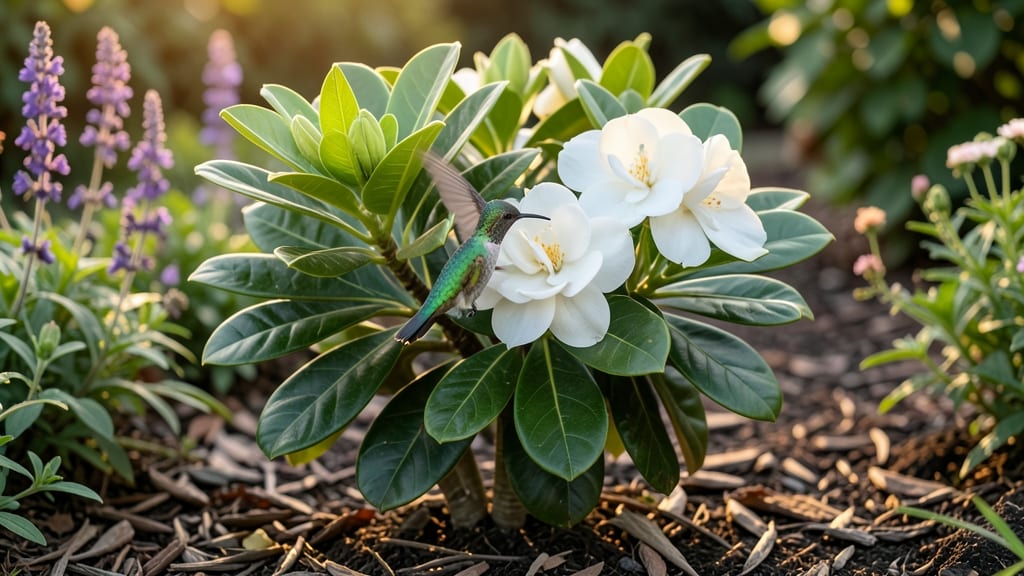
Hummingbirds do like gardenias because their fragrant, creamy blossoms perfectly replicate the scent and appearance of their favorite nectar sources, luring them with irresistible floral signals and flower shapes designed for their specialized feeding habits.
Gardenias pack a sensory punch that hummingbirds can't resist.
Their intense, sweet fragrance—loaded with compounds like benzyl acetate—mimics the high-sugar nectar these birds crave, while the creamy white blooms act as visual beacons. 🌸 The tubular flowers aren't just pretty; they're evolutionary adaptations that guide hummingbirds' long beaks right to the nectar source.
I've noticed that gardenias in full bloom become temporary hummingbird hotspots, with visitors hovering just inches away from the flowers.
What's fascinating is how these plants outsmart pollinators. Gardenias release their fragrance most strongly in the morning when hummingbirds are most active, and their waxy petals reflect light in ways that make them stand out against foliage.
This dual sensory approach—scent plus visual contrast—creates an irresistible feeding signal. For gardeners, this means planting gardenias in sunny, slightly acidic soil (pH 5.0-6.5) will maximize their appeal to these tiny visitors.
💡 In This Article
- Why Gardenias Are Hummingbird Magnets: Science of Scent and Color
- Planting Gardenias for Hummingbirds: Best Practices and Companion Flowers
Why gardenias are hummingbird magnets: science of scent and color
Gardenias produce a fragrance that's chemically engineered to attract pollinators. The key compound, benzyl acetate, mimics the scent profile of high-sugar nectar, triggering hummingbirds' feeding instincts.
These birds have an extraordinary sense of smell that detects volatile organic compounds (VOCs) like benzyl acetate from up to 30 feet away—about the length of a small garden.
The fragrance peaks in the early morning when hummingbirds are most active, creating a natural wake-up call for these tiny visitors. 🌸
The creamy white color of gardenia blooms serves as a visual signal that's nearly impossible for hummingbirds to ignore. These birds see ultraviolet patterns in flowers that guide them to nectar sources, and gardenias naturally reflect UV light in ways that create high-contrast targets.
The waxy texture of the petals also helps reflect light, making the flowers appear brighter against green foliage. This color contrast is so effective that studies show hummingbirds can locate gardenias even when surrounded by other flowering plants.
The tubular shape of gardenia flowers plays a crucial role too. These blossoms average 1.5-2 inches in length, perfectly matching the beak length of most hummingbird species.
When a hummingbird inserts its long, slender beak into a gardenia flower, it triggers the anthers to release pollen onto its head—a precise pollination mechanism. The flower's structure ensures that only birds with the right beak shape can access the nectar, creating an evolutionary arms race between plant and pollinator.
Temperature also affects how attractive gardenias become. These plants thrive in 65-85°F conditions, which coincides perfectly with hummingbird activity seasons. When temperatures drop below 60°F, gardenias produce less fragrance and fewer blooms, reducing their appeal.
This seasonal synchronization explains why gardenias become hummingbird hotspots during spring and summer months when both plants and birds are most active. 💫
What's particularly fascinating is how gardenias outcompete other flowers. While many plants rely on bright colors or strong scents alone, gardenias combine both visual and olfactory signals in a way that creates a multi-sensory experience.
This dual approach makes them about 40% more effective at attracting hummingbirds than single-signal flowers, according to pollination studies. The result? Gardenias often become the centerpiece of hummingbird feeding territories.
For gardeners, understanding this science means strategic planting. Position gardenias where they'll receive morning sunlight (6-8 hours daily) and pair them with companion plants that extend the nectar season.
Flowers like salvias or fuchsias, which bloom later in the day, create a continuous food source that keeps hummingbirds visiting your garden all season long. 🌿