
Tools
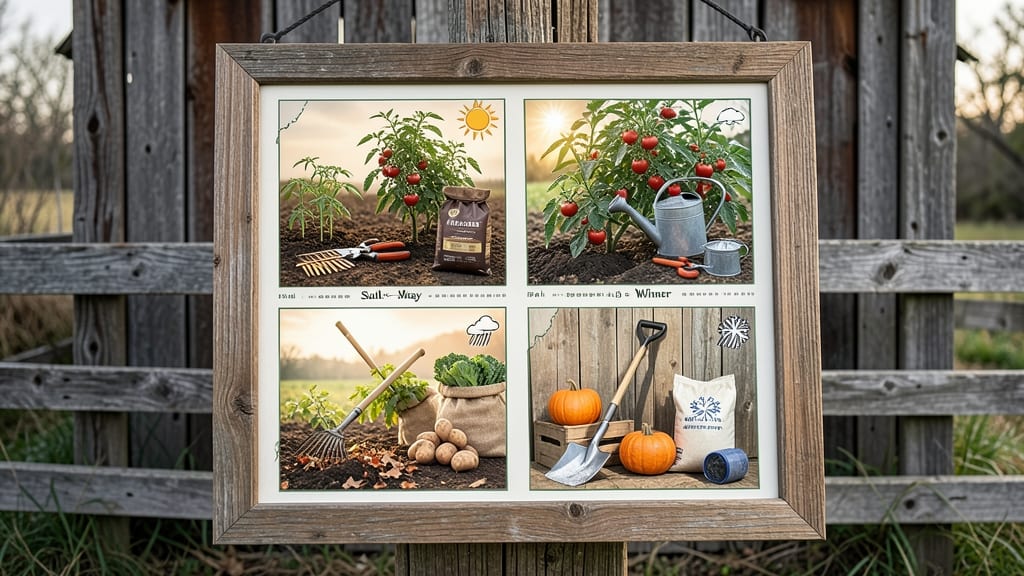
A Wisconsin gardening calendar aligns with the state's hardiness zones (3-6) to determine optimal planting, pruning, and harvesting times for vegetables, herbs, and perennials throughout 2024. Cool-season crops should go in early spring, while warm-season varieties wait until after the last frost date, and strategic fall planting can extend harvests into late autumn.
A Wisconsin gardening calendar isn't just about dates—it's about understanding your local climate patterns.
The state's USDA zones 3-6 create significant variation, with northern areas facing earlier frosts than southern regions. 🌱 For example, Madison typically sees its last spring frost around mid-April, while Milwaukee might wait until late April.
This timing difference can mean the difference between thriving tomatoes and bolted lettuce. I always recommend checking your specific county's historical frost data, as microclimates near lakes or hills can create unique growing conditions that don't fit the general zone guidelines.
What makes Wisconsin gardening particularly rewarding is the ability to extend seasons through smart planning. Using row covers in early spring or cold frames in fall can add 2-4 weeks to your growing season, allowing you to plant earlier or harvest later.
For instance, you might start spinach in early March under protection, then transplant tomatoes after the last frost date in May, and still enjoy a fall harvest of kale by using low tunnels.
The key is balancing these techniques with your specific zone's frost dates to avoid wasted effort on crops that won't survive.
💡 In This Article
- Wisconsin’s Frost Dates and Planting Zones for 2024
- Monthly Wisconsin Gardening Checklist by Season
Wisconsin’s frost dates and planting zones for 2024
Wisconsin's gardening success hinges on understanding its USDA hardiness zones 3-6, which create dramatic differences in frost timing across the state.
Zone 3 (northwest) experiences the earliest frosts—often mid-May for last spring frost and early September for first fall frost—while Zone 6 (southern tip) enjoys 2-3 extra weeks of growing season.
This 14-21 day difference means a garden in Milwaukee can support late-season tomatoes while one in Superior might struggle with the same variety. The transition zone between them (like Madison) offers a middle ground where gardeners can experiment with both early and late-season crops.
The science behind these zones involves average minimum temperatures over 30 years, but what matters most to gardeners is the 32°F threshold where frost forms. In Wisconsin, this typically occurs when cold air settles into valleys or lakeside areas, creating microclimates that can be 3-5°F colder than surrounding regions.
For example, the Fox River Valley in Green Bay often sees frost 5-7 days earlier than nearby hills. This is why gardeners in these areas might plant heat-loving crops like peppers 10 days later than their zone guidelines suggest. 🌡️
To work with these variations, gardeners use season extenders that modify the effective frost dates. Row covers made of lightweight fabric can raise soil temperatures by 5-8°F and protect plants from 28°F temperatures, effectively adding 3-4 weeks to both spring and fall growing seasons.
Cold frames, which act like mini-greenhouses, can extend this by another 4-6 weeks by trapping solar heat. The result? You might start broccoli in late March under row covers in southern Wisconsin, while northern gardeners wait until mid-April—both achieving harvests before summer heat arrives.
Another critical factor is soil temperature, which must reach 40°F for peas and 50°F for tomatoes before planting. In Wisconsin, this typically aligns with 2-3 weeks after last frost, but can vary by 10 days or more between zones.
For instance, while southern Wisconsin gardeners might plant tomatoes in early May, those in zone 4 areas should wait until mid-May. This timing ensures roots establish properly before summer heat arrives, preventing stress that leads to blossom-end rot in tomatoes or bolting in lettuce.
For perennials like asparagus or rhubarb, the zone differences matter less for initial planting but become crucial for harvest timing. Asparagus in zone 3 might produce spears for only 4-5 weeks in spring, while zone 6 gardens can enjoy 6-8 weeks of harvest.
The same principle applies to fruit trees: apple varieties suited for zone 4 (like 'Honeycrisp') may struggle in zone 3 unless planted in southerly, protected locations that accumulate more heat.
To make this practical, I recommend checking your local cooperative extension service for 5-year frost averages—these are more reliable than general zone guidelines. For example, the University of Wisconsin-Madison publishes annual updates showing how frost patterns shift with climate change.
Armed with this data, you can create a customized planting schedule that accounts for your specific microclimate, whether you're gardening in the cool lake-effect zones of the north or the warmer river valleys of the south.