
Tools
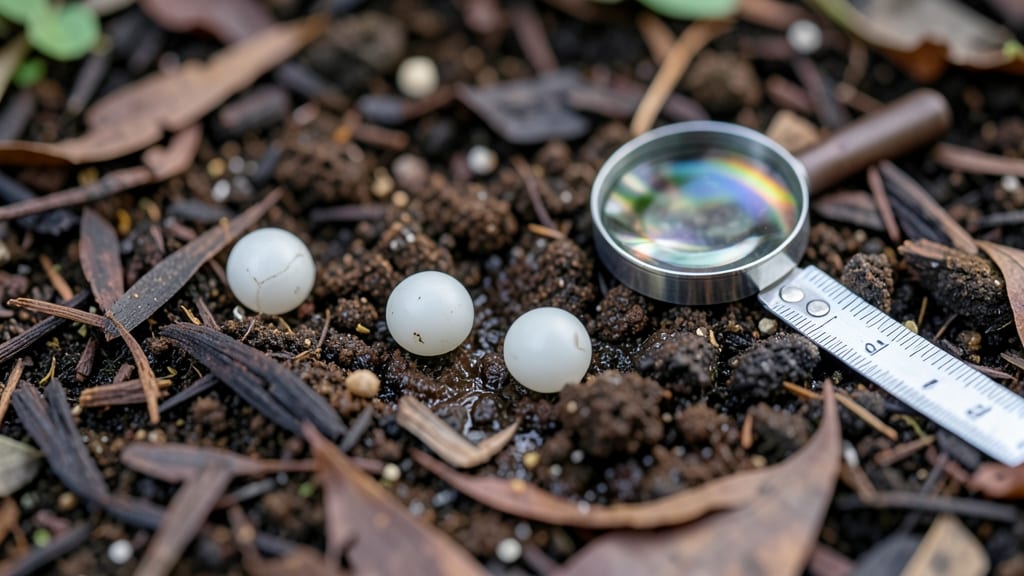
Finding white balls in garden soil usually means you're dealing with harmless gypsum deposits, calcium carbonate buildup, or insect casings from fungus gnats, though these can signal underlying soil issues if present in large quantities.
These white specks often form when soil minerals like calcium or sulfur crystallize after water evaporation, especially in alkaline soils. 🔥 The good news? Most are harmless—gypsum, for example, actually improves soil structure—but their presence might hint at overwatering or poor drainage.
Fungus gnat casings, on the other hand, suggest a pest problem needing organic intervention, like beneficial nematodes or reduced moisture. Always check soil pH first to distinguish between mineral deposits and biological activity.
For a quick test, crush a ball between your fingers: gypsum feels gritty, while lime deposits dissolve in vinegar. If you're unsure, a simple soil pH kit can reveal whether your garden needs acidifying or alkalizing amendments. Remember, small quantities are normal, but persistent white buildup warrants closer inspection.
💡 In This Article
- Identifying Common Causes of White Balls in Soil
- When and How to Address White Soil Balls in Gardens
Identifying common causes of white balls in soil
When you spot white balls in garden soil, the first step is examining their texture and composition. Gypsum crystals—made of calcium sulfate—typically form in sandy or alkaline soils after water evaporates, leaving behind hard, gritty deposits that resemble small pebbles.
These crystals are usually 1-5 millimeters in diameter and dissolve slowly in water, unlike lime deposits which fizz when exposed to vinegar. Gypsum itself is harmless and can even improve soil structure by helping clay particles bind together, making it beneficial in moderate amounts.
The appearance of white balls can also reveal whether they're mineral-based or biological. Fungus gnat casings, for instance, appear as tiny, soft, white cocoons (about 1-2 millimeters) often found near the soil surface or in moist potting mixes.
These casings are the pupal stage of fungus gnats, a common garden pest that thrives in overwatered soils with poor drainage. Unlike gypsum, these casings feel slightly rubbery when crushed and may leave behind a fine, powdery residue as they decompose.
Lime deposits, another common culprit, form when calcium carbonate precipitates in alkaline soils with a pH above 7.5. These deposits often appear as chalky, powdery clusters that crumble easily between fingers. The key difference?
Lime dissolves almost instantly when dropped into vinegar, producing visible bubbles from the acetic acid reaction. This chemical test is a quick way to distinguish lime from gypsum, which requires stronger acids like hydrochloric to dissolve. 🔥
Location in the soil can also provide clues. Mineral deposits like gypsum or lime tend to accumulate in drier, upper soil layers where evaporation concentrates minerals, while biological casings often appear near moisture-prone areas like under mulch or in container gardens.
If you're seeing white balls consistently in the same spot, it's worth checking for water pooling or poor drainage, as these conditions encourage both mineral buildup and pest activity.
Soil chemistry plays a huge role in what you'll find. In acidic soils (pH below 6.5), white balls are less likely to form because minerals stay dissolved. However, in alkaline soils (pH above 7.5), calcium and magnesium compounds precipitate out as white deposits.
This is why testing your soil's pH is the first step—it tells you whether you're dealing with a harmless mineral buildup or a sign of imbalance that might need adjustment with organic amendments like sulfur or peat moss.
One often-overlooked cause is salt deposits, which form when irrigation water contains high levels of dissolved minerals. These appear as crusty, white encrustations on soil surfaces, particularly in container gardens or areas with poor leaching. Unlike gypsum or lime, salt deposits can actually harm plant roots by increasing soil salinity.
The fix? Flush the soil with 3-4 times more water than the container holds to leach out excess salts, then use filtered or rainwater for future watering.