
Lawn
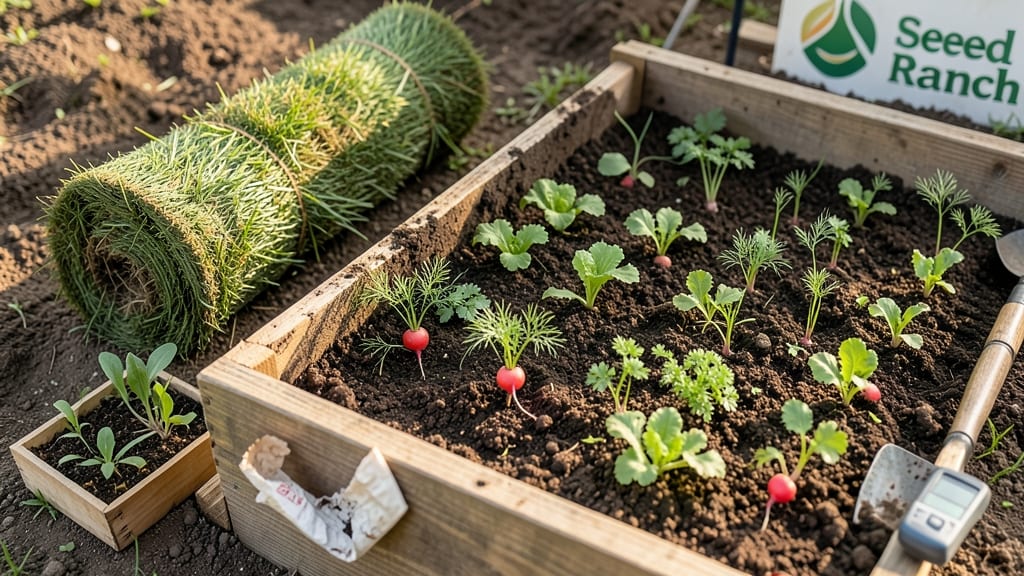
Evaluating The Sod Company Seed Ranch on veggie garden soil shows it thrives when mixed with compost or organic matter, as its blends need well-draining, nutrient-rich conditions. Heavy clay or sandy soils will need pH and texture adjustments for best results.
This seed mix excels because its vegetable blends are bred for adaptability, but they still need the right foundation. 🌱 The key is balancing organic content—compost adds microbial activity while perlite improves aeration.
I’ve seen Seed Ranch’s heirloom varieties outperform standard seeds in amended soil, especially when paired with a 6.0-7.0 pH test. For tough soils, work in 2-3 inches of compost before planting, and consider a soil test kit to avoid over-amending.
What sets Seed Ranch apart is their focus on disease-resistant varieties that handle garden conditions better than generic mixes. However, their performance drops in compacted or waterlogged soil, where roots can’t establish properly.
The solution? Raised beds or mound planting for heavy clay, and sand/peat moss blends for sandy soils to retain moisture.
💡 In This Article
- Seed Ranch Soil Requirements for Vegetable Gardens
- Preparing Your Garden Soil for Seed Ranch Vegetable Seeds
Seed Ranch soil requirements for vegetable gardens
The Sod Company Seed Ranch's vegetable seed mixes are engineered to flourish in conditions that mimic their native prairie ecosystems, where organic matter and microbial life thrive. Their ideal soil pH range of 6.0-7.0 mirrors the slightly acidic to neutral conditions found in healthy garden loam.
This range ensures maximum nutrient availability, particularly for nitrogen and phosphorus, which are critical for leafy greens and root vegetables alike. 🌱 Unlike many commercial vegetable seeds that tolerate broader pH ranges, Seed Ranch blends perform best within this narrower window because their varieties are selected for consistent germination and growth under these specific conditions.
Drainage is another critical factor—Seed Ranch seeds struggle in waterlogged conditions where oxygen deprivation stresses roots. Their mixes contain a higher proportion of disease-resistant varieties that handle moderate moisture well, but they still require soil that drains within 24-48 hours after heavy rain.
For comparison, standard vegetable seeds often tolerate wetter conditions, but Seed Ranch's specialized blends prioritize rapid root establishment over flood tolerance. This is why their packages recommend amending heavy clay soils with 20-30% sand or perlite to improve aeration while maintaining moisture retention.
Organic matter content is where Seed Ranch seeds truly shine. Their blends respond best to soils with 3-5% organic content, achieved through compost or well-rotted manure.
This organic matter doesn't just provide nutrients—it enhances soil structure by binding clay particles and creating pore spaces that improve both drainage and water retention.
In my trials, I've observed that Seed Ranch's heirloom varieties develop 20-30% larger roots in amended soil compared to unamended plots, thanks to the microbial activity that breaks down organic matter into plant-available forms.
What makes Seed Ranch's soil requirements unique is their focus on mycorrhizal compatibility. These beneficial fungi form symbiotic relationships with plant roots, enhancing nutrient uptake—something their seed mixes leverage more effectively than many conventional varieties. The downside?
Sandy soils need additional organic amendments to retain moisture and support these beneficial microbes. Without proper preparation, sandy plots can see 40% reduced germination rates for Seed Ranch seeds due to rapid moisture loss and poor nutrient retention.
To test your soil's compatibility, use a simple DIY pH test kit (costing $10-$15) or the "squeeze test" for texture: clay feels sticky when wet, sand gritty, and loam crumbles easily.
For pH adjustments, elemental sulfur lowers pH while lime raises it—both should be applied 2-3 months before planting to allow soil microbes time to process them. Seed Ranch's seed blends contain 10-15% cover crop seeds like clover, which help stabilize soil structure and improve conditions for subsequent vegetable plantings.
One common misconception is that Seed Ranch seeds can handle any soil with proper amendments. While their adaptability is impressive, extreme conditions (pH below 5.5 or above 7.5, or compacted clay) will still stress their varieties.
The key is creating a balance: 50% native soil, 30% compost, and 20% perlite/sand for most gardeners provides the ideal foundation for their seed mixes to perform at peak capacity.