
Pests
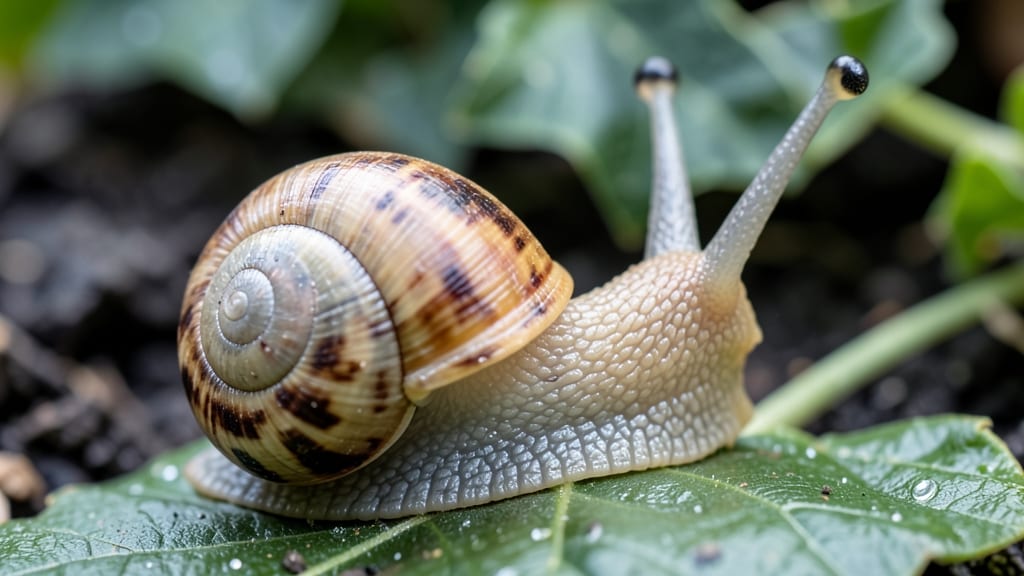
Understanding garden snail anatomy reveals how their spiral shell, muscular foot, sensory tentacles, and retractable head work together to help them thrive in gardens while avoiding threats. Each feature plays a critical role in their survival and behavior.
Garden snails have evolved some fascinating adaptations that make them both resilient and challenging to manage in your yard. 🌿 Their coiled shell isn't just for show—it's a fortress that protects their soft body from predators and harsh weather, while the thick mucus from their foot creates a slippery barrier against threats.
The two pairs of tentacles (the longer ones for touch and shorter ones for detecting smells) help them navigate and find food, even in the dark. What's especially interesting is their retractable head, which pulls back into the shell when danger approaches, creating an almost impenetrable defense system.
This specialized anatomy explains why garden snails prefer damp, shaded areas—they need moisture to keep their skin and respiratory pore functioning properly. Their foot's unique texture allows them to climb smooth surfaces with ease, which is why they're often found on leaves and stems.
Understanding these features helps gardeners implement more effective control methods, like creating physical barriers or using natural predators that target these specific vulnerabilities.
💡 In This Article
- How Garden Snail Body Parts Work Together for Survival
- Identifying Key Snail Anatomy Features in the Garden
How garden snail body parts work together for survival
The garden snail's spiral shell is more than just a home—it's a multi-layered defense system. Made primarily of calcium carbonate, this coiled structure grows with the snail, adding new chambers as it matures.
The shell's thickness varies by species, but garden snails typically have shells reaching 1.5 to 2.5 inches in diameter. The spiral design creates a compact shape that's harder for predators to crack open, while the tight coiling maximizes protection with minimal material.
When threatened, the snail retracts completely, sealing itself inside with a mucus barrier that hardens slightly, making it nearly impossible for birds or beetles to pry them out.
The muscular foot is the snail's primary mode of locomotion, covering about 70-80% of its body weight when extended.
This large, flat sole secretes a continuous stream of mucus—up to 0.5 milliliters per minute—that serves three critical functions: lubrication for movement, a chemical barrier against pathogens, and a scent trail that can be followed by other snails.
The foot's texture isn't smooth; it has tiny ridges that create suction points, allowing the snail to climb vertical surfaces like leaves or fences with ease. This adaptation explains why they're often found on plants at night, when moisture levels are highest and predators are less active.
The dual tentacle system provides the snail with heightened sensory awareness. The longer pair (up to 1 inch long) contains 1,000+ touch-sensitive cells that detect vibrations and textures, while the shorter pair holds the eyes at their tips—a rare example of eyes located outside the head.
This positioning gives the snail a 360-degree field of vision while keeping the eyes protected when retracted. The chemical sensors on these tentacles can detect food sources from up to 3 feet away, explaining why snails often converge on ripe fruits or fresh garden plants.
When damaged, these tentacles can regenerate within 2-3 weeks, though they remain sensitive during regrowth.
Breathing through a respiratory pore on the right side of its body reveals another fascinating adaptation. Unlike fish, garden snails use a modified lung called a pneumostome that can absorb oxygen directly from the air.
This pore must stay moist to function properly, which is why snails seek damp environments—their skin can only absorb 10-15% of their oxygen needs through cuticle pores, forcing them to rely on the pneumostome for the rest.
During dry periods, they'll often bury themselves in soil or hide under leaves to prevent dehydration, demonstrating how their anatomy directly influences their behavior patterns.
What makes this anatomy particularly effective is how these features work in concert. The shell protects the entire body, while the tentacles provide early warning of threats. When danger approaches, the snail's first response is to retract its head and tentacles—this takes less than 0.5 seconds—before sealing itself inside.
The foot's mucus trail not only helps with movement but can also contain pheromones that signal safe routes to other snails. This interconnected system explains why garden snails are so successful in their environment: every part of their anatomy serves multiple survival functions simultaneously.
Understanding these mechanics helps explain why traditional control methods often fail. For example, beer traps work because snails are attracted by the scent (detected by their shorter tentacles) but can't retract quickly enough when they fall in.
Similarly, copper barriers exploit the snail's sensitivity to electrical currents—when their foot touches the metal, it creates a mild shock that makes them recoil. These control methods target specific anatomical vulnerabilities, proving that knowing how each body part functions can lead to more effective garden management strategies.