Planting
Planting a vegetable garden in New York at the right time means the difference between a bountiful harvest and a season of disappointment—especially with the region’s shifting frost dates and microclimates.
New York’s unpredictable climate can make planting a vegetable garden feel like a high-stakes guessing game—but timing your crops right means the difference between a thriving harvest and a sad, wilted disappointment.
In this guide, I’ll break down the best months to plant for both cold-hardy and warm-season crops, accounting for NYC’s last frost dates (around April 15) and upstate’s later average (mid-May).
You’ll learn how to stretch your growing season with row covers, when to start seeds indoors, and which crops thrive in New York’s short but productive summers—so you can avoid the common mistakes that leave gardens empty-handed.
New York planting calendar: best months for cold-hardy vegetables by Zone
New York’s cold-hardy vegetables thrive when planted at the right time, but the last frost date varies dramatically between NYC’s Zone 7a and Upstate’s Zone 5b. For NYC, aim for mid-April plantings, while Upstate gardeners should wait until late April to early May.
These cool-season crops like kale and peas tolerate frost, but timing ensures they mature before summer heat sets in.
Microclimates add another layer—urban areas like Brooklyn may warm up faster than rural Hudson Valley. Always check your local frost dates (NY State agriculture extensions provide updated forecasts). For this guide, we’ll use Zone 5-7 averages, with adjustments for NYC’s earlier start.
Cold-hardy vegetables like kale, peas, and spinach are your best bets for early spring. These crops handle light frosts (down to 20°F) and even perform better when grown in cooler weather. Plant them 4-6 weeks before your last frost for a head start.
Broccoli and cabbage also fit this category but prefer slightly warmer soil. Start these 2-3 weeks before last frost to avoid stunted growth from cold, wet soil. Succession planting every 2 weeks ensures a continuous harvest through summer.
| Crop | Zone 5 (Upstate) | Zone 6 (Midstate) | Zone 7 (NYC) | Notes |
|---|---|---|---|---|
| Peas | Late April | Mid-April | Early April | Direct sow; tolerates frost |
| Spinach | Mid-April | Late March | Early March | Bolt-resistant varieties for summer |
| Kale | Early April | Late March | Early March | Sweeter after frost; harvest young leaves |
| Broccoli | Late April | Early April | Mid-March | Start indoors for head formation |
| Lettuce | Mid-April | Late March | Early March | Succession plant every 2 weeks |
For Zone 5 gardeners, focus on late April plantings to avoid early frosts. Use row covers to extend the season if you plant earlier.
In Zone 7 (NYC), you can start as early as early March for hardy greens like spinach and kale, but protect seedlings with floating row covers if nights dip below 30°F.
Adjust your schedule if you experience an unusually early frost. Monitor local weather forecasts and use microclimate data (e.g., urban areas warm faster). For example, Brooklyn may be safe for early plantings while Westchester still sees frost risks.
Don’t forget fall planting! Many cold-hardy crops thrive in cool autumn weather. Start broccoli and kale in early August for a fall harvest before the first frost. Use black plastic mulch to warm soil and extend the season by 2-3 weeks.
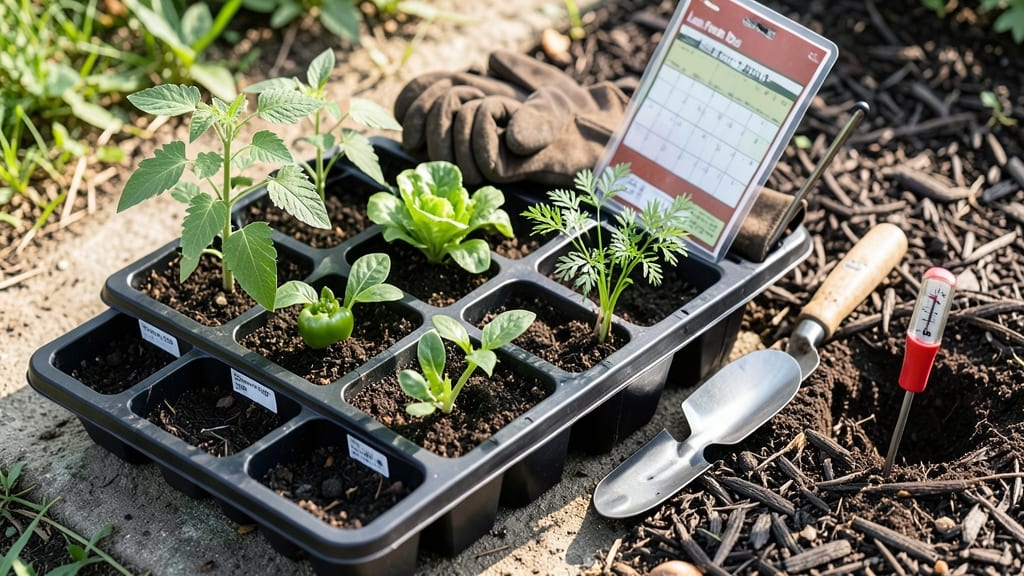
Soil temperature matters just as much as air temperature. Use a soil thermometer—most cool-season crops need soil at 40-50°F to germinate. If your soil is too cold, wait 1-2 weeks or use seedling trays indoors to jumpstart growth.
Pro tip: Plant radishes as a frost indicator. They germinate quickly and tolerate cold, so if they thrive, your spinach and peas will too. If radishes bolt (go to seed) early, your soil is warming too fast—time to switch to warm-season crops
Warm-season vegetables in New York: when to start seeds indoors vs direct-sow outdoors
New York’s warm-season vegetables like tomatoes, peppers, and cucumbers thrive with precise timing—start too early, and they’ll bolt; wait too long, and frost will nip them.
The key is balancing indoor seed-starting with outdoor soil temperatures, which vary dramatically across NYC’s Zone 7a and Upstate’s Zone 5b. I’ll break down the exact weeks to start seeds indoors, when to transplant, and how to avoid common pitfalls like leggy seedlings or stunted growth.
For tomatoes and peppers, which need a long, warm season, I always start seeds indoors 6-8 weeks before the last frost date.
In NYC, that’s around March 15–April 1, while Upstate gardeners should aim for April 1–April 15. Cucumbers and beans, on the other hand, are more forgiving—they can handle cooler soils and often do better when direct-sown outdoors after the last frost, usually May 15 in NYC and May 30 Upstate.
- 🌱 March 15–April 1 (NYC) or April 1–15 (Upstate): Start tomatoes and peppers indoors under grow lights (6–8 hours/day).
- 🌱 April 15–May 1: Harden off seedlings (acclimate to outdoor temps) for 2 weeks before transplanting.
- 🌱 May 15 (NYC) or May 30 (Upstate): Transplant tomatoes and peppers only after soil reaches 60°F+.
- 🌱 May 15–June 1: Direct-sow cucumbers, beans, and squash when soil is 55°F+ and all frost risk has passed.
- 🌱 June 15–July 1: Sow successive plantings of beans and cucumbers every 2 weeks for continuous harvests.
One of my biggest mistakes early on was transplanting tomato seedlings too soon because the air felt warm. But soil temperature is the real indicator—tomatoes and peppers need consistent 60°F+ soil to thrive. I now use a soil thermometer ($10 at garden centers) to confirm readiness.
For cucumbers and beans, I’ve found they tolerate slightly cooler soils (55°F+) and often recover better from transplant shock if direct-sown.
If you’re short on indoor space, peppers are the most patient—you can start them 8–10 weeks before last frost without fear of overcrowding. Tomatoes, however, bolt quickly if crowded, so I prioritize them in seed-starting rotations.
For cucumbers, I skip indoor starts entirely unless I’m growing heirloom varieties that need a head start. Bush beans are my go-to for direct sowing—they germinate in just 5–10 days once soil warms up!
Pro tip: Use black plastic mulch to warm soil faster for direct-sown crops like cucumbers. I lay it down 2–3 weeks before planting to create a microclimate that speeds up germination. For tomatoes, I add a cage or stake at transplant time to avoid disturbing roots later.
And always water deeply at transplant to reduce shock—dry soil + root disturbance = recipe for failure.
For Upstate gardeners, don’t rush! The last frost date shifts 2–3 weeks later than NYC, so adjust your timeline accordingly. If you’re in Zone 5b, hold off on transplanting until June 1 to be safe.
And if a late frost sneaks in? Row covers are your best friend—they can protect young plants down to 28°F.
Timing warm-season crops in New York is equal parts science and art. Master these soil temperature thresholds and seed-starting windows, and you’ll be feasting on homegrown tomatoes by July and peppers by August—no matter where you garden in the state. 🌿