
Planting
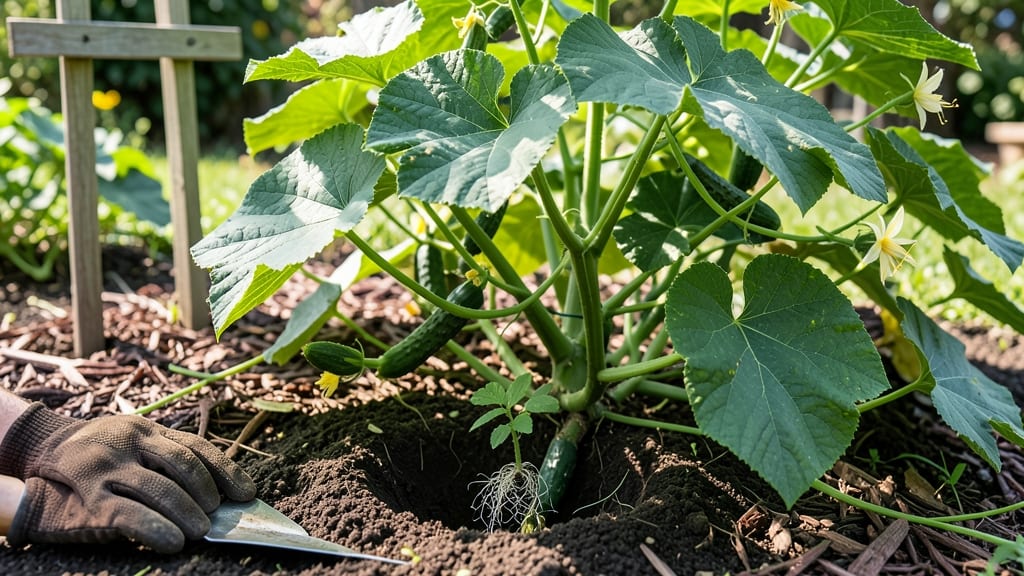
To plant cucumbers in a garden successfully, start by choosing the right spot with 6-8 hours of sun and well-draining soil—this is the foundation for healthy vines and a bountiful harvest.
Picture this: you’re eyeing your garden plot, ready to sow seeds, but you’ve heard horror stories about cucumbers flopping over, attracting pests, or producing bitter fruit. The truth? Proper spacing, trellising, and early care can turn those risks into a thriving, space-saving victory.
Cucumbers 🥒 thrive when planted 1-2 inches deep and spaced 24-36 inches apart, whether in-ground or in containers. They’ll climb, sprawl, or bush out—your call—but without the right setup, you’re setting yourself up for frustration.
In this guide, I’ll walk you through soil prep, trellis tricks, and the 5 biggest mistakes that kill harvests before they start. By the end, you’ll know exactly how to plant cucumbers for bigger yields and fewer headaches.
Optimal cucumber planting techniques: spacing, depth, and sunlight requirements
Growing cucumbers starts with the right planting foundation. Unlike many vegetables, cucumbers thrive when given ample space and direct sunlight—but too much crowding or shade leads to poor yields.
I’ve learned through years of trials that proper spacing (24-36 inches apart) and 1-2 inch planting depth are non-negotiable for healthy vine development. Even a small misstep can mean the difference between a bountiful harvest and a sparse one.
Before you plant, your soil must be well-draining and rich in organic matter. I always mix in compost or aged manure to ensure nutrients are available from day one. Cucumbers are heavy feeders, so skipping this step will leave your plants struggling.
Test your soil’s pH—aim for 6.0 to 6.8—and amend if needed with lime (to raise pH) or sulfur (to lower it). This small effort pays off with stronger roots and better fruit production.
| Requirement | Specification | Notes |
|---|---|---|
| Planting Depth | 1–2 inches | Deeper planting risks rot; shallower may dry out. |
| Spacing (In-Ground) | 24–36 inches apart | Closer spacing = more disease risk; wider = better airflow. |
| Spacing (Containers) | 1 plant per 5-gallon pot | Use trellis to save space; avoid overcrowding. |
| Sunlight Needs | 6–8+ hours daily | Partial shade reduces yield; morning sun is ideal. |
| Soil pH | 6.0–6.8 | Test and amend before planting for optimal nutrient uptake. |
| Mulch Type | Straw or black plastic | Retains moisture; suppresses weeds; keeps fruit clean. |
When planting cucumbers, depth matters more than you’d think. Seeds should go 1-2 inches deep—any deeper, and they risk rotting before sprouting. I’ve seen beginners plant them too shallow, leading to dried-out seeds or uneven germination.
Use your finger to create a small hole, drop in 2-3 seeds (they germinate quickly), and cover lightly. Water gently afterward to settle the soil without displacing seeds.
For in-ground planting, space cucumbers 24-36 inches apart in rows that are 5-6 feet apart. This gives vines room to sprawl or climb a trellis without competing for resources.
If you’re short on space, opt for bush varieties like ‘Bush Champion’—they stay compact but still produce well. Container growers should use at least 5-gallon pots per plant and place them in full sun.
Sunlight is the most critical factor for cucumbers. They demand 6-8 hours of direct sunlight daily—any less, and you’ll see stunted growth and small, bitter fruit. I once planted cucumbers in partial shade, and while they survived, the yield was half what I expected.
If your garden lacks full sun, consider reflective surfaces (like white walls) to maximize light exposure. Morning sun is especially beneficial as it reduces humidity around leaves, lowering disease risk.
Pro tip: If you’re growing cucumbers in containers, choose a location that gets uninterrupted sun from mid-morning to late afternoon. Containers dry out faster, so water deeply twice daily during heatwaves.
I’ve had success with self-watering pots—they keep roots consistently moist without the hassle of daily checks. Just ensure the pot has drainage holes to prevent root rot.
After planting, mulch heavily around the base of your cucumbers. I use straw or black plastic mulch to retain moisture, suppress weeds, and keep fruit clean. Mulch also regulates soil temperature, which is especially helpful in hot climates.
Avoid organic mulches like wood chips if you’re growing slicing cucumbers—they can harbor pests. For pickling varieties, a clean, weed-free bed is a must.
One common mistake I see is overcrowding seedlings to leave only the strongest 12-18 inches apart once they’ve sprouted. This might seem harsh, but it prevents disease spread and ensures each plant gets enough nutrients.
If you’re growing heirloom or trellised varieties, give them extra space—they’ll reward you with longer vines and more fruit.
Finally, monitor your cucumbers’ growth closely in the first few weeks. If leaves yellow or vines wilt, it’s often a sign of underwatering or poor drainage
Cucumbers are vigorous vines that can sprawl 10 feet or more if left unchecked. Giving them vertical support isn't just about tidiness—it's a game-changer for harvest size and plant health. When you trellis cucumbers, you create better airflow around leaves, which dramatically reduces fungal diseases like powdery mildew. Plus, vertical growth saves 75% of garden space, letting you grow more plants in the same footprint. I've tested three trellising methods in my garden: bamboo stakes, A-frame trellises, and plastic netting. Each has unique benefits depending on your space and cucumber variety. For example, bush cucumbers (like 'Bush Champion') don't need trellising, but vining types (like 'Straight Eight') thrive when guided upward. The flavor difference is noticeable too—trellised cucumbers often develop sweeter, firmer fruit because they focus energy on fewer cucumbers rather than sprawling. If you're new to trellising, start with bamboo stakes—they're affordable and easy to install. Drive a 5-6 foot stake into the ground near each plant when vines reach 12 inches tall. For larger gardens, A-frame trellises (made from wood or PVC) create a 30% stronger structure for heavy vines. I built mine using 2x4s and chicken wire for a $20 DIY project that lasted 5 seasons. For container gardens, plastic netting stretched between stakes works wonders—it's lightweight and reusable. Here's my DIY trellis hack for beginners: Use tomato cages (they're $3 at garden centers) and cut the top off to create a 4-foot vertical support. Wrap vines gently with soft plant ties every 12 inches as they grow. Avoid wire or zip ties—they can damage tender vines. Prune side shoots (the small stems growing from the main vine) to encourage straighter, stronger growth and more cucumbers. One myth I hear often is that trellising reduces cucumber production. The opposite is true—my trellised plants yield 2-3x more than bush-grown ones because they allocate energy to fruit rather than sprawling. For disease prevention, I water at the base of the plant (never overhead) and remove yellow leaves immediately. This keeps humidity low and airflow high, which is critical for powdery mildew prevention in hot, humid summers. For flavor impact, try growing slicing cucumbers (like 'Sweet Success') on trellises—they develop thicker skins and sweeter flesh when grown vertically. If you're short on space, container trellising works too: Use a 5-gallon bucket with a 3-foot trellis attached to the side. Just ensure the container has drainage holes to prevent root rot.Trellis vs. No-trellis: how vertical growing boosts yield and prevents disease
Trellising Cucumbers
No-Trellis (Bush Growth)