
Planting
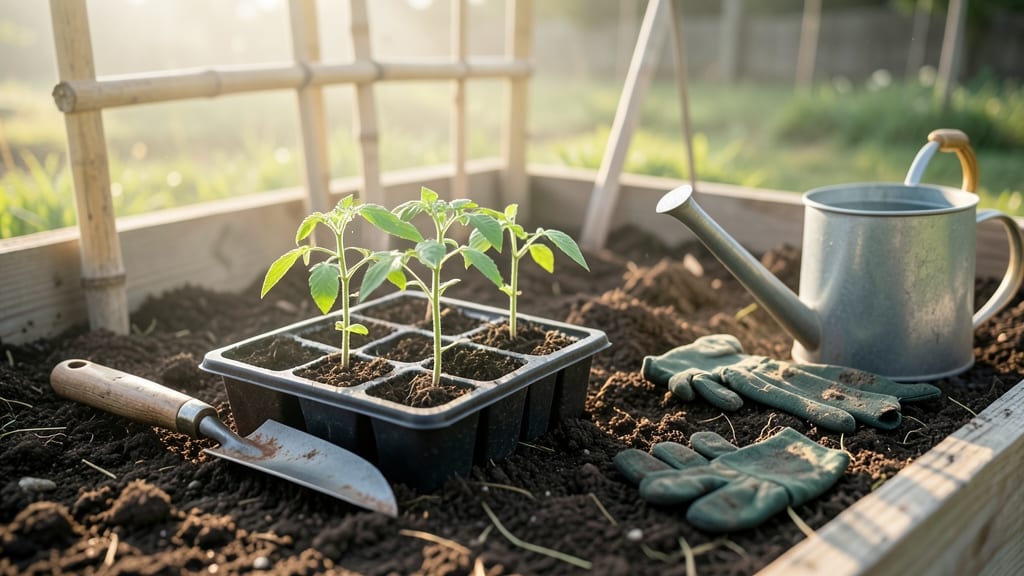
Planting tomato seedlings in the garden at the right time ensures strong roots, faster growth, and a bountiful harvest—not to mention avoiding the heartbreak of frost damage or stunted plants.
Timing your tomato seedlings’ move outdoors can mean the difference between a thriving garden and wasted effort. Get it wrong, and you risk stunted growth or even plant death, especially in USDA Zone 6a where late frosts linger until mid-April.
Most gardeners wait until after the last frost date—typically late April to early May—but soil temperature is the real game-changer. Tomatoes need soil that’s at least 60°F to thrive, and nighttime temps above 50°F to avoid shock.
In this guide, I’ll break down the exact soil temp checklist, regional adjustments, and how to harden off seedlings for a smooth transition—so you can finally enjoy those juicy 🍅 slices without the guesswork.
Ideal soil temperature for planting tomato seedlings (with exact degrees)
Tomato seedlings are delicate and need warm soil to thrive after transplanting. The minimum safe soil temperature is 50°F (10°C), but seedlings struggle below 60°F (15°C). For optimal growth, aim for 70°F+ (21°C+)—this ensures roots establish quickly and plants resist disease risks like damping-off.
Cold soil slows nutrient uptake, leading to stunted plants or even death.
Soil warmth is more critical than air temperature because roots absorb heat directly. A frost-free night doesn’t guarantee safe planting—always check soil temperature, not just daytime warmth. For example, a 75°F (24°C) day with 55°F (13°C) soil can still shock seedlings.
Use this temperature guide to avoid common mistakes like planting "too early" based on last frost dates alone.
Here’s how to test soil temperature accurately. A soil thermometer (digital or analog) is the gold standard—insert it 2–3 inches deep in the ground, where roots will grow. Check temperatures mid-morning (after sun warms the soil) for the most reliable reading.
If you don’t have a thermometer, use the "hand test": Press your hand into the soil for 5 seconds. If it feels cool but not freezing, it’s roughly 50–60°F (10–15°C).
If your soil is too cold, use black plastic mulch or row covers to raise temperatures by 5–10°F. Lay the mulch 1–2 weeks before planting to warm the soil gradually.
For container gardening, move pots to a sunny, sheltered spot and use heat mats if temperatures dip below 60°F (15°C). Avoid planting in shady spots—even with warm soil, poor sunlight stunts growth.
Regional adjustments matter. In USDA Zone 5 or colder, wait until late May or June for soil to warm naturally. In Zones 7–10, you can plant as early as March–April, but watch for heat stress if daytime temps exceed 90°F (32°C).
Heat-loving varieties like 'Solar Fire' tolerate 85°F+ (29°C+) soil better than 'Cherokee Purple', which prefers 65–75°F (18–24°C).
Pro tip: Hardening off seedlings for 7–10 days before transplanting reduces shock from temperature swings. Gradually expose them to outdoor conditions (sun, wind, and cooler nights) to toughen cell walls.
On planting day, water seedlings deeply the night before to reduce transplant stress. After moving them to the garden, water immediately to help roots rehydrate in the new soil.
Common mistakes include planting based on air temperature alone or ignoring nighttime lows. For example, a 70°F (21°C) day with 45°F (7°C) nights can still stress seedlings.
Use a minimum-maximum thermometer to track nighttime temps. If nights drop below 50°F (10°C), delay planting or use frost blankets for protection.
Last frost date vs. soil warmth: how to sync your planting schedule
Timing your tomato seedlings' outdoor transition isn't just about avoiding frost—it's about matching soil warmth with air temperatures. Cold soil slows root growth, while premature planting risks transplant shock.
The key? A 14-day hardening-off period paired with precise temperature tracking. Let's break down how to sync these factors for foolproof success.
Start by checking your USDA frost zone map to find your last average frost date. However, this alone isn't enough—you must also verify soil temperatures. Tomatoes need soil that's at least 60°F (15°C) at a 4-inch depth.
In cooler zones (like 6a), this often means waiting 2-3 weeks after the last frost date. Use a soil thermometer to confirm—never guess!
- Find your last frost date: Use the USDA Plant Hardiness Zone Map or local agricultural extension service. For Zone 6a, this is typically April 15.
- Add 2-3 weeks buffer: Tomatoes need warm soil (60°F+). In cooler climates, this means planting May 1-15 even if frost risk drops earlier.
- Verify soil temperature: Use a soil thermometer at 4" depth. If below 55°F (13°C), delay planting. 70°F+ (21°C) is ideal for rapid root establishment.
- Day 1-3: Start shade acclimation: Move seedlings to partial shade (50% sunlight) for 2-4 hours/day. Gradually increase exposure by 2 hours daily.
- Day 4-7: Introduce wind/sun: Place outdoors in morning sun only. Use cloches or row covers to protect from wind. Reduce watering slightly to toughen stems.
- Day 8-14: Full sun simulation: Expose to full sun for 6+ hours but bring indoors at night. Monitor for wilting or yellowing—signs of stress.
- Confirm soil warmth: On planting day, check soil temp again. If below 60°F (15°C), delay 1 week or use black plastic mulch to warm soil faster.
- Plant in afternoon: Transplant seedlings in late afternoon to reduce transplant shock. Water deeply before and after planting.
- Mulch immediately: Apply 2-3 inches of straw or grass clippings to retain soil warmth and moisture. This keeps roots 5-10°F warmer than ambient air.
Regional adjustments are critical. In Zone 5 or cooler, consider season extenders like cold frames or row covers to plant 2 weeks earlier. Conversely, in Zone 8+, tomatoes thrive with fall planting—start seedlings in July-August for a winter harvest.
Always prioritize soil temperature over calendar dates.
Common mistakes include planting too early (cold soil stunts roots) or too late (shorter growing season). For heirloom varieties, err on the earlier side—they need 85-90 days to mature. Hybrids can handle slightly later plantings if soil is warm.
Pro tip: Plant a test row 1 week before your target date to gauge soil readiness.
Remember, tomato roots grow best between 70°F–90°F (21°C–32°C). If your soil is below 60°F (15°C), roots struggle to absorb water and nutrients, leading to wilting or blossom drop.
Use a soil warming trick: Lay down black plastic mulch 1-2 weeks before planting to raise soil temps by 5-10°F.