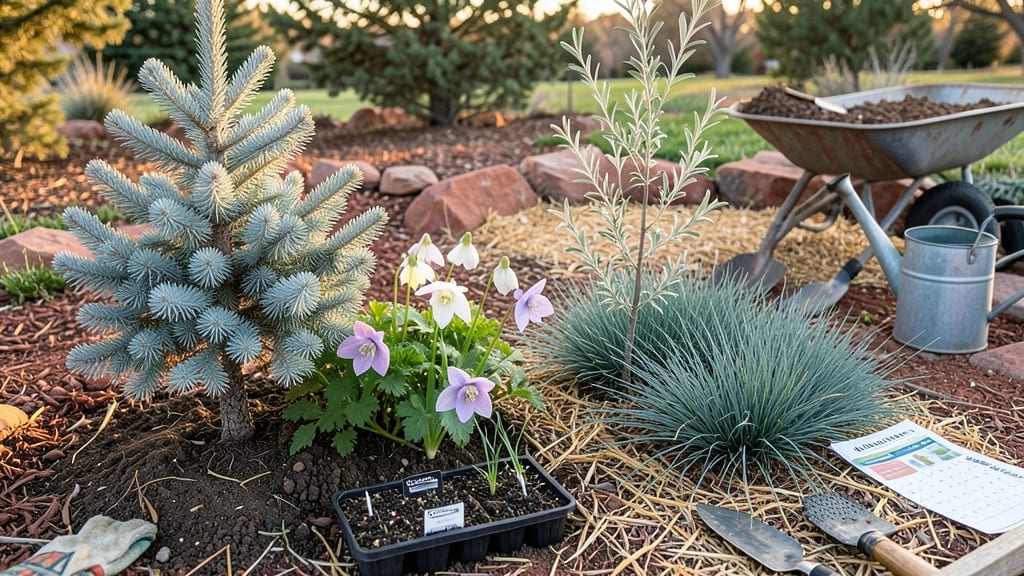
Planting a garden in Colorado means timing your seeds and seedlings to avoid the late frosts that can wipe out your hard work before it even starts.
Colorado’s diverse elevation zones create wildly different planting seasons—get the wrong timing, and your 🌱 General Garden could freeze before sprouting. But master these frost-free deadlines, and you’ll enjoy a thriving harvest from the Front Range to the Western Slope.
Whether you’re in Denver’s USDA Zone 5-8 or the high-altitude valleys near 10,000 feet, knowing when to plant is the difference between a bumper crop and a sad, withered disappointment.
Here’s how to align your planting schedule with Colorado’s short but productive growing season—plus the pro tips to stretch it even longer.
🌱
When to Plant General Garden Garden
Jan
❄️
Feb
❄️
Mar
🌱
Apr
🌱
May
🌸
Jun
☀️
Jul
🌱
Aug
🌱
Sep
🌱
Oct
🌱
Nov
🍂
Dec
❄️
Colorado’s frost-free planting zones by elevation: key deadlines
Colorado’s elevation-driven climate means your Denver garden and a Grand Junction plot can have 6-week differences in frost-free dates. Understanding these zones saves your seedlings from surprise freezes—especially critical for heat-loving tomatoes or cool-season kale.
The USDA Plant Hardiness Zone Map gives a baseline, but Colorado’s microclimates (urban heat islands vs. mountain valleys) demand local adjustments.
At 2,500–4,000 ft (Front Range cities like Denver/Aurora), average last frost dates hover around April 15–May 1. But climb to 6,000–8,000 ft (Colorado Springs, Fort Collins), and those dates push to May 15–June 1.
Above 9,000 ft (Telluride, Leadville), some years see frost into June 15—where even hardy potatoes need row covers.
Urban gardens in Denver or Boulder often warm up 1–2 weeks earlier than rural areas due to concrete heat absorption. Conversely, Western Slope valleys (Grand Junction, Durango) can plant 2–3 weeks earlier than Front Range cities at similar elevations.
Always check your local CoCoRaHS station for 3-year averages—app data beats guesswork.
Here’s your elevation-by-elevation planting timeline, including microclimate adjustments and USDA Zone cross-references:
| Elevation Range |
USDA Zone |
Avg. Last Frost |
Plant After Date |
First Frost Risk |
Microclimate Tip |
| 2,500–4,000 ft |
Zone 6-7 |
April 15–May 1 |
May 15–June 1 |
Oct 15–Nov 1 |
Urban areas: plant 7–10 days earlier; rural: delay by 5–7 days. |
| 4,000–6,000 ft |
Zone 5-6 |
May 1–May 15 |
May 30–June 10 |
Oct 1–Oct 15 |
Mountain foothills: use row covers for early peas/carrots. |
| 6,000–8,000 ft |
Zone 4-5 |
May 15–June 1 |
June 15–July 1 |
Sep 15–Oct 1 |
Colorado Springs: south-facing slopes warm up 2 weeks early. |
| 8,000–10,000 ft |
Zone 3-4 |
June 1–June 15 |
July 1–July 15 |
Sep 1–Sep 15 |
High-altitude: only plant heat-tolerant varieties (e.g., Swiss chard, kale). |
| 10,000+ ft |
Zone 2-3 |
June 15–July 1 |
July 30–Aug 15 |
Aug 15–Sep 1
Best vegetables to plant in Colorado by season: timing tips
Colorado’s short growing season demands precision when planting vegetables. Cool-season crops like kale and spinach thrive in early spring or fall, while tomatoes and peppers need warm soil. Elevation plays a huge role—plants at 5,000 ft may need 2-3 weeks earlier than those at 8,000 ft.
Let’s break down the best timing for Colorado’s top vegetables.
Start with cool-season crops like broccoli and carrots in late March to early April, even before the last frost. For warm-season favorites such as zucchini and cucumbers, wait until mid-May to early June when soil temperatures hit 60°F+.
Succession planting—sowing seeds every 2 weeks—keeps harvests coming all season long.
📅 Colorado Planting Timeline by Season
-
Late March–Early April: Start cool-season seeds indoors (e.g., lettuce, peas).
-
Mid-April–May: Transplant hardy greens (e.g., spinach, kale) outdoors after frost risk passes.
-
Mid-May–Early June: Plant warm-season crops (e.g., tomatoes, beans) when soil is 60°F+.
-
July–August: Succession plant fast-growing crops (e.g., radishes, bush beans) for fall harvests.
-
August–September: Sow cool-season crops for fall harvests (e.g., broccoli, carrots).
For high-elevation gardens (6,000+ ft), delay planting by 2-3 weeks to avoid late frosts.
Use row covers to protect young plants and extend the season. Potatoes and onions are great early crops—they tolerate cooler soils and can be planted as soon as the ground is workable in March or April.
Warm-season crops like peppers and eggplants need extra care in Colorado. Start seeds indoors in March and transplant after the last frost. If your growing season is short, opt for fast-maturing varieties (e.g., Early Girl tomatoes, Bush Blue Lake beans) to maximize harvests before frost.
Don’t forget succession planting for continuous harvests! For example, sow lettuce every 3 weeks from May through July to keep a steady supply. Radishes mature in just 30 days, making them perfect for quick turns in the garden.
Adjust your schedule based on your specific elevation and microclimate. Urban areas like Denver may have warmer microclimates than rural zones, while the Western Slope enjoys longer frost-free periods. Always check local frost dates and soil temperatures for the most accurate timing.
★★★★★5.0(15 reviews)
|