
Companion Plants
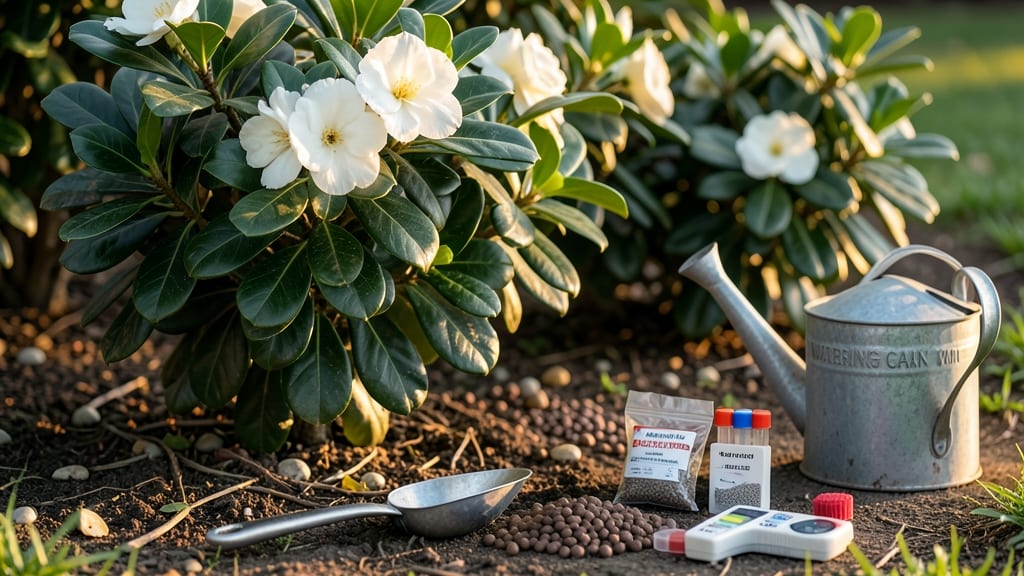
To feed gardenias properly, you'll need acidic soil (pH 5.0–6.5), a balanced fertilizer like 10-10-10 or 8-3-9, and monthly applications during spring and summer. Organic matter like compost or slow-release granules works best, while avoiding over-fertilizing in winter.
Gardenias thrive when their soil mimics their natural acidic habitat, which is why pH levels between 5.0 and 6.5 are non-negotiable. 🌿 The acidity helps unlock iron and other nutrients that fuel vibrant blooms, so testing your soil with a simple kit is a game-changer.
I've found that mixing in pine needles or peat moss can naturally adjust pH over time, while sulfur provides a faster fix for overly alkaline soil. The key is consistency—these plants are sensitive to fluctuations, so maintaining that ideal range prevents yellowing leaves and weak growth.
When it comes to fertilizers, timing matters just as much as the product.
I recommend starting applications in early spring to support bud formation, then continuing monthly until late summer when growth slows. Synthetic options like 10-10-10 deliver quick results, but organic choices such as compost tea or fish emulsion provide long-term soil health benefits. The golden rule?
Never fertilize in winter—gardenias go dormant, and excess nutrients can actually harm their roots. For best results, I dilute fertilizers to half-strength and apply them to moist soil to prevent root burn.
💡 In This Article
- Gardenia Soil and pH Requirements Explained
- Monthly Gardenia Fertilizer Schedule and Best Products
Gardenia soil and pH requirements explained
Gardenias evolved in the acidic soils of Southeast Asia, where pH levels naturally hover between 5.0 and 6.5—a range that unlocks critical nutrients like iron and manganese.
These micronutrients are essential for chlorophyll production and flower development, but they become unavailable in alkaline soils (pH 7.0+). 🌱 When soil pH rises, iron transforms into insoluble compounds that gardenia roots can't absorb, causing the telltale yellowing between leaf veins (a condition called chlorosis).
This is why testing your soil with a simple liquid pH kit (available for under $10) is the first step—it gives you precise numbers to work with, rather than guessing.
Adjusting soil acidity requires patience and the right tools. For quick fixes, elemental sulfur is the gold standard—it reacts with soil moisture to form sulfuric acid, lowering pH by about 1 point per 10 pounds applied per 100 square feet.
Organic options like pine needles (pH 4.0-5.0) or peat moss (pH 3.5-4.5) work more slowly but improve soil structure too.
I've found that mixing in 2-3 inches of pine bark fines (a byproduct of lumber mills) not only acidifies the soil but also improves drainage—critical for gardenias that hate soggy roots. The key is consistency: re-test your soil every 3-4 months until you hit that 5.0-6.5 sweet spot.
Organic matter plays an equally vital role beyond just acidity. Composted leaves or well-rotted manure (like cow or horse manure) add microbial activity that breaks down nutrients into forms gardenias can use.
Think of it like a living buffer system—these microbes help maintain stable pH levels while also improving soil aeration. 🌿 For container gardenias, I recommend mixing in 30% organic matter by volume at planting time, then top-dressing with compost annually.
This creates a sponge-like medium that holds moisture while preventing compaction, which is especially important for gardenias that prefer slightly moist (but never waterlogged) conditions.
One common mistake is assuming that more acidic amendments mean better results. Overdoing sulfur or peat moss can push pH too low (below 5.0), which stresses plants by increasing aluminum toxicity—a silent killer that causes stunted growth. The solution?
Start with small adjustments (like 1 pound of sulfur per 100 sq ft) and wait 4-6 weeks before retesting. For containers, I've found that mixing in 1 part sulfur to 10 parts soil at planting time provides a gradual acidification effect that lasts the season.
Visual cues often reveal pH problems before they become severe. Dark green leaves with yellow veins? Likely iron deficiency. Purple stems or new growth?
Could be phosphorus deficiency, often linked to overly acidic conditions. 🌿 The secret weapon here is lime (calcium carbonate) for raising pH—it's the opposite of sulfur but equally effective when used sparingly. For every 10 pounds of lime applied per 100 sq ft, you'll raise pH by about 0.5 points.
The goal is balance: gardenias need that acidic environment, but not so much that other nutrients become locked away.
For gardeners who want to go the DIY route, a simple compost tea recipe works wonders. Steep 1 cup of well-aged compost in 5 gallons of water for 24-48 hours, then strain and apply as a soil drench.
This not only feeds the plant but also introduces beneficial microbes that help maintain soil health. The best part? It's free, sustainable, and gives you that "living soil" ecosystem gardenias crave.