
Container Gardens
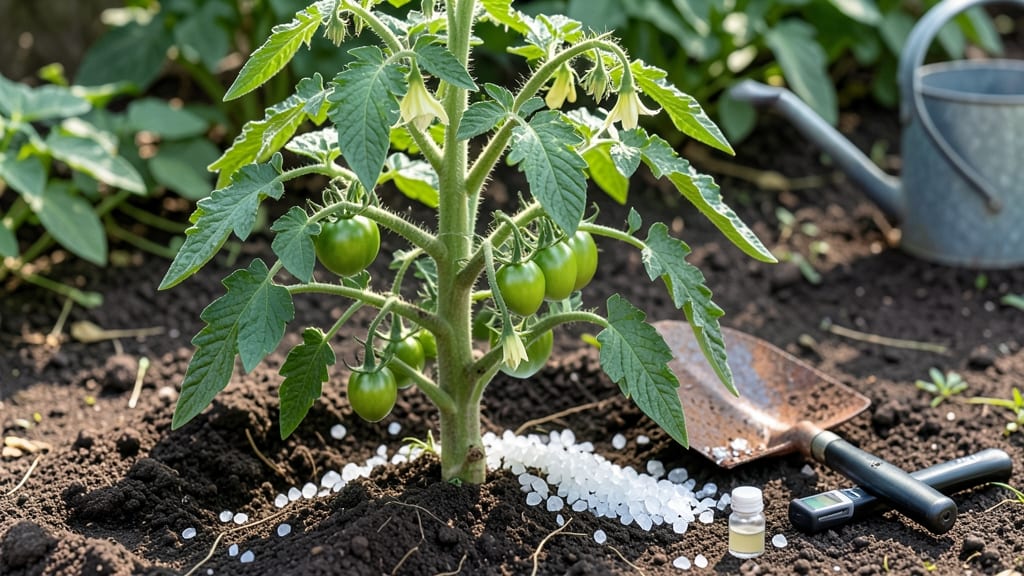
Using Epsom salt for garden soil provides a quick magnesium and sulfur boost that helps plants thrive, particularly in nutrient-poor or acidic soils. Apply 1 tablespoon per foot of plant height once a year by dissolving it in water for either a foliar spray or soil treatment.
Magnesium is essential for chlorophyll production, so when your plants start showing yellowing between leaf veins or stunted growth, they're likely magnesium-deficient. 🌱 Epsom salt delivers magnesium sulfate directly to roots or leaves, making it especially useful for heavy clay soils or acidic conditions where nutrients bind tightly.
I've seen dramatic improvements in tomato plants and peppers after just one application—especially when combined with compost for balanced nutrition.
For best results, apply Epsom salt in early spring when plants are actively growing or after a heavy harvest when they've depleted soil nutrients.
You can mix 1 tablespoon per gallon of water for a foliar spray (applied in the evening to prevent leaf burn) or work it directly into the soil around plants. Just remember: a little goes a long way—overuse can actually harm your plants by creating salt buildup in the soil.
💡 In This Article
- How Epsom Salt Fixes Magnesium Deficiencies in Plants
- Best Ways to Apply Epsom Salt in Garden Soil
How Epsom salt fixes magnesium deficiencies in plants
Epsom salt—chemically magnesium sulfate (MgSO₄)—works by delivering magnesium in a form plants can absorb quickly. Magnesium sits at the center of chlorophyll molecules, meaning it's critical for photosynthesis.
When plants lack magnesium, they can't produce enough chlorophyll, which shows up as yellowing between leaf veins (a classic deficiency symptom). 🌿 The sulfur component also plays a role in protein synthesis and enzyme activation, helping plants convert nutrients into energy more efficiently.
Soil type dramatically affects how well Epsom salt works. In heavy clay soils, magnesium binds tightly to clay particles, making it unavailable to plant roots. Epsom salt bypasses this issue by dissolving magnesium directly into the soil solution.
Sandy soils, while well-draining, often lack nutrient-holding capacity, so Epsom salt helps replenish what washes away during watering. For acidic soils (pH below 6.0), magnesium becomes even more critical because acidity increases leaching of this essential nutrient.
You'll notice deficiency symptoms first on older leaves because plants prioritize moving nutrients to new growth. Look for interveinal chlorosis (yellowing between veins while veins stay green) in plants like tomatoes, peppers, or roses.
Stunted growth or weak stems often appear next, as magnesium helps activate enzymes that drive plant metabolism. A single application of Epsom salt can revive struggling plants within 2-4 weeks, though heavy deficiencies may require multiple treatments.
What most gardeners don't realize is that Epsom salt's effectiveness depends on proper timing. Applying it when plants are actively growing (spring or early summer) ensures they can utilize the magnesium immediately. The sulfate component also helps break down organic matter in the soil, releasing additional nutrients.
For container gardens, where soil volume is limited, Epsom salt becomes even more valuable as a quick nutrient boost between regular feedings.
For visual learners, imagine magnesium as the "glue" holding chlorophyll together—without it, leaves can't capture sunlight efficiently. This is why magnesium-deficient plants often appear weak and pale, even when other nutrients like nitrogen are abundant.
The key is balance: while Epsom salt provides magnesium, it shouldn't replace a comprehensive soil amendment program that includes compost, lime (for acidic soils), and organic matter to improve long-term nutrient availability.
Pro tip: Mix 1 tablespoon of Epsom salt per gallon of water for a foliar spray on the undersides of leaves where stomata (pores) are concentrated. This method delivers magnesium directly to where it's needed most—the chlorophyll-producing cells.
Just be sure to apply in the evening to prevent leaf burn from sunlight exposure.