
Size
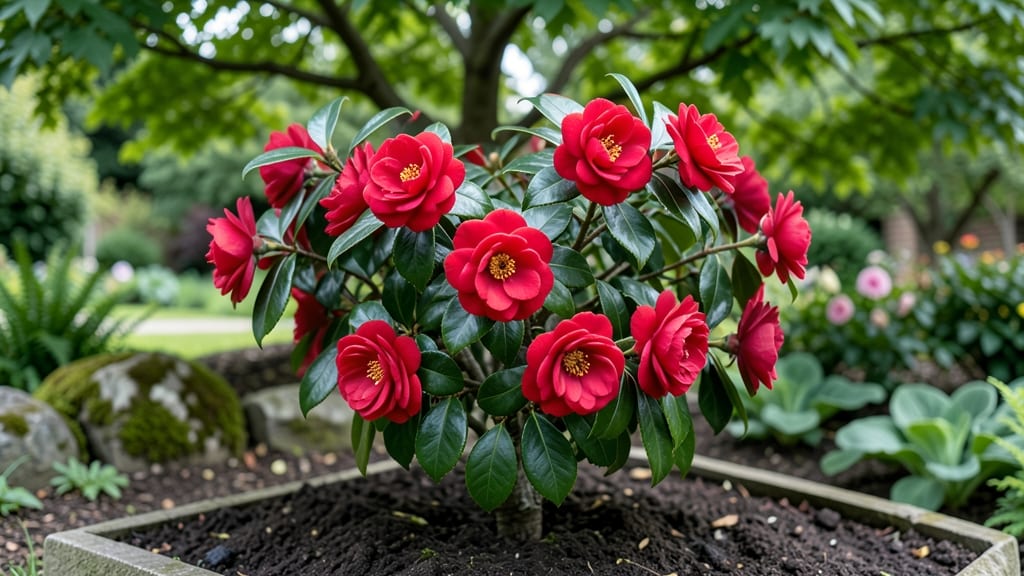
What is the rarest thing to grow in a garden? It’s the Middlemist Red camellia, a prized hybrid with deep crimson blooms that thrives only in specific microclimates. Other ultra-elusive options include the Franklinia alatamaha—a nearly extinct wildflower—and the critically endangered Paeonia jishanensis peony, both requiring expert-level care.
What makes these plants so rare isn't just their scarcity—it's their stubborn refusal to adapt outside their native conditions. 🌿 The Middlemist Red camellia, for example, demands precise humidity and temperature ranges, while Franklinia alatamaha (the "Franklin tree") has vanished from the wild and survives only in botanical gardens.
Even sourcing cuttings or seeds can take years through specialized networks. For gardeners willing to take the challenge, these plants offer not just beauty but a chance to participate in conservation efforts.
If you're curious about other hard-to-find botanical treasures, consider exploring heirloom varieties like the Black Bat Flower (Tacca chantrieri) or the Ghost Plant (Graptopetalum paraguayense), both of which require patience and ideal growing conditions.
The thrill of cultivating these rare specimens lies in the journey—from securing the plant to mastering its unique care requirements.
💡 In This Article
- Why These Rare Garden Plants Are Nearly Impossible to Grow
- How to Source and Care for Rare Garden Plants
Why these rare garden plants are nearly impossible to grow
The Middlemist Red camellia's rarity stems from its hybrid origins and exacting growing conditions. This plant thrives only in USDA Hardiness Zones 7-9, where winter temperatures hover between 10-20°F and summer humidity stays above 60%.
The challenge lies in its slow growth rate—it can take 5-7 years to produce its first blooms, and even then, only under precise light conditions (partial shade with morning sun). Unlike common camellias, it rejects standard propagation methods, requiring air-layering or grafting to preserve its unique traits.
The Franklinia alatamaha, or Franklin tree, presents an even greater puzzle. This species was declared extinct in the wild in the 1800s due to habitat destruction, leaving only cultivated specimens.
Its survival depends on acidic, well-draining soil with a pH of 5.0-6.0 and full sun exposure, but its seeds lose viability within 24 hours of collection. 🌱 The plant's slow maturation (taking 10-15 years to flower) and sensitivity to root rot make it nearly impossible to grow from seed—most gardeners rely on rare cuttings from specialized collections like the U.S. National Arboretum.
Genetic fragility explains why Paeonia jishanensis, a Chinese peony, remains critically endangered. This plant's hybrid sterility means it rarely produces viable seeds, forcing conservationists to use micropropagation techniques in sterile labs.
Its native habitat in Yunnan Province provides cool, moist summers and dry winters, conditions nearly impossible to replicate in most gardens. Even when grown successfully, its delicate root system makes transplantation risky, with survival rates dropping below 30% if not handled with extreme care.
Climate dependencies create another layer of difficulty. The Middlemist Red camellia, for instance, suffers in high-heat zones (above 90°F), where its leaves scorch, while Franklinia alatamaha struggles in areas with summer temperatures exceeding 85°F.
These plants evolved in microclimates with specific temperature fluctuations—recreating those conditions requires cloche protection, automated misting systems, or even greenhouse cultivation in marginal climates.
Conservation status adds to the complexity. Many rare plants, like Paeonia jishanensis, are protected under CITES regulations, requiring permits for transport and cultivation. Even legal acquisition doesn't guarantee success—gardeners often face root rot or fungal infections from improper soil mixes.
The Wolfiporia extensa (a rare medicinal fungus) demands sterile, wood-chip substrates and 90% humidity for months, making it accessible only to expert mycologists.
What most gardeners overlook is the psychological barrier these plants create. Patience becomes a 10-year commitment rather than a seasonal hobby. The Middlemist Red camellia, for example, may take decades to reach its full potential, while Franklinia alatamaha might never flower in a home garden.
This combination of biological fragility and time investment explains why these plants remain out of reach for most enthusiasts. 💫
The irony? Many of these plants were once common in their native ecosystems. The Franklin tree, for instance, dominated Georgia's Altamaha River valley before human activity wiped it out. Today, only 18 known specimens exist in cultivation worldwide.
For gardeners, the challenge isn't just growing something rare—it's participating in a botanical rescue mission where every successful cultivation helps preserve genetic diversity.