
Plants
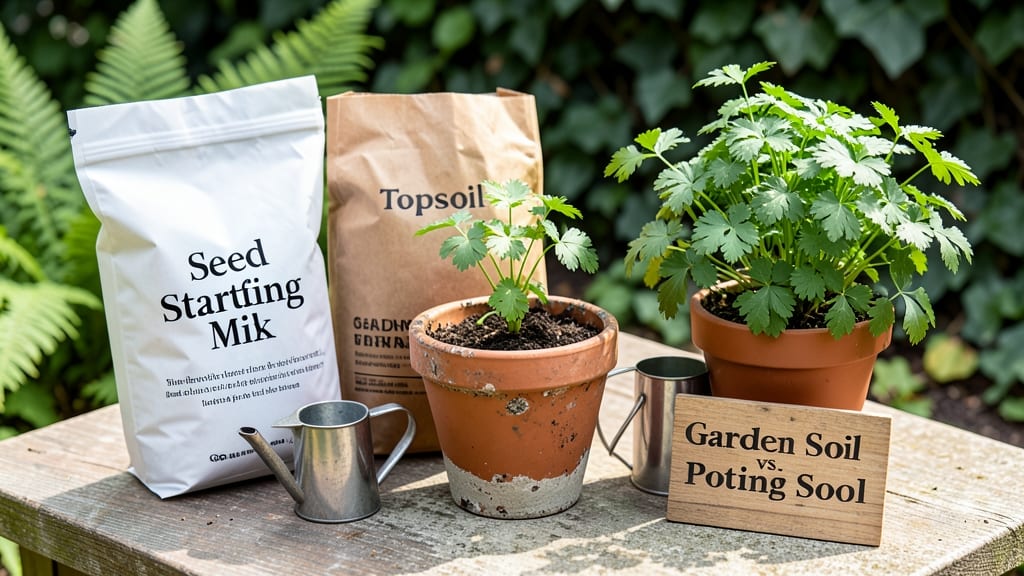
You can use garden soil for potting plants only after amending it, as it compacts easily, drains poorly, and may harbor pests or diseases. Mix it with perlite, sand, or compost (1:1 ratio) to improve aeration and drainage before planting.
Garden soil's heavy clay content makes it ideal for outdoor beds but disastrous for containers.
The dense texture suffocates roots by blocking oxygen and water flow, while its natural pathogens can rot delicate potted plants. 🌱 I've seen even hardy herbs like rosemary struggle when planted directly in unamended garden soil—within weeks, the roots turn black from lack of airflow.
The key is transforming its composition: adding perlite creates air pockets, while compost introduces beneficial microbes that garden soil often lacks.
For best results, tailor your mix to the plant's needs. Succulents thrive in blends with 50% perlite to prevent rot, while herbs like basil benefit from 30% compost for nutrient density.
Always sterilize garden soil by baking it at 200°F for 30 minutes to eliminate weed seeds and pathogens before mixing. This simple step can mean the difference between a thriving container garden and one that fades within a season.
💡 In This Article
- Why Garden Soil Fails as Potting Mix
- How to Safely Amend Garden Soil for Containers
Why garden soil fails as potting mix
Garden soil's natural structure makes it a poor choice for containers because its high clay content creates a dense, compacted matrix that suffocates roots. When wet, clay particles bind tightly, reducing pore space by up to 50%—this means oxygen can't reach roots, causing them to suffocate.
In contrast, ideal potting mixes contain 20-30% air space to allow root respiration. 🌱 The texture difference is dramatic: garden soil feels heavy and sticky when wet, while potting mix remains light and crumbly, similar to how cake batter holds air versus dense mud.
The problem extends beyond texture—garden soil often contains weed seeds, pathogens, and pests that thrive in its dense environment. For example, fungal spores like Phytophthora (which causes root rot) can persist for years in untreated garden soil.
These microbes become dormant in dry conditions but activate when moisture increases, creating a perfect storm for container plants with no escape route. The microbial ecosystem in garden soil also lacks the beneficial fungi and bacteria found in quality potting mixes, which help break down nutrients into plant-available forms.
Nutrient availability is another critical failure point. Garden soil releases nutrients slowly through complex mineral breakdown processes that work well in large outdoor beds but become unreliable in containers. Potted plants rely on immediate nutrient access since their root systems are confined.
Without proper aeration, essential elements like nitrogen and phosphorus become locked in the soil matrix, starving plants even when fertilizer is applied. This is why even nutrient-rich garden soil can lead to yellowing leaves and stunted growth in containers.
Consider the case of basil plants: in garden soil, they often develop brown edges within weeks due to poor oxygen flow, while the same plants thrive in amended mixes with 30% compost and 20% perlite.
The difference isn't just about nutrients—it's about creating an environment where roots can breathe and expand freely. The ideal potting mix mimics forest floor conditions, where organic matter decomposes rapidly and air circulates between particles.
One often-overlooked factor is the soil's water retention capacity. Garden soil holds water like a sponge, creating anaerobic (oxygen-free) zones that promote root rot. Potting mixes strike a balance with ingredients like perlite or vermiculite that release water gradually, keeping roots consistently moist without drowning them.
This is particularly crucial for tropical plants like ferns, which need 60-70% humidity around their roots but will suffocate in waterlogged garden soil.
The science of soil structure explains why even "good" garden soil fails in containers: its particles lack the porous, fibrous structure of potting mixes.
Think of it like comparing a brick wall (garden soil) to a lattice fence (potting mix)—both provide support, but one allows airflow while the other becomes a barrier. 🌿 This structural difference is why professional growers never use garden soil directly, even for hardy plants like lavender.