
Tools
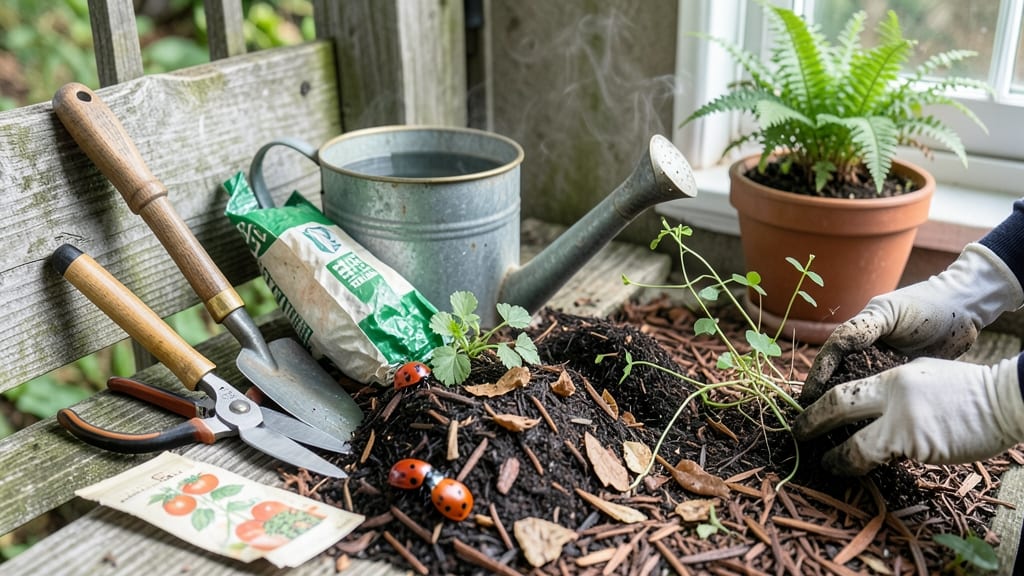
Gardening slang refers to the playful and practical terms gardeners use to describe plants, tools, growing techniques, and even weather conditions—like calling a heavy rain a 'thumper' or joking that a struggling plant took a 'dirt nap.' These expressions make gardening feel more personal and fun while streamlining communication among hobbyists.
Gardening slang isn't just colorful language—it's a shorthand that helps gardeners quickly share advice, diagnose problems, and bond over shared experiences. 🌱 For example, calling a beginner a 'baby gardener' or a stubborn weed a 'pigweed' adds personality to the craft while making complex concepts easier to grasp.
Many terms, like 'heirloom' for heritage plants or 'hardening off' for acclimating seedlings, also reflect practical needs that evolve with gardening trends and regional climates.
These phrases often carry historical weight too. 'Grandma's marigolds' might refer to a specific variety passed down through generations, while 'tomato blight' describes a common disease that's been a gardener's nemesis for decades.
The slang even helps newcomers feel welcome by creating an insider language that separates gardeners from casual plant enthusiasts.
💡 In This Article
- Origins and Meanings Behind Popular Gardening Slang
- How to Use Gardening Slang Like a Pro
Origins and meanings behind popular gardening slang
Many gardening terms trace back to practical needs and historical influences. Take 'grandma’s marigolds,' for example—this phrase often refers to heirloom varieties passed down through generations, like Marigold 'Bonanza Gold', which thrives in full sun and repels pests naturally.
These names reflect the sentimental value gardeners place on plants tied to family traditions, creating a sense of continuity. 🌼 Similarly, 'tomato blight' describes Phytophthora infestans, a fungal disease that can destroy crops within 5-7 days if untreated, earning its grim nickname from gardeners who’ve battled it for centuries.
Regional variations add another layer to gardening slang. In the Pacific Northwest, 'thumper' describes a heavy rainstorm that pounds the soil, while in the Southeast, it might be called a 'gully washer.'
These terms reflect local weather patterns—like the 12+ inches of rain a thumper can drop in 24 hours—and help gardeners quickly communicate urgent conditions. Even plant names shift: 'collard greens' in the South become 'greens' in New England, showing how language adapts to regional growing habits.
The evolution of slang mirrors gardening trends. Terms like 'heirloom' (plants saved for 50+ years) gained popularity as seed-saving movements grew, while 'hybrid' refers to modern varieties bred for disease resistance, like Tomato 'Celebrity'.
This distinction highlights how slang bridges tradition and innovation, helping gardeners navigate both old-school techniques and new science. 🌱 The phrase 'green thumb' itself stems from the idea that skilled gardeners have a magical touch—though science shows it’s more about understanding soil pH (6.0-7.0) and moisture levels than luck.
Weather-related slang often carries survival lessons. A 'heat wave' isn’t just hot air—it’s a 90°F+ stretch that can stress plants, while 'frost warning' signals temps dropping below 32°F, risking damage to tender crops. These terms help gardeners prepare, like covering plants with frost cloth or adjusting watering schedules.
Even humor plays a role: calling a struggling plant a 'dirt napper' lightens the mood when failures happen, keeping the focus on learning rather than frustration.
Some slang reflects tool evolution too. 'Lopers' are long-handled pruners for tall plants, while 'dibbers' are simple sticks for planting seeds at 1-inch depth. These names simplify instructions—imagine saying, "Use your 18-inch lopers to trim that 6-foot sunflower" instead of describing the tool’s purpose every time.
The language evolves with technology, like 'hydroponics' replacing older terms for soil-less growing.
What’s fascinating is how slang builds community. Beginners hear 'hardening off' (acclimating seedlings to outdoor conditions over 7-10 days) and instantly feel like insiders. It’s a shorthand that turns complex tasks into shared experiences, whether discussing 'blossom end rot' in tomatoes or celebrating a 'bountiful harvest.'
These phrases turn gardening from a solitary chore into a collaborative passion.