
Pests and Diseases
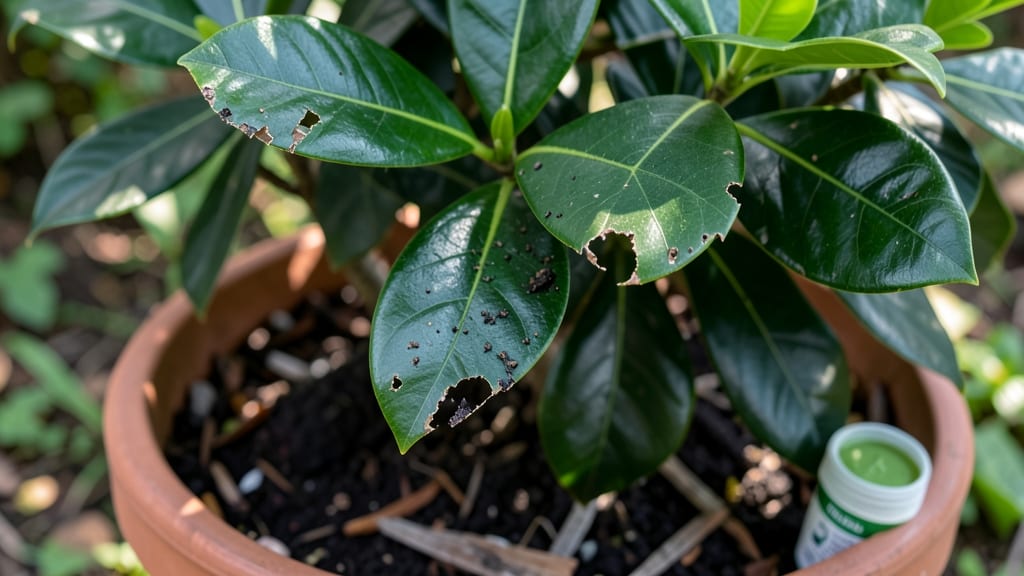
When your gardenia leaves are being eaten, the most common culprits are spider mites, aphids, caterpillars, slugs, or scale insects. Look for signs like fine webbing, curled leaves, or chewed edges before treating with neem oil or insecticidal soap.
Gardenias attract pests because their thick, waxy leaves provide both shelter and a food source for insects and mollusks. 🌿 The soft undersides of leaves are especially vulnerable to spider mites, which thrive in dry conditions and leave behind telltale webs, while aphids cluster in colonies that secrete sticky honeydew.
Caterpillars, on the other hand, create ragged holes as they feed, often hiding during the day and emerging at night. Slugs leave behind shiny trails and irregular bite marks, typically targeting younger leaves first.
To protect your gardenia, focus on early detection and preventive care. Regularly inspect the undersides of leaves and remove any pests you spot manually. Neem oil works well as a preventive spray, especially when applied in the early morning when pests are most active and before blooming season begins.
For severe infestations, consider using horticultural oil or introducing beneficial nematodes to the soil.
💡 In This Article
- Identifying Gardenia Leaf Pests by Damage Patterns
- Organic Pest Control Methods for Gardenia Plants
Identifying gardenia leaf pests by damage patterns
Spider mites are the most common culprits behind gardenia leaf damage, and their presence is easy to spot if you know what to look for.
These tiny pests—barely 1/50th of an inch long—create fine, silky webs on the undersides of leaves, often between leaf veins. 🌿 The webs appear as delicate, grayish strands that trap moisture, creating an ideal breeding ground.
Their feeding causes stippling (tiny yellow or white dots) that eventually turns brown as leaf tissue dies. The reason they target gardenias? These plants have thick, waxy leaves that provide perfect shelter while the mites pierce cells to suck out sap.
Aphids, on the other hand, leave behind a completely different signature. These soft-bodied insects cluster in colonies on new growth and leaf undersides, often near leaf buds.
Their damage appears as curled, yellowing leaves and a sticky residue called honeydew—this sugary substance attracts ants and promotes sooty mold growth. 🍯 Aphids prefer gardenias because the plant's sap is rich in sugars, which fuels their rapid reproduction.
Unlike spider mites, aphids don't create webs but instead leave behind a trail of distorted, puckered leaves that fail to photosynthesize properly.
Caterpillars create the most dramatic damage with their ragged feeding patterns. Look for irregular holes, chewed edges, or entire leaves skeletonized down to the veins. 🐛 These pests often hide during the day and emerge at night, which is why you might notice fresh damage in the morning.
Gardenias attract caterpillars because their leaves contain compounds that mimic the natural diet of many moth species. The key difference here is the size of the damage—caterpillars leave behind large, uneven bite marks, while spider mites and aphids create more uniform patterns.
Slugs and scale insects present their own unique challenges. Slugs leave behind shiny, slime trails and irregular bite marks with smooth edges, often targeting younger leaves first. 🌊 Their damage appears overnight, which is why you might wake up to find entire sections of leaves missing.
Scale insects, meanwhile, attach themselves to stems and leaf undersides, appearing as small, immobile bumps. These pests create a protective shell that makes them resistant to many sprays, and their feeding weakens the plant by disrupting nutrient flow.
Understanding these patterns helps you act quickly.
For example, if you spot fine webbing, you're dealing with spider mites and should focus on increasing humidity around your plant. 💧 If you see curled leaves with sticky residue, aphids are likely the issue, and a strong spray of water can dislodge them before they multiply.
The key is regular inspection—check both sides of leaves and stems at least once a week during growing season to catch problems before they spread.