
Companion Plants
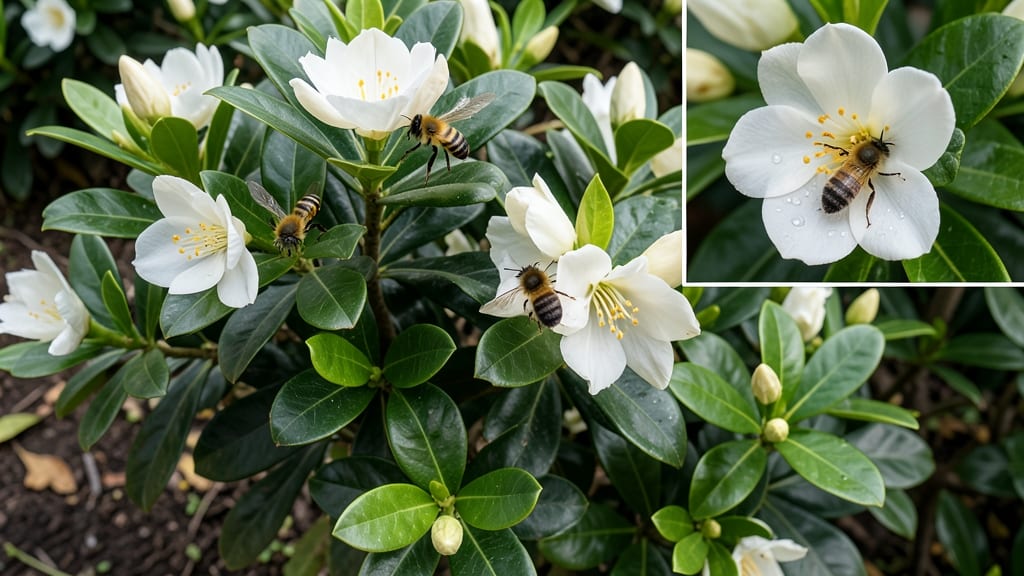
Gardenias rarely attract bees because their heavy, fragrant blooms produce minimal nectar and rely on moths for pollination instead. Their waxy petals and strong scent target nocturnal pollinators, leaving bees uninterested in their flowers.
Gardenias have evolved to appeal to moths rather than bees, which explains why you'll rarely see buzzing visitors on their creamy white blooms. 🌸 Their scent, while intoxicating to humans, is actually a nighttime signal for moths—think of it as a dinner bell for these nocturnal pollinators.
Unlike bee-loved flowers like lavender or sunflowers, gardenias don't offer the sweet rewards bees seek, making them a poor choice if your goal is supporting local pollinators. That said, their beauty and fragrance make them a fantastic addition to evening garden displays where moths (and humans) can fully appreciate them.
If you're looking to boost bee activity in your garden, consider swapping out gardenias for plants like bee balm or borage, which produce abundant nectar and bright colors that bees can't resist.
These alternatives will not only attract more pollinators but also create a lively, buzzing ecosystem that benefits your entire garden.
💡 In This Article
- Why Gardenias Are Poor Bee Magnets
- Best Bee-Friendly Alternatives to Gardenias
Why gardenias are poor bee magnets
Gardenias have evolved a unique floral strategy that prioritizes moth pollination over bees. Their blooms produce minimal nectar—often just 1-2 microliters per flower—compared to bee favorites like lavender, which yields 50-100 microliters per flower.
This nectar scarcity makes gardenias less appealing to bees, which rely on abundant sugar rewards for energy. The flowers' waxy, thick petals also create physical barriers that make it difficult for bees to access any available nectar, unlike the open, accessible structures of bee-balmed flowers.
The scent chemistry plays a crucial role too. Gardenias emit high concentrations of benzyl acetate and linalool, compounds that peak at night when moths are active.
These same compounds are less attractive to bees, which are more drawn to floral scents like geraniol and eugenol found in lavender or rosemary.
The strong, sweet fragrance that humans love is essentially a moth dinner bell, not a bee invitation. 🌙 This nocturnal scent profile explains why you'll rarely see bees on gardenias during daylight hours when they're most active.
Visually, gardenias lack the bright colors and patterns that signal "nectar here" to bees. Their creamy white blooms with subtle yellow centers provide little visual contrast, unlike the vibrant purples, blues, and yellows that bees can see in ultraviolet light.
Even the flower shape matters—gardenias have tightly clustered stamens that don't present easy landing platforms for bees, while bee-friendly flowers like sunflowers have broad petals that create perfect perches. These botanical design choices make gardenias a poor match for bee pollination needs.
What makes this especially interesting is how gardenias have made trade-offs in their floral biology. By focusing on moth pollination, they've sacrificed traits that would attract bees—like abundant nectar, accessible structures, and bee-friendly scent profiles. This specialization works perfectly for their nocturnal visitors but leaves them overlooked by daytime pollinators.
The contrast with bee-balmed flowers couldn't be more striking: where gardenias offer beauty and fragrance at night, their bee-friendly cousins provide sustenance and activity during the day.
For gardeners wanting to support pollinators, understanding these differences is key. Planting gardenias alongside bee-friendly alternatives creates a balanced ecosystem where each flower type serves its evolutionary purpose.
The result? A garden that thrives both night and day, with moths visiting gardenias under moonlight and bees buzzing between lavender and sunflowers in sunlight. 🌸
Consider this the botanical equivalent of having a restaurant that serves excellent dinner but forgets to open its doors in the morning—bees simply won't find what they need when they're looking.
The solution isn't to abandon gardenias, but to complement them with flowers that speak the language of our tiny, buzzing friends.