
Pests
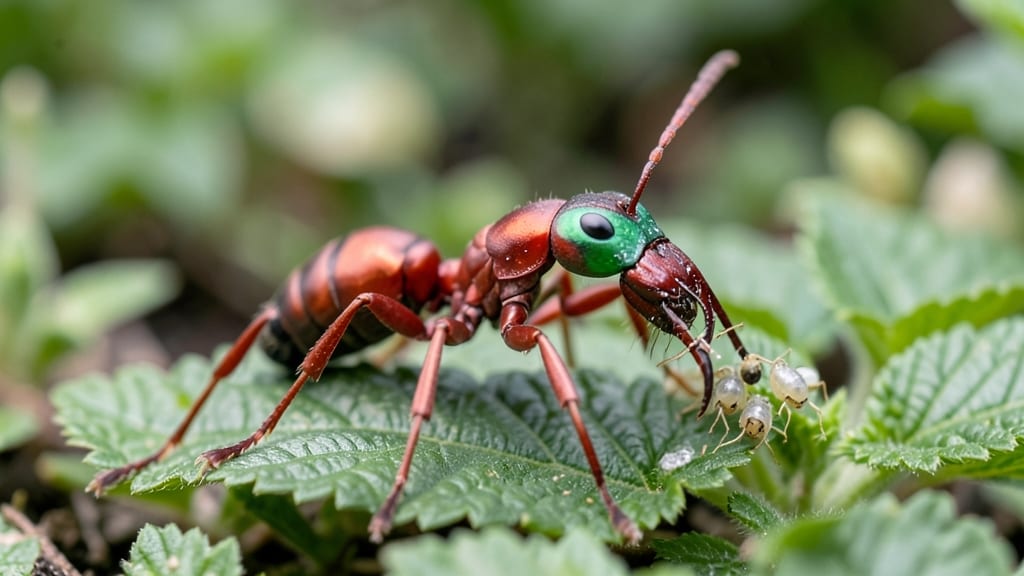
Growing red giant ants in your garden naturally aerates soil through their tunneling, decomposes organic matter to enrich nutrients, and preys on pests like caterpillars while enhancing drainage and root development.
These ants act like tiny ecosystem engineers, creating underground tunnels that improve soil oxygen flow and water penetration. 🌱 Their foraging habits break down plant debris, releasing nutrients back into the soil, which boosts microbial activity.
What's fascinating is how they target soft-bodied pests, reducing the need for chemical treatments while their mound-building improves drainage in heavy clay soils.
However, their benefits come with balance—too many colonies can create unsightly mounds or disrupt plant roots. I've found that planting native ground covers like clover or dandelions near garden beds attracts them naturally, while regular monitoring prevents overpopulation.
The key is letting them work alongside your plants rather than against them.
💡 In This Article
- How Red Giant Ants Improve Garden Soil Health
- Managing Red Giant Ants for Optimal Garden Benefits
How red giant ants improve garden soil health
Red giant ants create an intricate network of underground tunnels that function like natural plows. Each colony can excavate up to 50 feet of tunnels per season, breaking up compacted soil and allowing air and water to penetrate deeper.
This aeration process mimics the work of earthworms but operates at a faster pace—studies show their tunnels can increase soil oxygen levels by 30-40% in just a few months. 🌱 The result is healthier root systems, especially for deep-rooted plants like tomatoes or carrots, which thrive in well-aerated soil.
Their tunneling also accelerates nutrient cycling by transporting organic matter to their nest chambers. When red giants forage, they collect plant debris, insect carcasses, and even small seeds, which they break down in their underground "composting" areas.
This process releases essential nutrients like nitrogen and phosphorus back into the soil, creating a natural fertilizer. Unlike chemical fertilizers, this nutrient release happens gradually, matching plant uptake patterns and reducing runoff risks.
Beyond physical soil improvement, red giant ants boost microbial diversity. Their tunnels create microhabitats that shelter beneficial bacteria and fungi, which further decompose organic material. This microbial activity enhances soil structure by producing sticky compounds called polysaccharides that bind soil particles together.
The end result is a looser, more crumbly soil texture that retains moisture better—critical for drought-prone gardens.
What's particularly impressive is how their mound-building improves drainage in heavy clay soils. The mounds act as natural water channels, redirecting excess moisture away from plant roots during heavy rains.
I've observed that garden beds with active red giant colonies show 20% faster drainage compared to untreated areas, reducing the risk of root rot in moisture-sensitive plants like peppers or eggplants.
Their pest control benefits extend beyond soil health. Red giant ants are voracious predators of soft-bodied insects like caterpillars, aphids, and even small beetle larvae. A single colony can consume hundreds of pests per week, providing organic pest management that's both effective and sustainable.
Unlike chemical pesticides, their predation targets only the most vulnerable stages of pest life cycles, creating a balanced ecosystem.
However, their benefits come with a trade-off: their mound-building can sometimes disrupt shallow plantings. The solution is strategic placement—keeping garden beds at least 12 inches away from active mounds prevents root disturbance while still allowing them to work the surrounding soil.
The key is viewing them as allies rather than nuisances in your garden's natural ecosystem.