
Tools
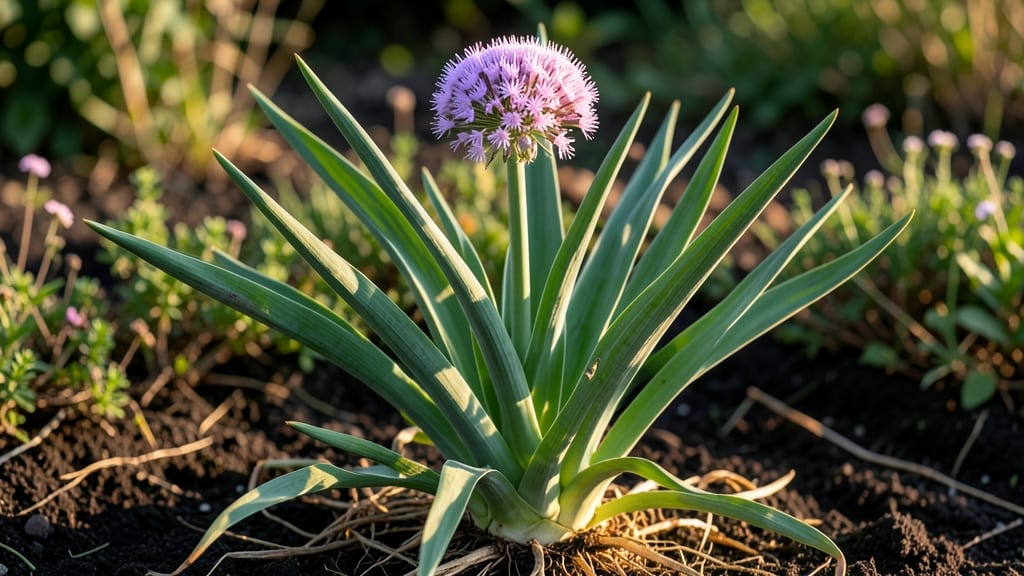
Garlic in the garden looks like a low-growing, fan-shaped plant with long, flat leaves that emerge from the base. Beneath the soil, its bulbs form segmented cloves wrapped in papery white skins, maturing by late summer. Young plants appear as small rosettes, while mature bulbs develop thick, layered structures underground.
Garlic's signature straight, sword-like leaves grow from a single base, reaching 12-24 inches tall depending on the variety. The hollow stalks are a key identifier—unlike grass or wild onions, which have solid stems. 🌱 Hardneck varieties produce a curly scape (flower stalk) in spring, while softneck types stay leafier.
The bulbs themselves are the real giveaway: plump, segmented cloves nestled in layers, unlike the single bulb of onions.
What's fascinating is how garlic's appearance changes with age. Early on, it looks like a tiny tuft of grass, but as it matures, the leaves fan out wider while the bulb swells underground.
This dual growth pattern—above and below soil—makes it easy to spot once you know what to look for.
💡 In This Article
- Identifying Garlic Plant Stages by Leaf and Bulb Development
- Common Garlic Look-Alikes: How to Avoid Mistaking It for Weeds or Other Plants
Identifying garlic plant stages by leaf and bulb development
Garlic's growth journey begins as a tiny sprout, emerging from a single clove planted in early spring or fall. The first leaves appear in a tight rosette pattern, typically 1/4 to 1/2 inch wide and 4-6 inches tall within the first 4-6 weeks.
These early leaves are a pale green and grow upright, forming what looks like a miniature version of its mature form. 🌱 The key difference between hardneck and softneck varieties emerges here: hardneck types develop a thicker base, while softneck varieties stay more slender and upright.
As the plant matures, the leaves elongate to 12-24 inches, becoming straighter and more rigid with a hollow core—a defining feature that distinguishes garlic from grass or wild onions.
By late spring, hardneck varieties produce a curly scape (a flower stalk) that spirals upward, while softneck types focus entirely on leaf and bulb development. The bulbs begin forming underground around 8-10 weeks, starting as small, round structures that gradually segment into individual cloves wrapped in papery white skins.
By mid-summer, the bulbs swell to their full size, with mature garlic bulbs typically measuring 2-3 inches in diameter. The leaves turn yellow and begin to die back, signaling that the bulb is nearly ready for harvest.
This is when the papery white skin becomes more pronounced, encasing the segmented cloves. Hardneck varieties often produce 4-12 cloves per bulb, while softneck types can yield up to 20 cloves, though they’re generally smaller in size.
What most gardeners overlook is the root system, which develops as the bulb grows. Unlike onions, garlic roots are fibrous and spread outward, anchoring the plant while the bulb expands.
This root system also helps distinguish garlic from weeds—true garlic roots are shallow and don’t penetrate deeply, unlike invasive grasses or wild onions. The combination of hollow leaves, segmented bulbs, and fibrous roots creates a unique signature that’s unmistakable once you’ve seen it mature.
Harvesting timing is critical: if left too long in the soil, the bulbs may split or develop smaller cloves. The ideal moment is when 60% of the leaves turn brown but before they completely wither.
At this stage, the papery skin is fully formed, and the cloves are plump, ready for curing. This process transforms the bulb’s texture from soft to firm, preserving it for storage. 🌿
One fascinating detail is how garlic’s growth stages reflect its origin. Hardneck varieties, often grown in colder climates, prioritize bulb development over scape production, while softneck types, suited for warmer regions, focus on leafy growth and higher clove counts.
This adaptability is why garlic thrives in diverse climates—its visual cues change subtly based on environmental conditions, making it a resilient and rewarding crop for gardeners.