
Tools
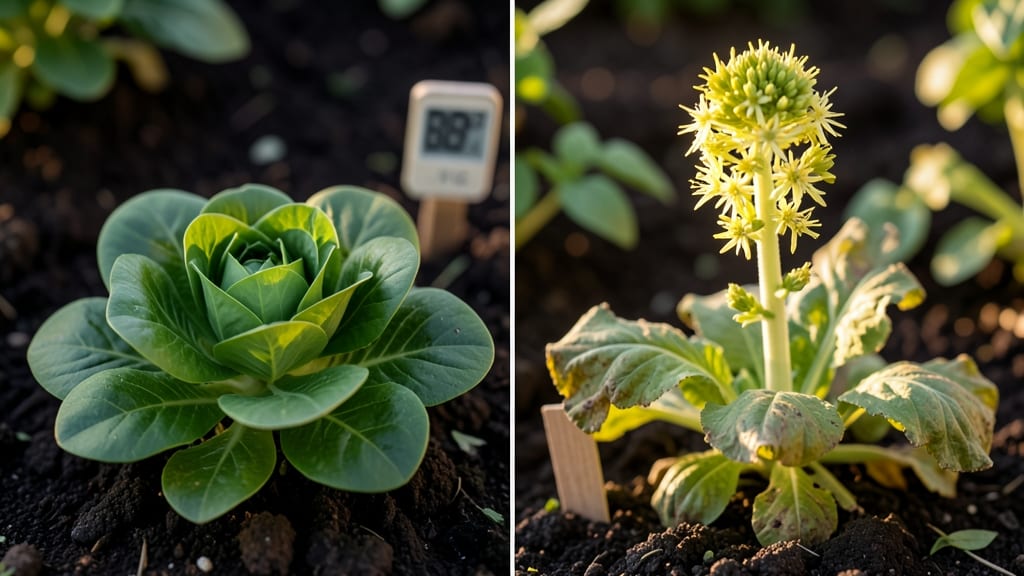
Bolting in gardening means when a plant suddenly grows a tall flower stalk, usually caused by stress like heat or drought, and stops producing leaves or edible parts to focus on seeds instead.
This sudden growth spurt happens when plants sense they're nearing the end of their life cycle, often triggered by environmental factors or even the plant's age. 🌱 For example, lettuce or spinach may bolt after just a few weeks in hot weather, turning bitter and woody.
Understanding this process helps gardeners choose the right varieties and timing to maximize harvests from leafy greens and herbs.
Bolting isn't always bad—some plants like cilantro or arugula actually taste better when they bolt—but it can ruin crops like basil or broccoli if it happens too early. The key is managing growing conditions to delay bolting as long as possible while still producing quality harvests.
💡 In This Article
- Why Plants Bolt: Stress Triggers and Biological Responses
- Preventing Bolting: Best Practices for Leafy Greens and Herbs
Why plants bolt: stress triggers and biological responses
When plants bolt, they're essentially entering a reproductive emergency mode triggered by hormonal changes. The process begins with an increase in ethylene gas—a plant hormone that signals aging—and a surge in gibberellins, which stimulate rapid stem elongation.
These chemical shifts divert energy from leaf production to flower and seed development, often within 7-14 days of the initial stress event. 🌱 For example, lettuce varieties like 'Black Seeded Simpson' may bolt after just 3-5 weeks in temperatures above 75°F, while spinach can bolt in as little as 2 weeks during heatwaves.
The most common triggers are environmental stressors that mimic the end of a plant's natural life cycle. Heat stress above 80°F disrupts normal growth patterns, while drought conditions cause plants to perceive water scarcity as a signal to reproduce quickly.
Even minor fluctuations—like nighttime temperatures dropping below 50°F—can trigger bolting in sensitive species. This explains why spring-planted lettuce often bolts during summer heat, even if it was thriving earlier in the season.
Genetics also play a crucial role. Some plants have built-in bolting mechanisms that activate after a certain number of leaves form—a process called "vernalization" in biennials like carrots or beets. In these cases, the plant's internal clock dictates when it will bolt, regardless of external conditions.
For instance, 'Bolero' basil will bolt after producing 6-8 true leaves, while 'Genovese' basil may take 10-12 leaves before flowering. This genetic variation is why some gardeners swear by specific varieties for their climate.
What's particularly interesting is how plants prioritize reproduction over survival during bolting. The flowering stalk can grow 1-2 inches per day in extreme cases, while leaf production grinds to a halt.
This rapid growth requires massive energy—up to 40% more calories than normal vegetative growth—meaning the plant's edible parts become bitter, fibrous, or inedible. The bitterness comes from increased levels of phenolic compounds, which act as a defense mechanism during this reproductive phase.
Consider the case of cilantro: its leaves become more potent when it bolts, but the stems turn woody. Meanwhile, broccoli will send up a single flower stalk, rendering the entire plant unusable for harvest.
This biological trade-off explains why gardeners must carefully manage growing conditions to delay bolting in crops like kale or Swiss chard, where leaf production is the primary goal.
The science behind bolting reveals nature's prioritization of species survival over individual plant longevity. When conditions become unfavorable, plants "choose" to reproduce quickly rather than risk dying without passing on their genes.
This evolutionary strategy helps explain why bolting is so difficult to prevent entirely—it's hardwired into many garden plants' survival mechanisms. 🌿