
Planting
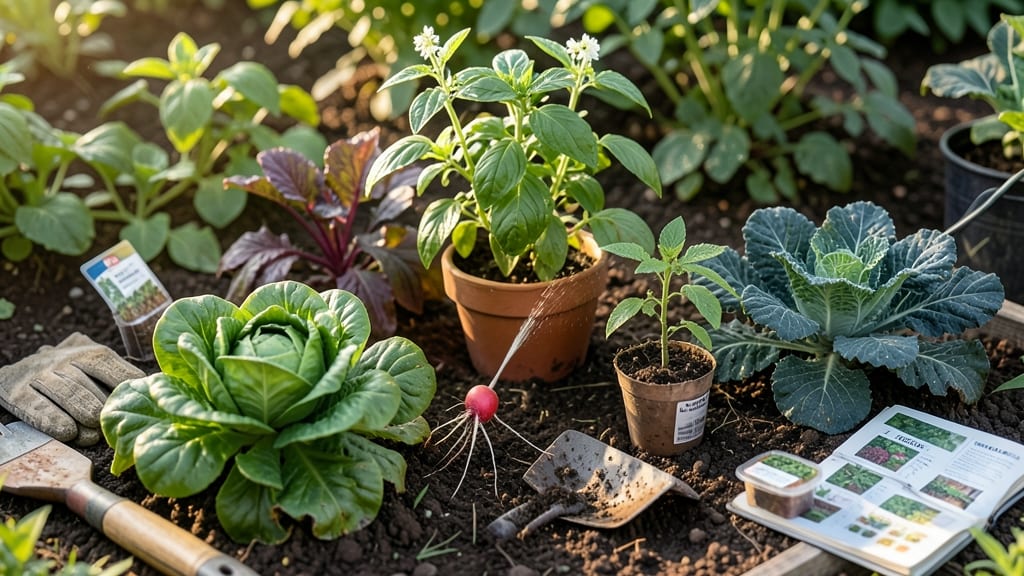
You can plant fast-growing crops in your garden now by focusing on leafy greens like spinach and kale, radishes, green onions, and bush beans, which thrive in spring or fall soil. Cool-season herbs such as cilantro and parsley also offer quick harvests.
Right now, your garden can become a productive space with the right choices. Fast-growing plants like radishes and green onions mature in as little as 30 days, perfect for impatient gardeners. 🌱 The key is matching your crops to your hardiness zone—what works in Zone 5 (like peas) may not thrive in Zone 9 (where lettuce takes center stage).
Soil temperature matters too: cool-season crops prefer 40-70°F soil, while warm-season plants need 60-85°F. I always check my local frost dates to time plantings for maximum success.
Don't overlook companion planting—pairing radishes with carrots or basil with tomatoes can boost yields and deter pests. For urban gardeners, container-friendly options like bush beans and herbs work beautifully on balconies or patios. Even if you're new to gardening, these quick harvests build confidence and encourage experimentation.
💡 In This Article
- Seasonal Planting Guide by USDA Hardiness Zones
- Top 10 Fast-Growing Garden Plants for Quick Harvests
Seasonal planting guide by USDA hardiness zones
Your hardiness zone determines what you can plant now because it reflects both average frost dates and soil temperature ranges.
For example, in Zones 3-5, where winters are harsh, you can start cool-season crops like spinach and peas as soon as the soil warms to 40°F—often by late April or early May.
Meanwhile, in Zones 8-10, where frost is rare or late, you might plant lettuce or radishes year-round, with peak growth in cooler months. 🌱 The USDA map divides the country into 13 zones based on the average annual minimum temperature, but microclimates (like urban heat islands or sheltered garden spots) can shift planting windows by 2-4 weeks.
Soil temperature is the real game-changer for seed germination. Most cool-season crops need soil between 40-70°F to sprout, while warm-season plants like bush beans require 60-85°F. A soil thermometer (around $10-$15) is worth the investment—planting too early in cold soil can leave seeds dormant or rot.
In Zone 6, for instance, you might plant radishes in early spring or late summer when soil temps dip below 75°F, while in Zone 9, you could grow them year-round with consistent moisture.
Frost dates are another critical factor. In northern zones, wait until after the last frost (typically May 15 in Zone 5) to plant frost-sensitive crops like lettuce. In southern zones, you might avoid summer planting entirely to prevent bolting (premature flowering).
Urban gardeners often face warmer microclimates than rural areas, so containers near buildings may allow for earlier plantings. For example, a patio in Zone 7 might reach 65°F soil by March, while a rural plot stays below 50°F until April.
Here’s how to adjust for your specific zone:
- Zones 3-5: Focus on peas, spinach, and kale in early spring; save beans for late May after soil warms.
- Zones 6-7: Plant radishes, green onions, and parsley in early spring or late summer for fall harvests.
- Zones 8-10: Grow lettuce, cilantro, and bush beans year-round with consistent watering.
Don’t forget to test your soil’s pH—most greens prefer 6.0-7.0, while beans thrive in slightly acidic 5.8-6.5. A simple $20 soil test kit reveals whether you need to amend with lime or compost. In my Zone 6 garden, I’ve found that adding 2 inches of compost before planting boosts early growth by 30% compared to unamended soil. 💫
For urban gardeners with limited space, prioritize container-friendly crops like bush beans (which grow in 5-gallon pots) or green onions (harvestable in 45 days from scraps). Even a sunny windowsill can host herbs like parsley or cilantro, which regrow from cuttings.
The key is matching your space to the plant’s mature size—radishes need just 2 inches of space, while bush beans require 6-8 inches between plants.