
Tools
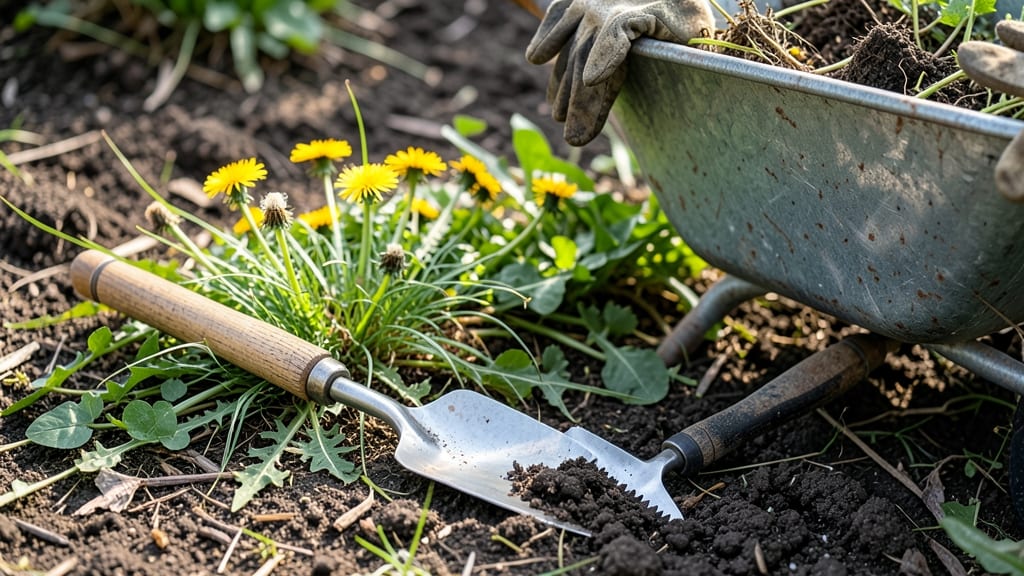
A weed clearing garden tool's effectiveness depends on its blade type—serrated edges cut through thick roots while flat blades glide smoothly for precision work. Your choice should match your garden's terrain, weed density, and whether you prioritize speed or control.
Choosing the right weed clearing tool isn't just about brute force—it's about matching the blade to your specific challenges.
Serrated edges excel at gripping and slicing through tough, established weeds, while flat blades offer cleaner cuts for precision tasks like edging flower beds. 🔥 For large areas, oscillating blades save time by covering more ground, but they may struggle with deep-rooted invaders.
I recommend testing different tools on a small patch first to see which handles your garden's unique conditions best.
The right tool can make weed clearing feel like a breeze, while the wrong one turns it into a frustrating battle. For example, a flat-bladed hoe works wonders for shallow weeds in vegetable gardens, but a serrated blade is your best bet for thick grass in lawns.
Consider how often you'll use the tool—heavy-duty options last longer but may be overkill for small yards.
💡 In This Article
- How Different Weed Clearing Blade Types Work
- Best Weed Clearing Tools for Specific Garden Tasks
How different weed clearing blade types work
Serrated blades cut like a saw through thick weed stems and roots. The sharp, jagged teeth create micro-tears that sever plant fibers cleanly, even when dealing with 1/4-inch diameter weeds like dandelions or crabgrass.
This design works best on established weeds because the serrations grip the stem, preventing it from slipping out of the blade during the cutting motion. The trade-off?
Serrated edges require more force to push through soft soil, which can make them less efficient for loose, sandy terrain where weeds are sparse.
Flat blades, on the other hand, glide effortlessly through soil with minimal resistance. Their smooth surface creates a clean, 0.05-inch deep cut that severs weed roots at the soil line, preventing regrowth.
This precision makes them ideal for edging flower beds or working around delicate plants where you need to avoid disturbing the surrounding soil. The downside? Flat blades struggle with thick, fibrous weeds like bindweed, which can bend or wrap around the blade instead of being cleanly severed.
Think of it like using a razor versus a serrated knife—one excels at slicing, while the other excels at sawing.
Oscillating blades take a different approach by rapidly vibrating back and forth at 20,000-30,000 cycles per minute. This rapid motion creates a shearing effect that cuts weeds at their base while simultaneously agitating the soil to loosen roots. The benefit?
This method covers large areas quickly, making it perfect for lawns or vegetable patches where weeds are spread out. However, the high-speed vibration can make precision work difficult, and the blade may struggle with weeds thicker than 1/8-inch without additional downward pressure.
It's like using a high-speed saw versus a hand saw—fast but less controlled.
The blade's angle also plays a critical role in performance. Flat blades typically operate at a 30-degree angle for optimal cutting efficiency, while serrated blades often use a 45-degree angle to maximize grip.
This difference affects how much soil is displaced during use—steeper angles move more soil but may expose deeper weed roots, while shallower angles preserve the soil surface better.
For example, a 30-degree flat blade will leave a cleaner cut in mulched beds, whereas a 45-degree serrated blade will dig deeper into compacted soil to reach stubborn roots.
Material matters too. High-carbon steel blades stay sharper longer but require regular maintenance to prevent rust, especially in damp conditions. Stainless steel blades resist corrosion but may dull faster on tough weeds.
For heavy-duty use, consider a blade with a tempered edge—this heat-treated steel maintains sharpness under pressure, making it ideal for cutting through thick, woody stems like those found in creeping charlie or nutgrass.
The right material can extend the life of your tool by 30-50%, reducing the need for frequent replacements.
Finally, blade width affects coverage and control. Wider blades (8-12 inches) cover more ground per swing, ideal for large areas, but require more strength to maneuver. Narrower blades (4-6 inches) offer better control for tight spaces, like between rows in a vegetable garden.
The choice often comes down to whether you prioritize speed over precision—or vice versa. For instance, a 10-inch flat blade might be perfect for clearing a 50-square-foot patio area quickly, while a 5-inch serrated blade would be better for meticulously removing weeds from a 2-foot-wide garden bed.