
Lawn
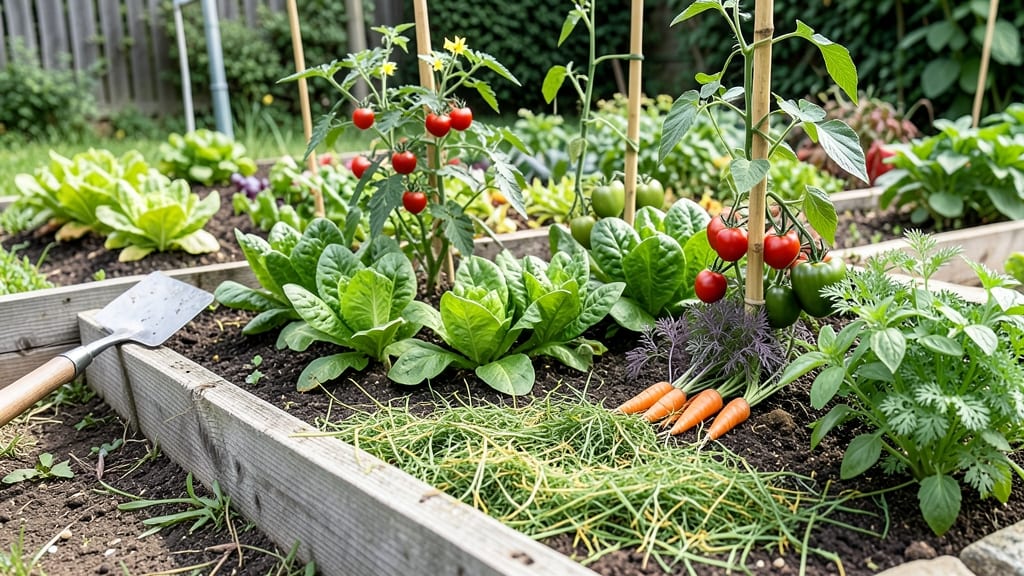
Incorporating grass clippings into vegetable gardens boosts soil health by providing natural nitrogen and organic material, but they should always be dried or composted beforehand to avoid compacting soil and spreading disease. Applying them fresh risks suffocating plant roots and attracting harmful pests.
Grass clippings contain about 2-4% nitrogen by weight, making them a free, nutrient-rich soil amendment when used correctly.
The key is proper preparation—drying them first prevents thatch buildup, which can block water and air from reaching roots. 🌱 I've found that spreading a thin layer (¼ inch) around established plants works best, while newer gardens benefit more from composted clippings mixed into the soil.
Just avoid clippings from lawns treated with herbicides or pesticides, as these chemicals can harm your vegetables.
For best results, time your application between plantings or during fall cleanup. This gives the clippings time to decompose safely before new growth begins. Many gardeners also use them as mulch, but always keep them away from plant stems to prevent moisture-related rot.
The organic matter they provide improves soil structure over time, reducing the need for synthetic fertilizers.
💡 In This Article
- How Grass Clippings Benefit Vegetable Garden Soil
- Safe Ways to Apply Grass Clippings in Vegetable Beds
How grass clippings benefit vegetable garden soil
Grass clippings act as a natural fertilizer because they're packed with 2-4% nitrogen by dry weight, which is about half the nitrogen content of fresh manure.
When grass blades break down, they release this nitrogen slowly into the soil, feeding plants over weeks rather than all at once like synthetic fertilizers.
The organic matter they provide also improves soil structure by increasing its ability to hold water—up to 20% more moisture retention in sandy soils—while enhancing aeration in clay-heavy gardens. 🌱
The difference between fresh and dried clippings comes down to decomposition speed and nitrogen availability. Fresh clippings release nitrogen quickly but can create a thick mat that blocks sunlight and air, while dried clippings decompose more slowly, providing a steady nutrient release.
Studies show that a ¼-inch layer of dried clippings adds about 0.5 pounds of nitrogen per 100 square feet, roughly equivalent to a light application of organic fertilizer. The key benefit is this nitrogen boost without the risk of burning plants, unlike chemical fertilizers.
Beyond nitrogen, grass clippings contribute carbon-rich organic material that feeds beneficial soil microbes. These microbes break down the clippings into humus, which improves soil tilth and helps retain nutrients.
However, this process requires proper preparation—fresh clippings can create a dense layer that suffocates roots and traps moisture, creating ideal conditions for fungal diseases like damping-off. The organic matter also helps break up compacted soil over time, making it easier for roots to penetrate deeper.
One common mistake is applying too much at once, which can lead to thatch buildup—a thick layer of undecomposed material that blocks water and air.
To avoid this, spread clippings in thin layers (¼ inch or less) and mix them into the top 2-3 inches of soil rather than leaving them on the surface. For container gardens, use composted clippings instead, as they won't compact the potting mix.
The ideal application rate is about 1-2 pounds per 100 square feet when dried, depending on your soil's existing nitrogen levels.
For vegetable gardens, the benefits extend to pest control too. The organic matter encourages beneficial nematodes and fungi that prey on harmful insects, reducing the need for chemical pesticides.
However, this only works if the clippings are properly decomposed—fresh clippings can attract slugs and other pests by creating damp, sheltered microhabitats. The nitrogen also helps vegetables like tomatoes, peppers, and leafy greens grow stronger and more resistant to stress, leading to higher yields and better flavor. 🌿
What most gardeners don't realize is that grass clippings also help regulate soil temperature. The organic layer acts as insulation, keeping roots cooler in summer and warmer in winter. This is particularly valuable for heat-sensitive crops like lettuce or spinach, which can bolt (go to seed prematurely) in hot conditions.
The mulching effect also reduces water evaporation, meaning you'll need to irrigate less frequently—saving both time and resources. For best results, apply clippings in early spring or late fall when plants aren't actively growing, giving them time to incorporate naturally.