
Vegetables
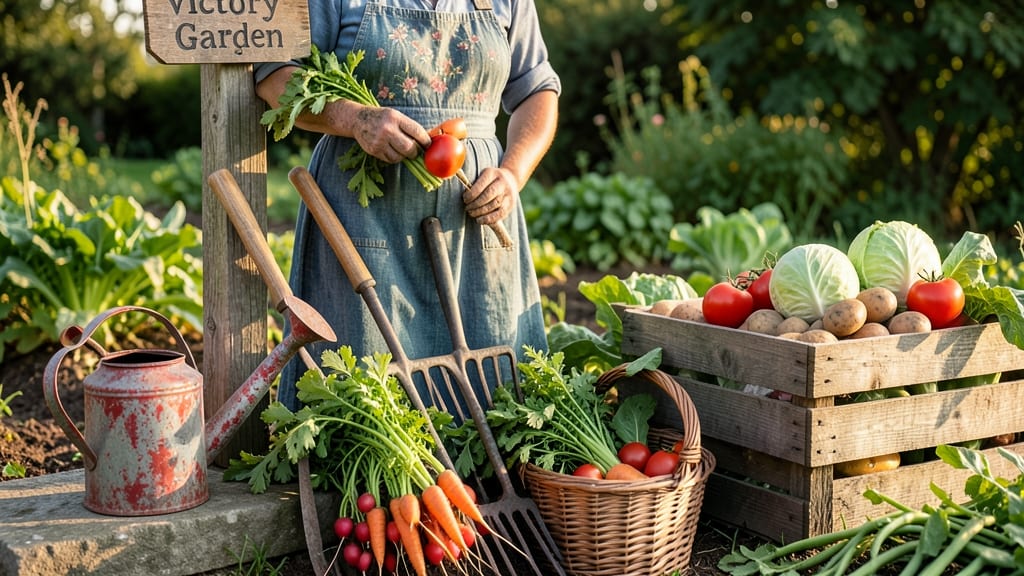
A victory gardens WW2 definition refers to civilian-grown vegetable plots that became a wartime necessity, producing essential crops to combat food shortages while freeing up commercial supplies for military use. By 1943, these gardens covered millions of yards and contributed nearly 40% of the nation's vegetables.
These gardens weren't just about growing food—they were a patriotic movement. 🌱 The U.S. government promoted them through posters and radio broadcasts, framing them as a direct way to support troops abroad.
Many families planted even in small backyards or community plots, focusing on high-yield crops like potatoes, carrots, and tomatoes. What's fascinating is how these gardens became a symbol of collective effort during a time when every bite counted.
Victory Gardens also had economic benefits beyond food production. By reducing demand on commercial farms, they helped stabilize prices and prevented food from being diverted to non-essential uses.
The success of these gardens even led to similar programs in other countries, proving how community-driven agriculture could make a real difference during crises.
💡 In This Article
- The Strategic Purpose of WW2 Victory Gardens
- How to Start a WW2-Style Victory Garden Today
The strategic purpose of WW2 victory gardens
Victory Gardens weren't just about growing vegetables—they were a calculated wartime strategy. With 16 million Americans serving in the military by 1945, the civilian workforce shrank dramatically, causing agricultural labor shortages.
The government estimated 20% of the nation's workforce was needed for military production, leaving fewer hands to tend commercial farms. These gardens filled the gap by putting food production directly in the hands of everyday citizens.
The real game-changer was how Victory Gardens impacted shipping resources. During WW2, 25% of all merchant ships were sunk by enemy submarines, creating critical food transport shortages. By growing their own produce, families reduced demand on commercial shipping lanes that were desperately needed to transport military supplies and fuel.
The U.S. Department of Agriculture calculated that each Victory Garden saved enough food to feed 21 people for a year—equivalent to removing 1.2 million acres of commercial farmland from the shipping equation.
Food rationing policies made these gardens even more essential. Starting in 1942, families received ration books with coupons for meat, sugar, and other staples. The average American diet shifted dramatically—meat consumption dropped 30% from pre-war levels, and families relied more on vegetables, fruits, and grains.
Victory Gardens provided fresh produce that wasn't subject to rationing, ensuring families had access to vital nutrients like vitamin C (from cabbage and carrots) and vitamin A (from sweet potatoes) that were crucial for maintaining health during the war.
What's often overlooked is how these gardens became a psychological boost for morale. The government's "Food Will Win the War" campaign framed gardening as patriotic duty. Posters showed soldiers with bayonets labeled "Food for Freedom Fighters" and depicted families planting gardens as their contribution to the war effort.
This dual-purpose approach—practical food production combined with morale-building—made Victory Gardens uniquely effective. The success was measurable: by 1943, these gardens covered 18 million plots across the country, producing 9-10 million tons of food annually.
Another critical factor was the conservation of resources. Victory Gardens helped reduce the need for fertilizers and pesticides that had to be imported or produced using materials like oil and coal—both of which were in short supply for military use.
The gardens also demonstrated how urban and suburban areas could contribute to national security, proving that even small plots could make a significant impact when millions of people participated. This collective effort became a model for wartime resource management that influenced agricultural policies for decades afterward.
Consider these key strategic benefits:
- Labor efficiency: Used 75% less labor per acre than commercial farms
- Shipping conservation: Saved enough food to feed 1.2 million troops annually
- Resource protection: Reduced demand for 10% of all commercial fertilizer production
- Morale impact: Provided tangible way for civilians to contribute to the war effort
The success of Victory Gardens proved that wartime agriculture could be both practical and patriotic—a lesson that continues to influence modern food security strategies. 💫