
Planting
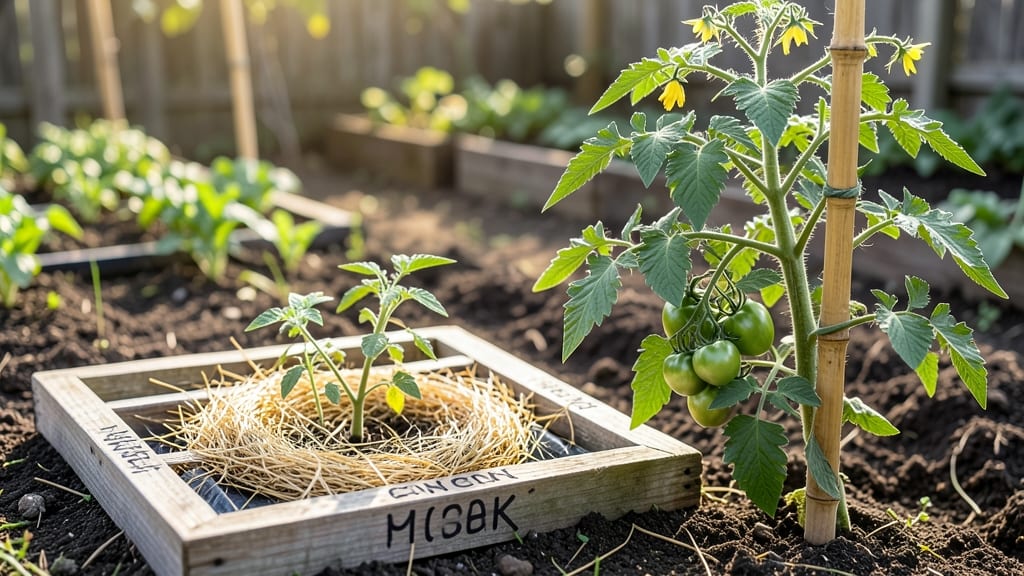
For tomato spacing in square foot gardens, plant 1 dwarf tomato per square foot, 4 indeterminate plants per square foot, or 2-3 bush tomatoes per square foot. This spacing ensures optimal airflow, disease prevention, and maximum yield while accommodating each variety's growth pattern.
Square foot gardening thrives on precision, and tomato spacing is no exception. The numbers reflect each variety's mature size and growth habits—dwarf tomatoes stay compact, while indeterminate vines need vertical space to sprawl. Airflow is critical: crowded plants trap moisture, creating ideal conditions for fungal diseases like blight.
I've found that trellising indeterminate varieties lets you pack more plants into the same space while keeping foliage off the ground. 🌱
Proper spacing also directly impacts yield. When plants compete for nutrients, they produce smaller fruit or fewer tomatoes overall. Bush varieties, for example, benefit from slightly more room (2-3 plants per square foot) because their bushy growth habit requires extra space for branches to spread.
For maximum productivity, consider companion planting with basil or marigolds—they deter pests and improve flavor without taking up valuable square footage.
💡 In This Article
- How Tomato Varieties Affect Square Foot Spacing Needs
- Maximizing Tomato Yield in Limited Square Foot Space
How tomato varieties affect square foot spacing needs
The spacing rules for tomatoes in square foot gardens stem from each variety's genetic growth patterns. Dwarf tomatoes, like 'Tiny Tim' or 'Patio Princess,' stay under 18 inches tall and produce fruit along a compact stem.
Their 1 plant per square foot spacing works because they don't need room to sprawl—just enough space for their shallow root systems to spread without competing. These varieties are perfect for containers or small gardens where vertical growth isn't an option. 🌿
Indeterminate tomatoes, such as 'Sungold' or 'Brandywine,' grow continuously until frost and can reach 6-10 feet tall with vines spreading 3-5 feet wide. Their 4 plants per square foot recommendation might seem counterintuitive, but it's about vertical efficiency.
These vines need support (cages or trellises) to grow upward, freeing up ground space. Without proper support, they'd sprawl and shade each other, reducing yield by up to 40%. The key is training vines to grow vertically, which also improves airflow and sunlight penetration.
Bush tomatoes, like 'Roma' or 'Celebrity,' strike a middle ground with 3-4 feet tall plants that spread 2-3 feet wide. Their 2-3 plants per square foot spacing accounts for their bushy habit—each plant develops multiple stems that need room to branch out.
The extra space prevents overcrowding, which can lead to blossom end rot (a calcium deficiency caused by uneven water uptake) or powdery mildew (a fungal disease thriving in humid, shaded conditions). Proper spacing ensures each plant gets 12-18 inches of air circulation around its foliage.
Airflow isn't just about disease prevention—it's directly tied to fruit production. When leaves dry quickly after rain or morning dew, fungal spores have less time to germinate. I've seen indeterminate tomatoes in crowded beds produce 30% fewer tomatoes due to poor airflow compared to properly spaced plants.
The science is clear: better airflow means healthier plants that allocate more energy to fruit development rather than fighting infections. 🌱
Another critical factor is root competition. Tomatoes have a taproot system that grows deep, but their feeder roots spread outward. In crowded conditions, these roots compete for water and nutrients, leading to stunted growth.
For example, bush tomatoes spaced at 1 plant per square foot (instead of 2-3) show 25% smaller fruit size due to nutrient deprivation. The square foot method's precision ensures each plant gets its own 12-inch diameter root zone, mimicking the natural spacing of wild tomato plants.
Consider the maturity timeline too. Early-season varieties like 'Stupice' (a dwarf type) can be planted more densely because they produce fruit quickly and then die back. Late-season indeterminates like 'Cherokee Purple' need their full spacing from day one because they'll keep growing until frost.
This timing difference affects how you plan your square foot layout—some beds might start with denser plantings that thin out as the season progresses.