
Tools
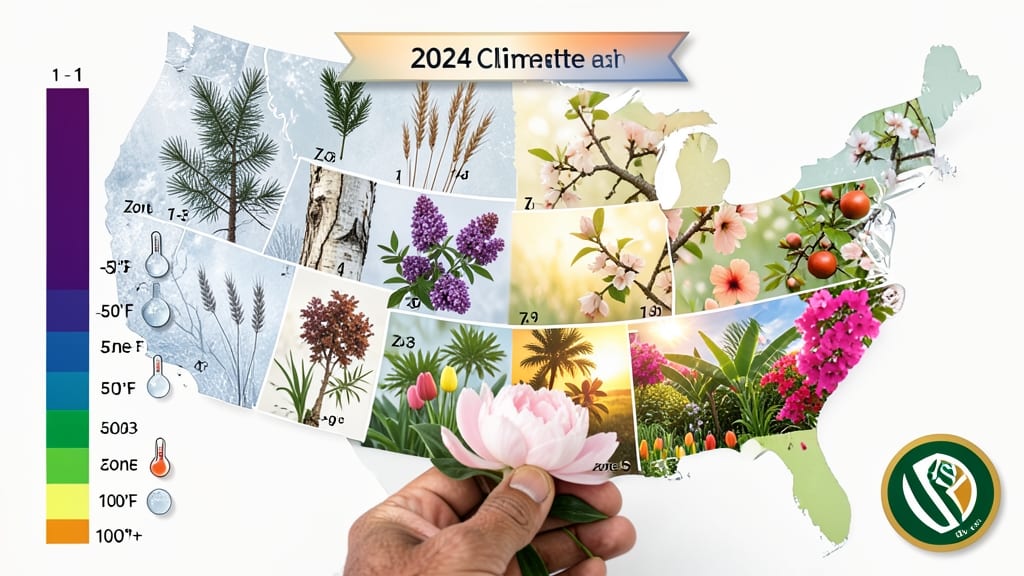
The 2024 USDA gardening zones reflect updated climate data, shifting many regions one zone warmer due to rising temperatures. Zone boundaries now include microclimates for more precise planting guidance, with Zone 13 appearing in parts of California and Florida for the first time. Always verify your exact location using the official USDA Plant Hardiness Zone Map for accurate planting decisions.
The 2024 update marks the first major revision since 2012, accounting for 10+ years of climate shifts that have warmed average minimum temperatures across most of the U.S. 🌡️ What’s most striking is how these changes force gardeners to reconsider traditional planting timelines—some areas now experience earlier last frosts by 2-3 weeks compared to 2012 data.
For example, parts of Texas that were Zone 8a in 2012 may now fall into Zone 9a, opening doors to heat-tolerant crops like okra or sweet potatoes that previously struggled in those conditions.
This shift also introduces microclimate precision—urban areas with pavement and concrete can be 5-10°F warmer than rural zones just miles away. The new map even accounts for elevation changes within states, helping high-altitude gardeners in Colorado or New Mexico select plants suited to their specific microclimates.
The addition of Zone 13 isn’t just about extreme heat; it reflects longer growing seasons in coastal regions where ocean currents moderate temperatures.
💡 In This Article
- How Climate Change Impacts 2024 USDA Gardening Zones
- How to Use the 2024 USDA Zone Map for Plant Selection
How climate change impacts 2024 USDA gardening zones
The 2024 USDA Plant Hardiness Zone Map reflects 10+ years of warming trends, with average minimum temperatures rising by 1.5-3°F across much of the U.S. since 2012. This shift occurs because the zones are based on the coldest 10-year average temperatures, and climate data shows consistent upward trends.
For example, what was Zone 7a (-5°F to 0°F) in 2012 may now be Zone 7b (0°F to 5°F) in 2024, meaning plants previously considered borderline now thrive.
Microclimates now play a critical role in zone classification, accounting for factors like urban heat islands (cities can be 5-10°F warmer than surrounding areas) and elevation changes. The new map even adjusts for coastal regions where ocean breezes moderate temperatures, creating Zone 13 in parts of Southern California and Florida.
This reflects longer frost-free seasons—some areas now experience 2-3 fewer frost days annually than in 2012, extending growing seasons by 3-4 weeks.
What this means for gardeners is a shift in traditional planting wisdom. Plants like peach trees (Zone 5-8) or citrus (Zone 9-11) can now grow in areas previously too cold. However, the changes also introduce risks: heat-sensitive crops like lettuce may struggle in newly warmer zones.
The USDA now recommends cross-referencing zone maps with local weather data to account for these nuances.
Elevation remains a key factor—mountainous regions like the Rockies or Appalachians may see cooler microclimates within warmer overall zones. For instance, a 5,000-foot elevation in Colorado could still fall into Zone 6, while nearby valleys might be Zone 8. This precision helps gardeners avoid costly mistakes when selecting plants.
The 2024 map also highlights regional disparities. The Northeast saw 2-4°F warming since 2012, while the Southwest experienced 1-2°F shifts.
These variations mean gardeners in Maine might now plant Zone 5b crops where Zone 4 was once standard, while Arizona gardeners can experiment with tropical plants like hibiscus in newly designated Zone 10 areas.
For long-term planning, the changes underscore the need for adaptive gardening strategies. Using season extension tools (like row covers or cold frames) can help bridge gaps in transitional zones. The USDA advises monitoring local weather patterns—some years may still experience unexpected late frosts, even in warmer zones.
Ultimately, the 2024 zones reflect a living, evolving system—one that challenges gardeners to stay flexible. What worked in 2012 may no longer apply, but the new map provides the tools to adapt. 🌱