
Tools
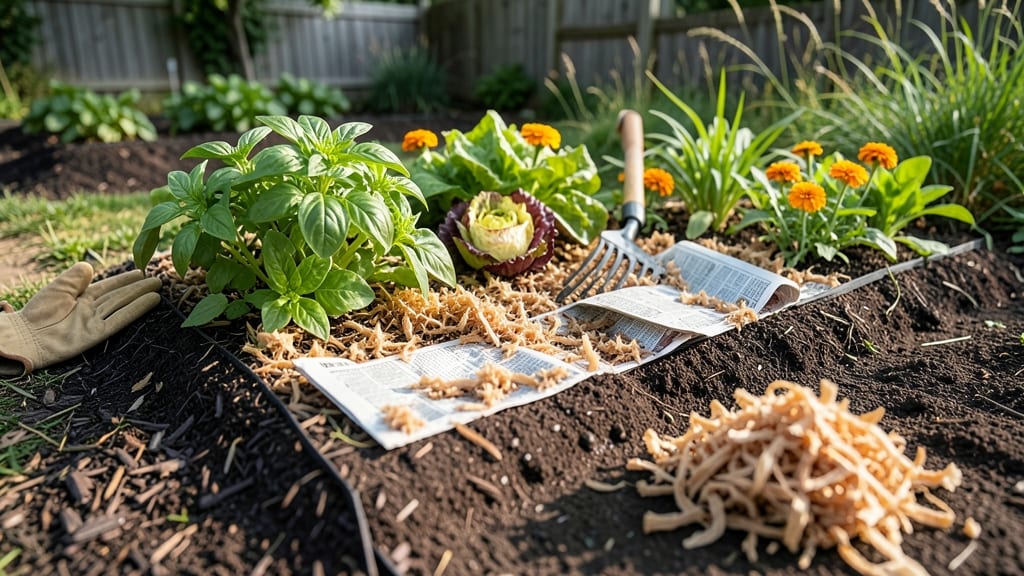
Shredded newspaper in the garden creates an effective organic mulch that blocks weeds, holds soil moisture, and breaks down gradually to boost soil fertility—but only works safely when it's ink-free and applied in thin layers.
This recycled material acts like a slow-release carbon source, feeding soil microbes over time while preventing erosion. 🌱 The key is balancing its acidity with compost or manure, since plain newspaper can lower soil pH if overused.
I've found it works best for annuals and vegetables rather than acid-loving plants like blueberries, where the pH shift matters more.
For best results, shred the paper into 1/4-inch strips and spread it in a 2-3 inch layer—thicker layers can suffocate soil and trap moisture. Pair it with nitrogen-rich materials like grass clippings to create a balanced decomposition environment.
If you're unsure about ink safety, opt for uncoated or soy-ink papers instead.
💡 In This Article
- How Shredded Newspaper Improves Soil Structure and Microbial Activity
- Safe Application Methods and Best Alternatives for Garden Mulching
How shredded newspaper improves soil structure and microbial activity
Shredded newspaper acts as a carbon-rich mulch because its cellulose fibers provide essential organic matter that feeds soil microbes. When applied to garden beds, it creates a protective barrier that blocks sunlight, preventing weed seeds from germinating while retaining up to 30% more soil moisture than bare ground.
The decomposition process releases slow-acting nutrients, particularly humus-like compounds, which improve soil aggregation and aeration over time—similar to how compost works but at a slower, steadier pace.
The real magic happens underground: as microbes break down the paper, they produce glomalin, a sticky glycoprotein that binds soil particles into stable crumbs. This process reduces compaction and improves root penetration, making it ideal for heavy or clay-heavy soils where drainage is poor.
However, newspaper’s high carbon-to-nitrogen ratio (about 80:1) means it initially consumes nitrogen from the soil—this is why pairing it with compost or manure (which adds nitrogen) is critical to prevent nutrient deficiencies in plants.
One common concern is ink toxicity. Most modern inks contain soy-based or vegetable oils, which break down safely, but older newspapers may use petroleum-based inks that can leach harmful chemicals. To test safety, soak a small piece in water for 24 hours—if the water remains clear, it’s likely safe.
The paper’s pH level (around 6.5-7.0) is neutral, but excessive use can acidify soil over time, which may stress plants like tomatoes or peppers that prefer slightly alkaline conditions.
For optimal results, shred the paper into 1/4-inch to 1/2-inch strips—this increases surface area for microbial colonization while allowing water to penetrate. A 2-3 inch layer is ideal; thicker layers can suffocate soil and trap moisture, creating anaerobic conditions that produce foul odors.
The decomposition process typically takes 3-6 months, depending on climate and soil conditions, making it a long-term soil amendment rather than a quick fix.
Consider this comparison: while straw mulch provides immediate moisture retention, shredded newspaper offers longer-term structural benefits by improving soil texture and microbial diversity. The key is balance—using it as part of a layered mulch system with compost or wood chips maximizes its benefits while mitigating risks.
For acid-loving plants like blueberries or azaleas, it’s better to use pine needles or oak leaves instead, as their natural acidity aligns better with those plants' needs.