
How To
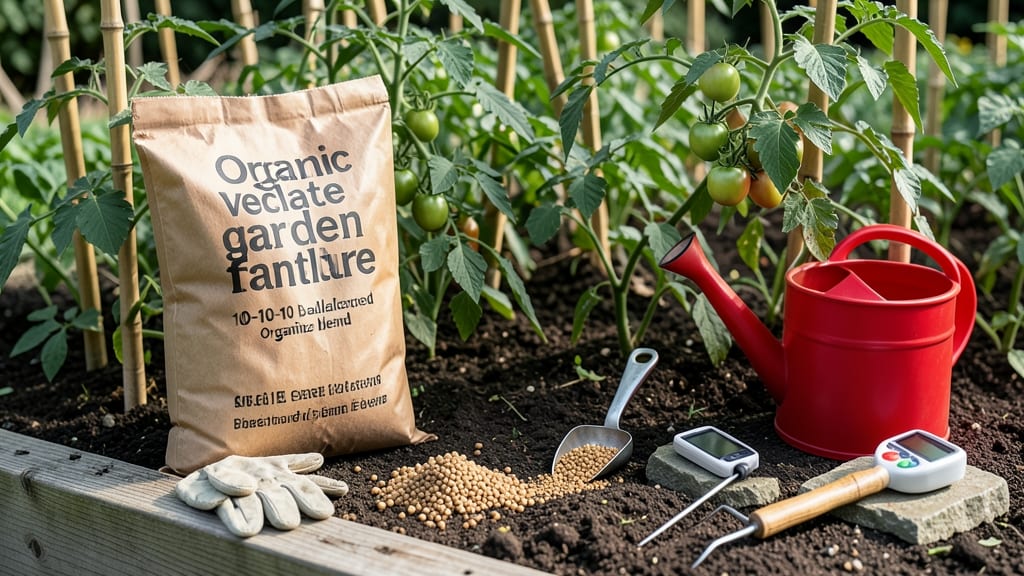
To fertilize a vegetable garden properly, you need a schedule that matches your soil’s needs and your plants’ growth stages—because guessing leads to wasted fertilizer or stunted crops.
Picture this: you’ve spent weeks tending your 🥬 garden, only to watch your tomatoes struggle or your lettuce bolt because the soil is either starved or overloaded. The key?
A fertilization plan that’s as precise as it is flexible, adjusting for everything from sandy soil to heavy clay and from leafy greens to fruiting plants.
Most gardeners overcomplicate it, but the truth is simpler: soil tests and crop-specific timing are your best tools. I’ll break down exactly how often to feed your garden—whether you’re using organic compost, synthetic blends, or something in between—so you avoid common mistakes like nutrient burn or missed harvests.
By the end, you’ll have a customizable schedule that keeps your soil healthy, your plants thriving, and your dinner table stocked with homegrown goodness—no more guesswork, just results.

Soil test results decoded: fertilizer frequency by nutrient deficiencies
Interpreting your soil test results is the first step to fertilizing your vegetable garden with precision. Most tests report N-P-K values (nitrogen, phosphorus, potassium), but understanding what those numbers mean—and how they translate to fertilization timing—can transform your harvests.
A low nitrogen reading, for example, signals leafy greens may need a boost every 3-4 weeks, while potassium-deficient soil might require a once-per-season application timed before fruiting.
Your soil’s organic matter percentage also plays a critical role. Soils with less than 3% organic matter need more frequent, lighter applications of fertilizer (every 4-6 weeks), while 5%+ organic matter can stretch intervals to 8-12 weeks.
Think of it like a slow-release system—your plants draw nutrients steadily from well-composted soil, reducing the need for synthetic inputs.
🌱
| Nutrient Deficiency | Fertilizer Type | Frequency | Best Application Time | Seasonal Adjustment |
|---|---|---|---|---|
| Low Nitrogen (N) | Blood meal, fish emulsion, or 10-0-0 | Every 3-4 weeks | Early spring + mid-summer | Avoid fall applications |
| Low Phosphorus (P) | Bone meal, rock phosphate, or 0-10-0 | Once per season | Pre-planting or early spring | Best in cooler months |
| Low Potassium (K) | Greensand, kelp meal, or 0-0-50 | Every 6-8 weeks | Late spring to early summer | Avoid late-season applications |
| Balanced Deficiency (N-P-K) | 10-10-10 or compost tea | Every 4-6 weeks | Spring + mid-summer | Adjust for local climate |
For cool-season climates (USDA Zones 3-6), focus on early spring fertilization (March-April) to jumpstart growth. Apply half your annual nitrogen at planting, then top-dress with a low-N fertilizer (like fish emulsion) every 6 weeks until the first frost.
In warm-season zones (7-10), shift timing to late spring (May-June) and prioritize potassium-rich fertilizers in summer to support fruiting crops like tomatoes and peppers.
Always pair your fertilizer schedule with soil moisture checks. Dry soil locks out nutrients, making even frequent applications ineffective. Water deeply 24 hours before and after fertilizing to activate nutrient uptake.
In sandy soils, which drain quickly, reduce application rates by 25-30% and fertilize more often (every 3 weeks), while clay soils can handle less frequent, heavier doses (every 8 weeks) due to slower nutrient release.
Watch for visual deficiency signs to fine-tune your schedule. Yellowing leaves (especially older ones) scream nitrogen deficiency, while purple stems or stunted growth often indicate phosphorus shortages. Brown leaf edges or weak stems?
That’s your cue to add potassium. Adjust your timing based on these cues—sometimes, a single targeted boost beats a rigid schedule.
🌿
Seasonal adjustments are key. In northern climates, where growing seasons are short, concentrate fertilization efforts on May and June, then taper off by August to avoid late-season flushes that stress plants before frost.
Conversely, southern gardens can fertilize through September, but switch to low-nitrogen formulas in late summer to encourage root hardening before winter. Pro tip: Side-dress (apply fertilizer beside plant roots) instead of top-dressing to reduce nutrient loss from rain or runoff.
Don’t overlook secondary nutrients like calcium, magnesium, and sulfur. While your soil
Plant-specific fertilization schedules for maximum yields
Not all vegetables have the same hunger for nutrients, which is why a one-size-fits-all fertilization approach rarely works. Tomatoes crave phosphorus for fruiting, while leafy greens need nitrogen for rapid growth.
Understanding these differences lets you feed your garden precisely—boosting yields without waste. The key is timing: fertilize at the right growth stages and with the right nutrient ratios.
Organic fertilizers like compost or fish emulsion release nutrients slowly, while synthetic options (e.g., 10-10-10 NPK) provide immediate boosts. For example, I use compost tea for leafy greens but switch to a phosphorus-heavy fertilizer when my tomatoes start flowering.
The goal? Match the fertilizer to the plant’s current needs—not just its general category.
- 1. Leafy Greens (Lettuce, Spinach, Kale): Apply nitrogen-rich fertilizer every 3-4 weeks during active growth. Use fish emulsion or alfalfa meal for organic options.
- 2. Root Vegetables (Carrots, Beets, Radishes): Fertilize lightly at planting with a balanced 5-5-5 mix. Avoid high-nitrogen fertilizers to prevent leafy growth over roots.
- 3. Fruiting Plants (Tomatoes, Peppers, Cucumbers): Start with phosphorus-heavy fertilizer (e.g., 5-10-10) at planting, then switch to potassium-rich (e.g., 0-0-50) when flowers appear.
- 4. Alliums (Onions, Garlic, Leeks): Use a low-nitrogen fertilizer (e.g., 3-4-6) at planting. Avoid fertilizing after 6 weeks to prevent bolting.
- 5. Herbs (Basil, Parsley, Cilantro): Fertilize every 6-8 weeks with a light dose of compost or worm castings. Over-fertilizing leads to bitter flavors.
For organic gardens, I rely on compost and manure teas for slow-release nutrients, while synthetic fertilizers offer quicker results. For example, my tomatoes get a synthetic 10-10-10 at planting and a potassium boost when flowers form. The trade-off? Synthetics require more frequent applications, while organics build soil health long-term.
Pro tip: Side-dress fertilizers (like alfalfa meal) mid-season for a nutrient boost without disturbing roots. I do this for my peppers in July to extend their fruiting window. Pair this with mulching to retain moisture and regulate soil temperature—critical for root vegetables like carrots.
Watch for plant signals: Yellowing leaves? Likely nitrogen deficiency. Stunted growth? Try a phosphorus-rich fertilizer. Adjust your schedule based on these cues—your plants will thank you with bigger, healthier yields. 🌿