
Tools
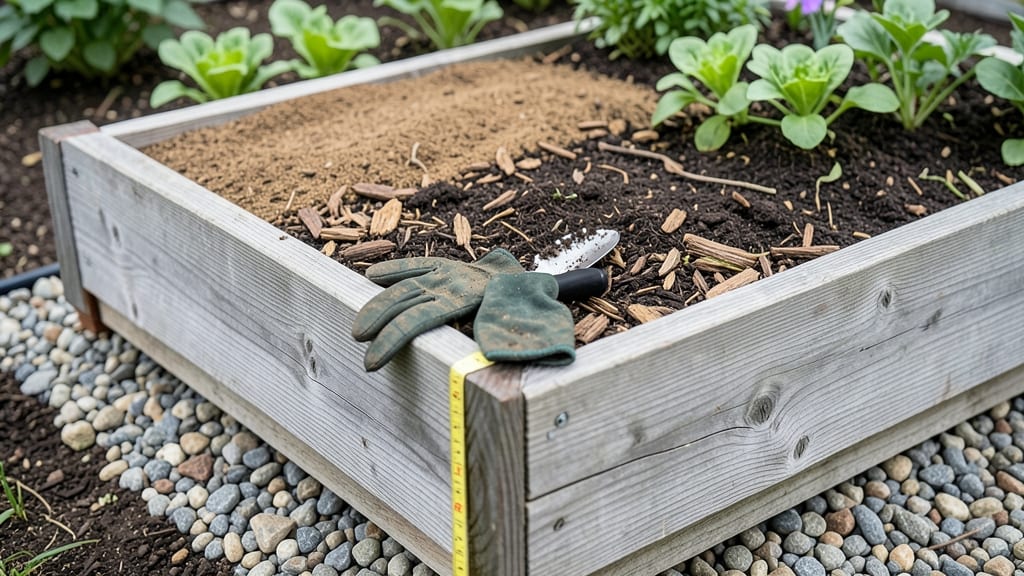
Getting your raised garden bed soil depth right is the foundation for healthy roots and bountiful harvests—because what’s below matters just as much as what’s above 🌱.
Struggling to get your raised garden beds to produce thriving plants? The secret often lies beneath the surface—in the layers of soil depth that determine root health and yield.
Too shallow, and your carrots and potatoes won’t develop properly. Too deep, and you’re wasting resources on empty space. The sweet spot? A carefully layered approach that balances drainage, nutrients, and root space.
In this guide, I’ll walk you through the ideal soil depth for different plants, how to layer your bed like a pro, and how to adjust for containers or small spaces—so you can grow bigger, stronger, and more efficient plants.
Optimal raised garden bed soil depth by plant type: root zone requirements
Getting your raised garden bed soil depth right is the foundation of a thriving garden.
Unlike in-ground planting, raised beds give you complete control over soil composition and depth—but that control comes with responsibility. Too shallow, and deep-rooted plants like potatoes will struggle. Too deep, and you waste resources while risking poor drainage.
The key is matching soil depth to your plants' root zone requirements, which vary dramatically between vegetables, herbs, and flowers.
Most gardeners aim for a minimum of 6 inches of soil depth for leafy greens and herbs, but deep-rooted crops like asparagus or carrots demand 18+ inches to thrive. Research shows that 60% of plant growth happens below the soil surface, where roots access water and nutrients.
Understanding these needs ensures your raised beds become productive powerhouses rather than wasted space.
| Plant Type | Root Depth | Recommended Soil Depth | Example Plants | Special Notes |
|---|---|---|---|---|
| Shallow-rooted vegetables | 0-6 inches | 6-12 inches | Lettuce, Radishes, Spinach, Green Onions | Fast-growing; prioritize topsoil quality |
| Medium-rooted vegetables | 6-12 inches | 12-18 inches | Beets, Bush Beans, Kale, Swiss Chard | Balanced depth for harvestable roots |
| Deep-rooted vegetables | 12-36 inches | 18-24 inches | Carrots, Potatoes, Sweet Potatoes, Asparagus | Requires deeper beds or layered soil |
| Herbs | Varies (3-12 inches) | 8-12 inches | Basil, Parsley, Thyme, Rosemary | Drought-tolerant herbs need well-draining soil |
| Flowers & Perennials | 6-24 inches | 12-18 inches | Marigolds, Lavender, Daylilies, Coneflowers | Perennials benefit from deeper soil long-term |
For shallow-rooted plants like lettuce or radishes, a 6-12 inch soil depth works perfectly. These crops thrive in the top layer where nutrients are most concentrated. However, if you're growing deep-rooted crops, like carrots or potatoes, you'll need to go deeper—18-24 inches is ideal.
Studies show that carrots grown in shallow beds often fork or split due to restricted root growth, reducing both yield and quality.
Herbs present a unique challenge because their root depth varies widely. Basil and parsley are happy with 8-10 inches, while rosemary and thyme can handle deeper beds up to 12 inches. The key is to match the soil depth to the herb's natural growth habit.
For example, rosemary is drought-resistant and benefits from deeper soil to establish strong roots that access moisture during dry spells.
When planning your raised bed, consider layering techniques to maximize depth without excessive height. For instance, you can use a 12-inch base layer of compost and topsoil for shallow-rooted plants, then add a 6-inch extension of loose, sandy soil for deep-rooted varieties.
This approach gives you flexibility to grow multiple plant types in the same bed over time.
Don't overlook the importance of drainage when adjusting soil depth. Raised beds should always have holes in the bottom or a gravel layer to prevent waterlogging. Poor drainage can lead to root rot, even in deep soil.
Test your soil's drainage by filling a container with water and measuring how quickly it drains—ideal drainage should take 2-4 hours for excess water to escape.
If you're working with limited space, focus on intercropping shallow and deep-rooted plants. For example, plant radishes (
Layering techniques for perfect raised bed soil composition
Creating the perfect raised bed soil composition starts with understanding how layers work together to support plant roots. Unlike in-ground soil, raised beds give you complete control over soil depth and structure. The key is balancing organic matter, drainage, and nutrient availability while avoiding compaction that stifles roots.
Most gardeners make the mistake of treating raised beds like in-ground plots, but the layering approach is what makes them thrive. Think of it like building a cake—each layer serves a purpose. The bottom layer provides stability, while the top layers hold moisture and nutrients.
For best results, aim for a minimum 12-inch depth for most vegetables, with deeper beds for root crops like carrots or potatoes.
Purpose: Improves drainage and prevents weeds while breaking down slowly
Purpose: Adds nutrients and improves soil structure for root growth
Purpose: Provides ideal planting medium with balanced moisture retention
Purpose: Reduces evaporation and suppresses weeds without compacting soil
One common mistake is using only one type of soil, like pure topsoil. This creates a dense layer that roots can't penetrate easily. Instead, the layered approach mimics natural forest floors where fallen leaves and organic matter gradually break down.
For deep-rooted plants like tomatoes or squash, add an extra 4-6 inches of compost-rich soil to the middle layer.
Don't forget to test your soil's pH before layering. Most vegetables prefer a slightly acidic to neutral range (6.0-7.0). If your local topsoil is heavy clay, mix in sand or perlite to improve drainage in the bottom layers.
For containers or small raised beds, reduce the depth slightly but maintain the same layering principle—just scale down proportions.
After building your layers, water thoroughly to help settle the materials without compacting them. Then let it sit for at least a week before planting to allow microbial activity to begin breaking down the organic matter.
This pre-planting cure creates a living soil ecosystem that will support your plants all season long.
For long-term success, add a 1-2 inch layer of compost each spring to replenish nutrients. This maintains the ideal soil structure while avoiding the need for heavy fertilizers that can disrupt the microbial balance.
With proper layering, your raised beds will provide consistent moisture, optimal aeration, and abundant nutrients—everything your plants need to thrive.