
Companion Plants
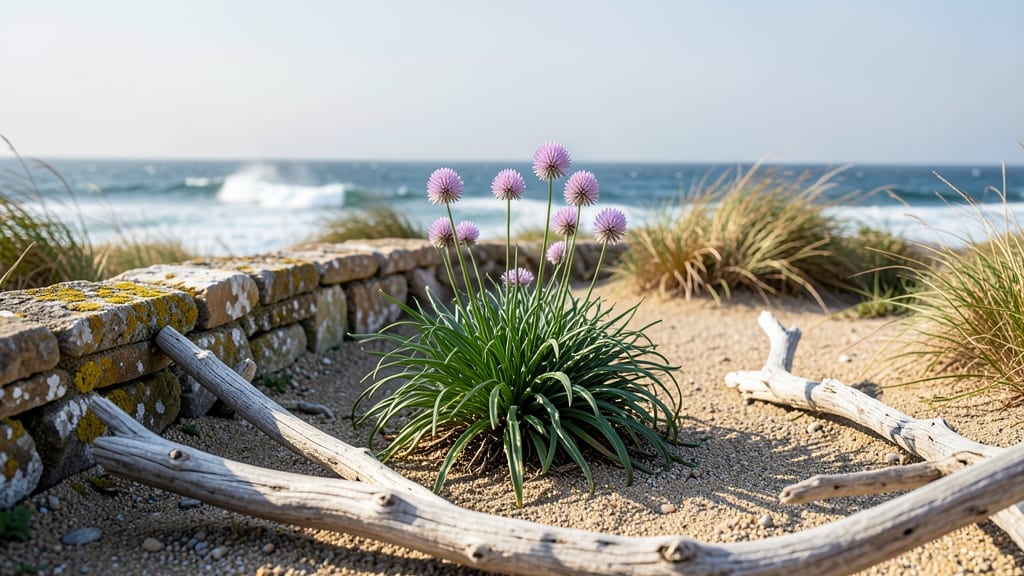
For seaside gardens, salt-tolerant plants like sea oats, beach grass, and saltmarsh cordgrass create resilient landscapes that withstand harsh coastal conditions. Drought-hardy options such as rosemary, lavender, and yucca also thrive in sandy, sun-drenched areas.
Creating a seaside garden means choosing plants that can handle salty winds, sandy soil, and intense sunlight—without compromising beauty. 🌊 The key lies in their natural adaptations: many coastal plants have waxy leaves to repel salt spray or deep roots to anchor against erosion.
I’ve found that mixing native grasses like sea oats with flowering perennals such as beach heather not only survives but thrives, adding texture and color to dunes and shorelines. For drier spots, Mediterranean herbs like rosemary and lavender offer both practicality and fragrance, while yucca’s sword-like foliage adds architectural interest.
What sets these plants apart is their ability to regulate moisture and salt intake, often through specialized glands or root systems. For example, saltmarsh cordgrass filters out excess salt before it reaches its leaves, while beach grass spreads aggressively to stabilize shifting sands.
When planning your garden, consider grouping plants by their moisture needs—some tolerate soggy soil near the tide line, while others prefer well-drained areas further inland.
💡 In This Article
- How Salt-Tolerant Plants Survive Coastal Conditions
- Best Salt-Resistant Plants by Garden Type and Climate
How salt-tolerant plants survive coastal conditions
Salt-tolerant plants have evolved remarkable physiological adaptations to thrive where most would wither. Their first line of defense is salt exclusion—specialized cells in their roots and leaves actively pump excess salt out before it can cause damage.
For instance, saltmarsh cordgrass (Spartina alterniflora) uses a process called osmotic regulation, where it maintains higher internal salt concentrations than the surrounding soil, creating a protective gradient that prevents toxic buildup.
This allows it to grow in soils with salinity levels up to 35 parts per thousand (ppt), comparable to seawater.
Their deep, fibrous root systems—often extending 3-5 feet downward—anchor them against wind and sand erosion while accessing moisture deep in the soil.
Beach heather (Erica cinerea) and sea lavender (Limonium spp.) also feature waxy leaf coatings that repel salt spray, much like a lotus leaf repels water.
These adaptations aren’t just about survival; they create a self-sustaining ecosystem by stabilizing dunes and filtering salt from groundwater, making the soil more hospitable for other plants over time.
Wind resistance is another critical factor. Plants like sea oats (Uniola paniculata) grow in dense clumps that reduce wind speed at ground level by up to 50%, creating microclimates that protect smaller plants. Their hollow stems act as natural shock absorbers, bending rather than breaking in storms.
This flexibility is why they’re often used in coastal restoration projects—their ability to withstand 70+ mph winds makes them ideal for dune stabilization.
What’s fascinating is how these plants manage water balance. Many, like beach grass (Ammophila breviligulata), have salt glands that excrete excess sodium chloride through tiny pores on their leaf surfaces.
This process, called salt secretion, keeps internal salt levels in check while allowing the plant to absorb necessary minerals. The trade-off? They often grow more slowly than inland plants, but their resilience pays off in the long run.
For gardeners, this means choosing plants based on their specific adaptations. For example, saltmarsh plants thrive in soggy, saline soils, while dune plants prefer well-drained, windy conditions. Mixing species with complementary adaptations—like pairing salt-excreting sea lavender with deep-rooted sea oats—creates a more stable and visually dynamic seaside garden.
One surprising benefit of these adaptations is their low-maintenance nature. Once established, salt-tolerant plants require minimal fertilization because they’ve evolved to extract nutrients efficiently from nutrient-poor coastal soils. This makes them perfect for eco-conscious gardeners looking to reduce water and chemical use while creating a hardy, low-stress landscape.