
Tools
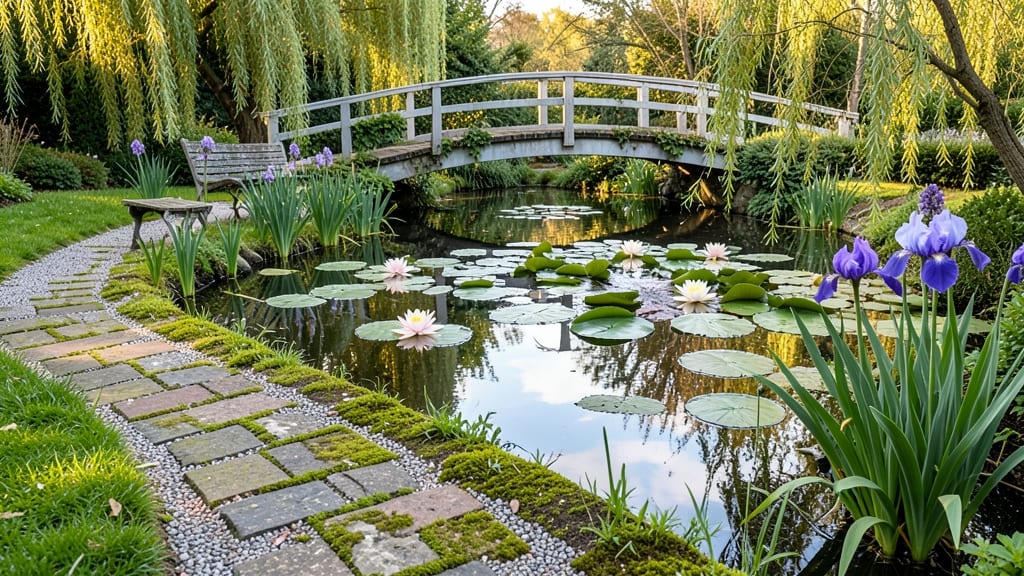
The pathway in Monet's garden at Giverny meanders through vibrant borders of peonies, roses, and wisteria, crafting a winding route that evolves with seasonal blooms while harmonizing natural curves with deliberate plant layering. This intentional design emphasizes fluid movement, shifting light patterns, and seamless transitions between floral displays.
The winding route isn't just decorative—it's a carefully engineered experience that guides visitors through time itself. 🌸 Monet's pathways create "picture frames" where each turn reveals new compositions, with taller plants like wisteria forming arches and lower blooms like peonies adding depth.
What makes this design timeless is how it balances structure (the path itself) with organic growth, creating a garden that feels both controlled and wild. The secret lies in these layered plantings: early spring bulbs give way to summer roses, then autumn clematis takes over, ensuring every season feels fresh.
For gardeners inspired by Monet's approach, the key is repetition with variation—using the same core plants (like roses) but in different colors and heights. 🌿 I recommend starting with three "anchor" plants that bloom consecutively (e.g., tulips, peonies, hydrangeas) and letting them dictate your path's rhythm.
The French climate gives Giverny's garden its lushness, but similar effects work in other regions by choosing native perennials with overlapping bloom times.
💡 In This Article
- How Monet’s Pathway Design Enhances Garden Flow
- Recreating Monet’s Signature Plant Pairings in Your Garden
How Monet’s pathway design enhances garden flow
Monet’s pathway at Giverny isn’t just a walkway—it’s a carefully orchestrated visual journey designed to manipulate how visitors experience space and time.
The paths curve gently rather than following straight lines, which creates a subconscious sense of discovery. 🌿 Studies in environmental psychology show that curved pathways slow movement, allowing gardeners to pause and absorb details they’d miss on a straight route.
The average path width at Giverny is about 3-4 feet, wide enough for two people to walk side-by-side but narrow enough to encourage intimate engagement with the surrounding plants.
The real magic happens in how Monet layered plant heights to frame views like a living painting.
Taller plants like wisteria (15-20 feet) and clematis (10-12 feet) form natural arches that draw the eye upward, while mid-height roses (3-5 feet) create horizontal lines, and low-growing peonies (2-3 feet) add depth at the base.
This vertical stratification works like a camera lens: each turn reveals new focal points while maintaining continuity. The science of "visual persistence" explains why this works—our eyes need about 0.2 seconds to adjust between focal points, and Monet’s design provides just enough variation to keep the experience fresh without overwhelming.
Seasonal transitions are the icing on the cake. Monet’s plant selection ensures that as one bloom fades (like early spring tulips), another takes over (summer roses), creating a 12-month color palette.
The pathway itself becomes a timeline: visitors walking it in May see peonies in full glory, while the same route in July bursts with roses, and autumn brings golden clematis. This isn’t accidental—Monet tracked bloom cycles meticulously, arranging plants so their peak seasons overlapped just enough to maintain visual interest.
The result? A garden that feels alive and evolving, rather than static. 🌸
Light plays an equally crucial role. The pathways are positioned to catch morning sun on spring blooms and afternoon light on summer flowers, enhancing their colors through natural backlighting.
Monet’s use of white gravel paths (about 6 inches wide) reflects light upward, brightening the surrounding foliage—a technique landscape designers call "light diffusion." This creates the illusion of more space while keeping the garden feeling enclosed and intimate.
The contrast between the cool gravel and warm plant hues also adds to the visual harmony.
What’s often overlooked is how the pathway’s design encourages physical movement that mirrors the garden’s visual rhythm. The gentle curves require visitors to shift their perspective constantly, preventing monotony. 💫 This "dynamic observation" principle (borrowed from Japanese garden design) means your brain stays engaged—unlike straight paths that can feel repetitive.
For gardeners wanting to replicate this effect, start with a central path that winds at least 30 feet before branching, and place focal points every 8-10 feet along the route to maintain visual interest.
The genius of Monet’s approach is that it’s both artistic and practical. The pathways serve multiple functions: they guide visitors, create microclimates (shady spots under wisteria arches), and even support plant growth by channeling rainwater to roots.
This multi-layered thinking is what makes his garden timeless—it’s not just about beauty, but about how design interacts with human experience. The takeaway? A great garden path should do more than connect points—it should transform the journey itself. ✨