
Neem Oil
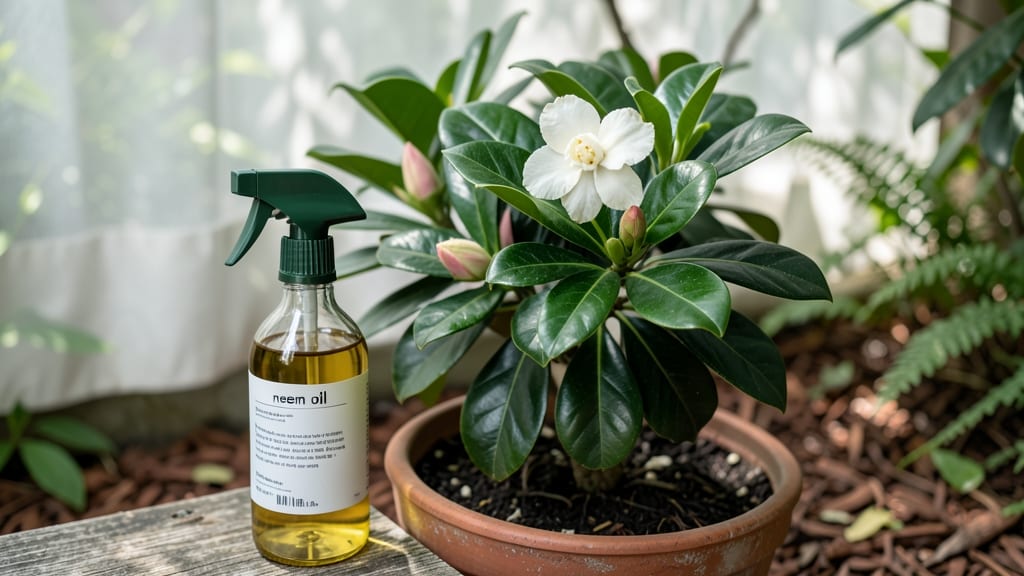
Using neem oil on gardenia plants effectively treats fungal infections like powdery mildew and black spot while restoring vitality to struggling foliage by inhibiting pathogen growth and strengthening natural plant resistance. Apply a diluted neem oil spray every 2-4 weeks during the growing season.
Neem oil works as a natural fungicide because its active compound, azadirachtin, disrupts fungal spores' ability to reproduce, breaking their life cycle before they can spread. 🌿 For gardenias, this means fewer unsightly spots and healthier leaves over time.
The key is consistency—regular applications during warm, humid months create a protective barrier while avoiding harsh chemicals that could stress the plant further.
When applying, I always mix 1 teaspoon of neem oil with 1 quart of water and a drop of mild dish soap as an emulsifier. Spray in the early morning or late evening to prevent leaf burn from sunlight exposure.
Pair this with proper spacing between plants for airflow, and you'll see a noticeable difference in just a few weeks.
💡 In This Article
- How Neem Oil Fights Gardenia Fungal Diseases
- Step-by-Step Neem Oil Application for Reviving Gardenias
How neem oil fights gardenia fungal diseases
Neem oil's power against gardenia fungal diseases comes from its active compound, azadirachtin, which acts like a fungal disruptor. This natural compound interferes with the growth and reproduction of fungal spores by blocking their ability to form protective cell walls.
For gardenias, this means targeting common pathogens like Botrytis (which causes gray mold) and Oidium (responsible for powdery mildew). Unlike chemical fungicides that often contain synthetic compounds like copper or sulfur, neem oil works by disrupting the pathogens' biological processes without harming the plant's beneficial microbes.
The science behind this involves azadirachtin's ability to inhibit enzymes that fungi need for growth. When applied as a foliar spray, the oil coats the leaves and stems, creating a protective barrier that prevents spores from germinating.
Studies show that neem oil can reduce fungal spore germination by up to 90% when used at the right concentration. For gardenias, which are particularly sensitive to environmental stress, this gentle yet effective approach helps restore their natural defenses without the harsh side effects of chemical treatments.
What makes neem oil especially valuable for gardenias is its multi-faceted action. It doesn't just kill existing fungi—it also disrupts the signaling pathways that allow spores to communicate and coordinate their attack.
This means that even if some spores survive the initial application, their ability to establish a full infection is significantly weakened. The result is healthier foliage with fewer black spots or powdery coatings, and a plant that can focus its energy on blooming rather than fighting off infections.
Another key advantage is how neem oil interacts with gardenia's natural chemistry. Gardenias produce their own antifungal compounds, but stress from disease or poor growing conditions can suppress these defenses. Neem oil acts as a catalyst, helping the plant ramp up its own protective responses.
This is why you'll often see improved leaf color and vigor within 2-3 weeks of consistent application, even in plants that were previously struggling.
For best results, always use a 1% neem oil solution (1 teaspoon per quart of water) and apply it when the gardenia is actively growing. The oil's fungicidal properties work best in warm, humid conditions—exactly when gardenias are most vulnerable to fungal outbreaks.
Just be sure to avoid spraying during peak sunlight hours, as the oil can cause leaf burn when exposed to direct UV rays.
One common misconception is that neem oil only works as a preventive measure. In reality, it's equally effective at treating existing infections, though you may need to apply it more frequently (every 7-10 days) until the symptoms clear.
The key is persistence—fungal diseases don't disappear overnight, but with regular care, your gardenia can make a full recovery and thrive once again.
If you're dealing with severe infections, consider combining neem oil with other cultural practices like improving airflow around the plant and avoiding overhead watering. This creates an environment where fungi struggle to take hold, giving the neem oil's protective effects an extra boost. 🌿