
Tools
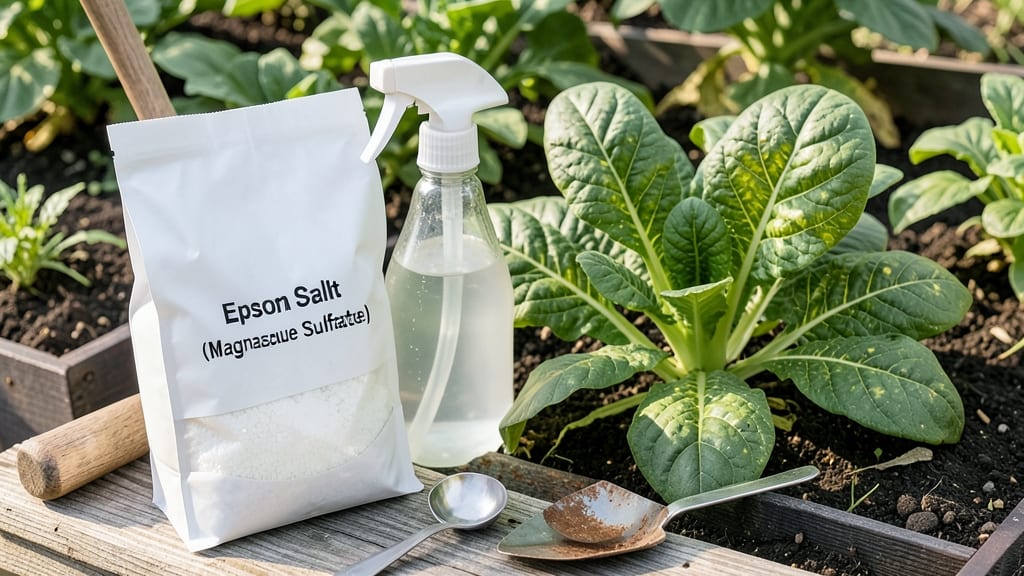
Using magnesium for gardens boosts plant health by strengthening chlorophyll production and preventing yellowing leaves, particularly in nutrient-poor soils. Try Epsom salt (magnesium sulfate) or organic options like dolomitic lime for best results.
Magnesium acts as the central atom in chlorophyll, the pigment that gives plants their green color and powers photosynthesis. 🌱 When your garden plants show yellowing between veins (a classic sign of deficiency), it's often a cry for more magnesium.
Unlike nitrogen or potassium, which get most of the attention, magnesium plays a quiet but crucial role in energy transfer within plant cells. I've seen dramatic turnarounds in struggling tomato plants after just one application of magnesium-rich fertilizer—leaves go from sad and yellow to vibrant green in days.
For practical application, Epsom salt is the easiest solution for quick fixes, while organic amendments like greensand provide long-term benefits. The key is proper timing: apply magnesium in early spring for new growth or late summer to help plants recover from heat stress.
Always follow package instructions, as overapplication can lead to soil pH imbalances that hurt other nutrients.
💡 In This Article
- How Magnesium Supports Chlorophyll and Plant Health
- Best Organic and Synthetic Magnesium Amendments for Gardens
How magnesium supports chlorophyll and plant health
Magnesium sits at the heart of chlorophyll's molecular structure, acting as the central atom that binds nitrogen-containing rings to create the pigment responsible for capturing sunlight. 🌿 Without magnesium, plants can't efficiently convert light energy into chemical energy through photosynthesis.
This is why magnesium deficiency often appears as yellowing between leaf veins (interveinal chlorosis)—the veins stay green because they contain more magnesium, while the surrounding tissue suffers.
Think of it like a plant's solar panel system failing: without proper magnesium, energy production grinds to a halt, leading to stunted growth and poor fruit development.
The biochemical process begins in the chloroplasts, where magnesium stabilizes the chlorophyll molecule's structure. Studies show that magnesium-deficient plants can experience a 30-50% reduction in photosynthesis efficiency, even when other nutrients are abundant.
This happens because magnesium also activates over 300 enzymes involved in energy transfer, carbohydrate metabolism, and protein synthesis. For example, in tomato plants, magnesium deficiency reduces fruit quality by 20-30% due to poor sugar accumulation—a direct result of compromised photosynthesis.
Organic magnesium sources like dolomitic lime release magnesium slowly over time, improving soil structure while providing nutrients. Synthetic options like Epsom salt (magnesium sulfate) offer an immediate boost but require careful application.
The key difference lies in availability: organic sources become plant-accessible through microbial activity in the soil, while synthetic magnesium dissolves quickly but may leach away if not properly managed.
For container gardens, I've found that mixing 1 tablespoon of Epsom salt per gallon of water as a foliar spray works wonders for houseplants showing deficiency symptoms.
Deficiency symptoms vary by plant type but often include curled leaves, poor flowering, and weak stems. In citrus trees, magnesium deficiency causes "yellow shoot" disease, where new growth remains pale and stunted.
The good news is that magnesium is highly mobile in plants—once corrected, symptoms often disappear within 4-6 weeks as the nutrient redistributes to new growth. For heavy feeders like corn or squash, a soil test can reveal if your garden needs a magnesium boost before planting season.
One surprising fact is that magnesium also helps plants regulate their water use. When magnesium levels drop, stomata (leaf pores) may close prematurely, reducing water uptake and increasing heat stress. This explains why magnesium-deficient plants often wilt more easily, even when soil moisture is adequate.
The solution? A balanced approach—combine magnesium amendments with proper irrigation practices to maximize uptake. For example, applying magnesium in the morning allows plants to absorb it before afternoon heat causes stress.