
Fertilization
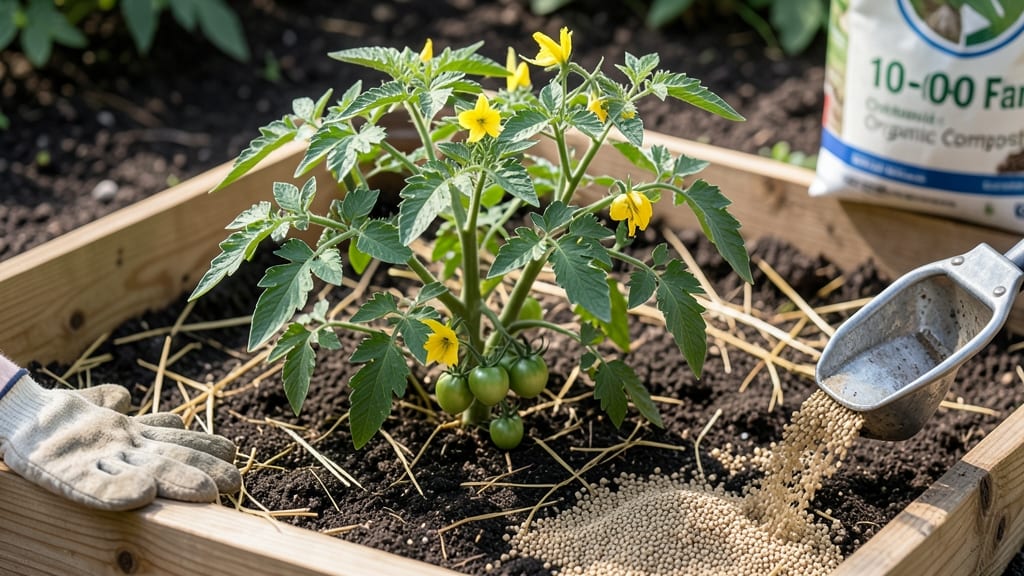
To fertilize your garden effectively, time applications based on plant type and growth stage: use slow-release fertilizer in early spring for perennials, seedlings, and vegetables; feed flowering plants mid-season; and apply light doses to lawns every 6-8 weeks during active growth. Never fertilize dormant plants or in extreme heat.
Timing matters more than you might think—roots absorb nutrients most efficiently during active growth phases, which aligns with seasonal patterns. 🌱 For instance, early spring kickstarts root development in perennials, while flowering plants need mid-season feeding to support bloom production.
Lawns, being perennial grasses, benefit from regular light feedings throughout their growing season, but skipping winter applications prevents nutrient buildup that can burn tender new shoots come spring.
What's interesting is how temperature plays a role: fertilizers applied when soil temps are below 50°F can leach into groundwater instead of feeding roots, while applications in 90°F+ heat stress plants by forcing rapid growth they can't sustain.
That's why I always check the soil thermometer before reaching for the fertilizer bag—it's the difference between a thriving garden and one struggling to recover.
💡 In This Article
- How Plant Life Cycles Determine Fertilizer Timing
- Seasonal Fertilizer Schedule by Common Garden Plants
How plant life cycles determine fertilizer timing
Every plant follows a biological rhythm where nutrient absorption peaks during specific growth phases. For annuals, which complete their life cycle in one season, the most critical fertilization window is during the first 4-6 weeks after planting when roots establish rapidly.
Perennials, however, have a different pattern—they store nutrients in their roots over winter and need a spring boost (typically when soil temps reach 55°F) to break dormancy and fuel new growth.
Lawn grasses, being perennial, require a different approach: they absorb nutrients continuously during their growing season but need 4-6 applications spaced 6-8 weeks apart to maintain vigor.
The science behind this lies in root zone activity. When soil temperatures rise above 50°F, microbial activity increases dramatically, breaking down organic matter and making nutrients available.
This is why early spring applications work best for cool-season plants like lettuce and spinach—their roots begin growing as soon as soil warms, while warm-season crops like tomatoes and peppers need fertilizer when nighttime temps stay above 60°F.
The key is matching fertilizer timing to when plants are biologically ready to use those nutrients, not just when you feel like applying them. 🌱
Temperature extremes create another critical factor. When soil temps exceed 85°F, plants experience nutrient burn because their metabolic processes can't keep up with rapid nutrient uptake. This is why summer fertilization often leads to leaf scorch or stunted growth—what appears to be a feeding frenzy is actually stress.
Similarly, applying fertilizer to dormant plants (like bulbs in winter) wastes nutrients since roots aren't active. The plant's natural growth cycle dictates when it can utilize fertilizer effectively, making timing as important as the fertilizer type itself.
Let's look at how this plays out in practice with three common scenarios. For vegetable gardens, the pre-planting phase (2-4 weeks before sowing) is ideal for incorporating compost or balanced fertilizer, while side-dressing (applying fertilizer alongside rows) works best when plants are 4-6 inches tall.
Flowering plants need a different approach—they require two applications: one when buds form and another when blooms appear, to support both reproductive growth and flower production.
Even lawns follow this pattern: they need early spring feeding to green up, late spring for root development, and early fall to store nutrients for winter.
What most gardeners overlook is how plant maturity affects fertilizer needs. Young seedlings, for example, need low-nitrogen fertilizers to prevent leggy growth, while established perennials can handle higher nitrogen levels.
The same principle applies to flowering plants—too much nitrogen late in the season will produce lush foliage at the expense of blooms.
This is why organic fertilizers with slow-release properties are often superior: they provide a steady nutrient supply that matches the plant's natural growth curve rather than overwhelming it with sudden spikes. 💫
Consider this analogy: fertilizing is like feeding a growing child. A toddler needs small, frequent meals with balanced nutrition, while a teenager might handle larger portions but still requires proper timing to avoid digestive stress.
Plants operate on similar principles—understanding their life cycles lets you provide nutrients exactly when they'll be most effective, maximizing growth while minimizing waste. This precision is what transforms good gardening into great gardening.
The bottom line is that successful fertilization hinges on three factors: plant type, growth stage, and environmental conditions. By aligning your fertilizer applications with these biological rhythms, you'll see healthier plants, better yields, and fewer wasted nutrients.
It's not just about what you feed your garden, but when you feed it—timing that makes all the difference in the plant kingdom.