
Planting
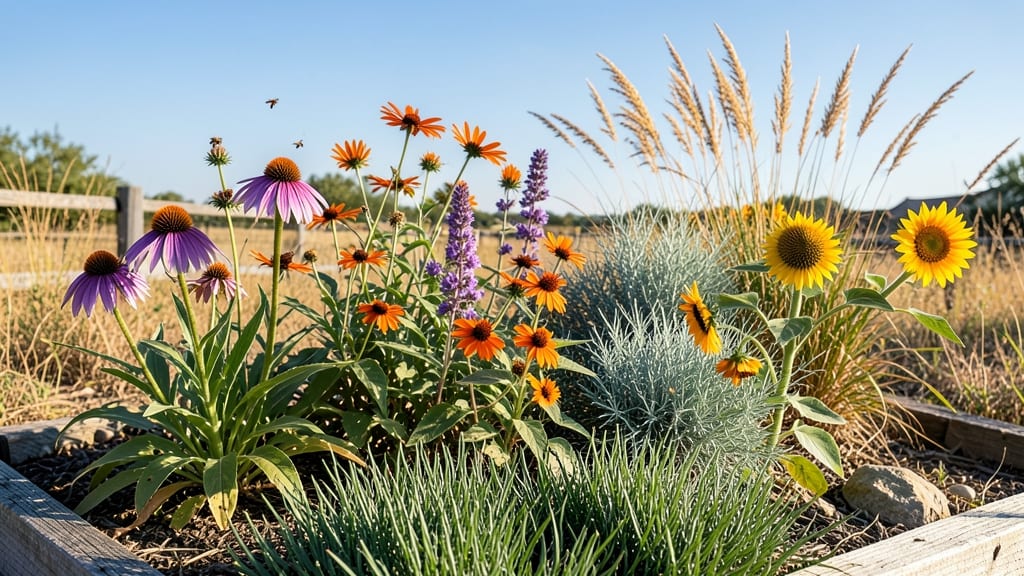
Kansas gardening zones cover USDA Hardiness Zones 5a through 7b, with most areas landing in 6a or 6b due to the state's dramatic seasonal shifts—think subzero winters and scorching summers. These variations mean your garden's success often depends on local microclimates, like sheltered spots that can push hardiness limits by a full zone.
Understanding Kansas's gardening zones starts with recognizing the state's diverse temperature extremes. The western plains often hit Zone 5a, while eastern areas like Kansas City sit comfortably in Zone 6b.
What makes this tricky is how quickly conditions change—one week might bring frost warnings, while the next could see triple-digit heat. 🌡️ This volatility means even neighboring yards might need completely different plant selections.
For example, a peony bush might thrive in Wichita (Zone 6b) but struggle in Garden City (Zone 5b) without winter protection.
What truly separates successful Kansas gardeners is their ability to work with microclimates. A south-facing wall can create a Zone 7-like microclimate in an otherwise Zone 6 area, while a low-lying spot might stay colder.
I've seen gardeners extend their growing season by 3-4 weeks simply by planting near heat-retaining brick walls or using raised beds with dark mulch. The key is observing your specific yard's patterns—where frost lingers longest or where heat pools—before making planting decisions.
💡 In This Article
- USDA Hardiness Zones in Kansas: Exact Boundaries and Plant Survival Limits
- Creating Microclimates for Kansas Gardens: Shelter, Soil, and Sun Strategies
USDA hardiness zones in Kansas: exact boundaries and plant survival limits
Kansas's USDA Hardiness Zones range from 5a in the western panhandle to 7b along the Missouri border, creating a dramatic east-to-west gradient. The western regions experience average annual minimum temperatures of -15°F to -20°F, while eastern areas rarely drop below 0°F.
This 15°F difference translates directly to plant hardiness—what thrives in Zone 6b Kansas City might perish in Zone 5a Garden City without protection. The state's flat terrain and continental climate amplify these extremes, with temperature swings of 100°F+ between winter lows and summer highs.
The frost-free period varies just as dramatically, from 150 days in western Kansas to 210 days in the southeast. This means gardeners in Zone 6a Topeka can plant warm-season crops like tomatoes 2-3 weeks earlier than their counterparts in Zone 5b Hays.
The USDA map shows these boundaries as smooth lines, but in reality, Kansas's zones shift abruptly over just 10-20 miles in some areas due to elevation changes and wind patterns.
For example, the Chisholm Trail region near Salina sits at 1,300 feet elevation, creating cooler microclimates compared to the lower plains.
What makes Kansas particularly challenging is the unpredictable nature of extreme events. A single late spring frost can devastate tender perennials, while summer heat waves can push temperatures to 110°F+—conditions that stress even heat-tolerant plants.
The 10-year average lows for Zone 6a (Kansas's most common zone) range from -10°F to -5°F, meaning plants rated for Zone 6 must withstand at least 5 years of these temperatures to be considered truly hardy.
This is why gardeners often plant Zone 7-rated perennials in sheltered locations, knowing they'll get extra protection.
Here's where the science gets interesting: Kansas's wind chill factor can make actual plant stress 3-5°F colder than the thermometer reading. A 20°F night with 20 mph winds feels like 10°F to plants, potentially pushing them into survival mode.
This is why windbreaks and snow fences become critical tools—reducing wind exposure by 50% can mean the difference between a plant surviving or dying. The same principle applies in summer, where evaporative cooling from wind can help plants endure 10°F hotter conditions.
Consider the case of crabapple trees, which thrive in Zone 5b but struggle in Zone 5a without winter mulch. The difference? 5°F of protection from 3 inches of mulch can shift a plant's survival odds from 50% to 90%+.
This is why Kansas gardeners often over-plant perennials—adding 20-30% more than recommended to account for potential winter dieback. The trade-off? More established plants mean faster ground cover and earlier blooms in spring.
For vegetable gardeners, the last frost date becomes the most critical factor. In Zone 6a, this typically falls around April 15, but can vary by 2 weeks either way depending on microclimate.
The first frost date in fall usually arrives October 15-30, giving gardeners a 170-190 day growing season. This is why fast-maturing varieties (like Early Girl tomatoes, which mature in 50-55 days) are essential—giving plants enough time to fruit before cold snaps.
The 100-day rule (counting back from your first frost) is your best friend for planning.
What most gardeners don't realize is how soil temperature interacts with air temperature. Even when air temperatures reach 70°F, soil may remain 10-15°F cooler—critical for seeds that need 60°F+ to germinate.
This is why black plastic mulch can raise soil temps by 5-8°F, extending the growing season by 2-3 weeks in spring. The same principle applies in fall, where straw mulch insulates roots, protecting them from 20°F ground temperatures that would otherwise kill tender plants.