
Advice
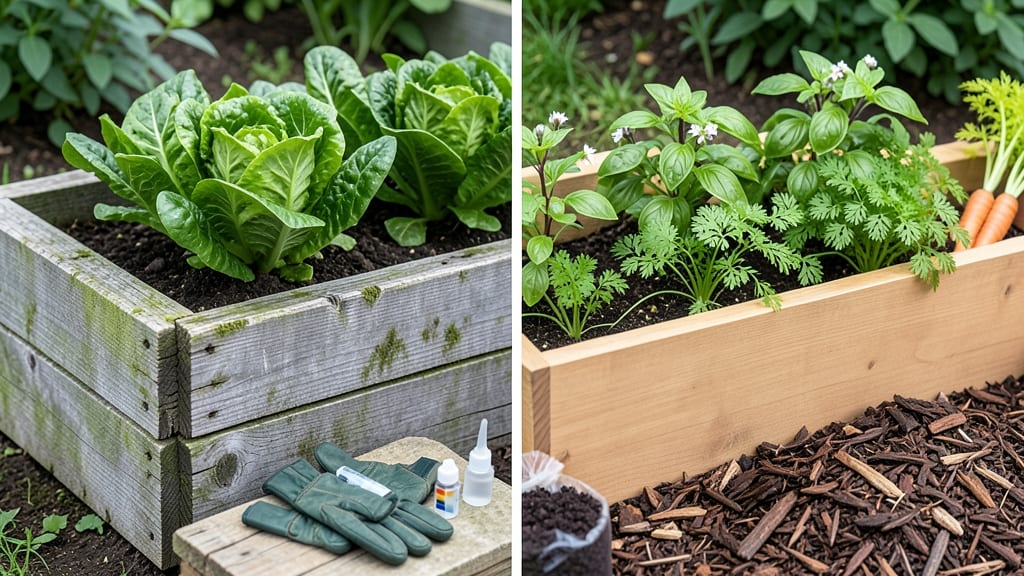
Is treated wood safe for gardens? Using older lumber carries risks from arsenic, chromium, and copper, but modern ACQ or MCQ-treated options release far fewer toxins over time. For raised beds or containers holding edible plants, opt for naturally rot-resistant woods like cedar or redwood instead.
Most gardeners don't realize how preservative chemicals seep into soil over time, altering pH levels and harming beneficial microbes. 🌱 Older pressure-treated wood with CCA (chromated copper arsenate) is particularly dangerous, as arsenic leaches slowly and accumulates in soil.
Even newer treatments like ACQ (alkaline copper quaternary) and MCQ (micronized copper quat) are safer but still require careful placement—keep them away from root zones of vegetables or herbs. If you're building a raised bed, cedar or redwood naturally resist rot without chemical additives, making them ideal for edible gardens.
For projects where treated wood is unavoidable—like fence posts or non-edible planters—choose ACQ-treated lumber and seal it with a non-toxic wood finish to minimize exposure. Always check the label for "ACQ" or "MCQ" instead of "CCA," and avoid burning treated wood, as inhaling the fumes can be hazardous.
When in doubt, recycled plastic lumber or composite materials offer chemical-free durability for garden structures.
💡 In This Article
- Chemical Risks in Treated Wood and How They Affect Soil
- Best Low-Toxicity Wood and Alternatives for Garden Projects
Chemical risks in treated wood and how they affect soil
The real danger in garden lumber comes from the preservative chemicals used during treatment. Older pressure-treated wood often contains CCA (chromated copper arsenate), which combines arsenic, chromium, and copper.
These metals don't just sit on the surface—they leach into soil at rates of 0.05-0.1 mg/kg per year for arsenic, according to EPA studies.
The arsenic disrupts plant nutrient uptake by mimicking phosphorus in cellular processes, while chromium alters soil pH, creating acidic micro-zones that harm beneficial microbes like mycorrhizal fungi.
Newer treatments like ACQ (alkaline copper quaternary) and MCQ (micronized copper quat) replaced CCA in 2003 due to arsenic concerns, but they still contain copper. The difference? ACQ leaches copper at 0.01-0.03 mg/kg annually—about 80% less than CCA—while MCQ uses micronized particles that bind more tightly to wood fibers.
However, copper accumulates in soil over time, potentially reaching toxic levels (50-100 ppm) for sensitive plants like tomatoes or lettuce after 5-10 years of use.
Here's what happens underground: The preservatives create a chemical gradient where water carries dissolved metals downward. In raised beds, this means edible crops absorb trace amounts through their roots.
While not immediately deadly, chronic exposure can reduce plant vigor and alter flavor profiles—something you'll notice in herbs like basil or cilantro growing near treated wood. The EPA's Soil Screening Guidance considers 0.39 mg/kg arsenic in soil as a threshold for potential health concerns.
Temperature and moisture accelerate leaching—wood in ground contact loses 2-3x more preservatives than above-ground structures. That's why fence posts degrade faster than deck railings. The good news? Modern ACQ-treated wood meets ASTM D6637 standards, which require 90% less arsenic than CCA.
But even these safer options should stay 12+ inches away from vegetable gardens to prevent root zone contamination.
Regulatory shifts matter too. The 2003 EPA ban on CCA for residential use forced the industry to adopt alternatives, but many homeowners still use old lumber. Test your wood: If it's greenish-gray (CCA) or has a 2003-or-earlier stamp, assume it's high-risk.
Newer wood will say "ACQ" or "MCQ" on the label, and often has a yellow or green stamp instead of the old green/black markings.
What most gardeners overlook is how these chemicals interact with soil organisms. Copper, for example, inhibits nitrogen-fixing bacteria at concentrations as low as 20 ppm, while chromium disrupts enzyme activity in decomposers like earthworms.
The result? Less organic matter breakdown and slower nutrient cycling in treated-wood-amended soil. For comparison, compost tea contains 0.1-0.5 ppm copper—far below what leaches from treated lumber.