
Pests
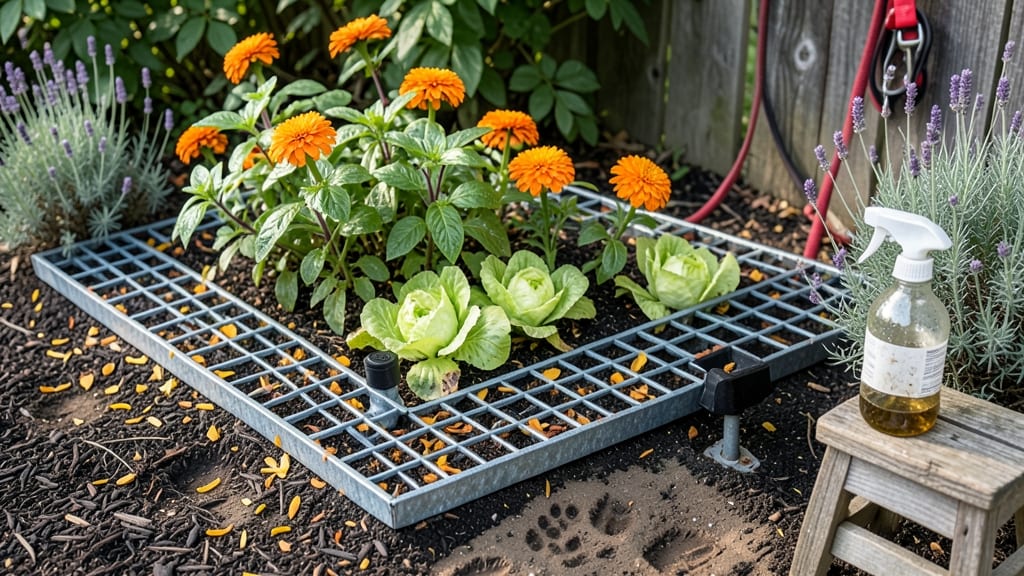
To keep dogs out of garden beds, start with physical barriers like chicken wire buried 6 inches deep, paired with training commands and deterrents such as motion-activated sprinklers or citrus sprays. Consistency is essential to discourage the behavior.
Dogs dig in garden beds for reasons ranging from boredom to scent marking, and their natural curiosity often overrides visual deterrents like rocks or mulch. 🐕 The key to success lies in combining physical barriers with positive reinforcement—buried wire prevents digging while training reinforces boundaries.
For example, motion-activated sprinklers create an unpleasant surprise when they activate, while citrus sprays disrupt their scent trails. I've found that smaller breeds require deeper barriers (up to 12 inches) compared to larger dogs, as their digging depth varies significantly.
When choosing materials, flexibility matters—plastic edging works well for small gardens, while metal grids provide durability for high-traffic areas. For slopes, securing barriers with landscape staples prevents shifting. Budget-conscious options include repurposed hardware cloth or layered cardboard soaked in vinegar (which dogs dislike).
The most critical factor? Consistency—rewarding your dog for staying out of the garden reinforces the boundary faster than punishment alone.
💡 In This Article
- Why Dogs Dig in Garden Beds and Effective Barrier Science
- Best Physical Barriers for Dog-Proofing Garden Beds
Why dogs dig in garden beds and effective barrier science
Dogs dig in garden beds primarily because of instinctual behaviors—burying bones, marking territory, or simply chasing prey.
Their powerful sense of smell also draws them to fresh soil, where they detect hidden insects or the scent of other animals. 🐾 For example, terriers like Jack Russells dig aggressively due to their hunting heritage, while smaller breeds may scratch out of boredom.
This explains why visual deterrents like rocks or mulch often fail: dogs see these as challenges to overcome rather than barriers.
The science behind effective barriers lies in their depth and material. A 6-inch-deep barrier works for most breeds, but terriers or hounds may require 12 inches because their digging depth exceeds that of smaller dogs. Flexible materials like chicken wire bend under pressure, while rigid plastic edging can snap.
Metal grids offer durability but may rust over time. The key is creating a physical obstruction that dogs can't bypass—something that disrupts their digging motion entirely.
Scent plays a critical role too. Dogs avoid areas sprayed with citrus or vinegar because these scents mask the appealing smells of soil and prey. Motion-activated sprinklers work by creating an unpleasant surprise when triggered, teaching dogs to associate the garden with discomfort.
However, these deterrents must be paired with barriers—otherwise, dogs will simply dig elsewhere. For instance, a sprinkler alone won't stop a determined digger, but a buried wire combined with a spray creates a multi-layered defense.
Behavioral training is equally important. Dogs learn boundaries through repetition, so consistency is non-negotiable. Rewarding them for staying out of the garden reinforces positive habits faster than punishment. For example, a simple command like "Leave it" paired with treats can redirect their focus.
Without training, even the best barriers may fail because dogs lack an alternative behavior to replace digging. The combination of physical barriers, scent deterrents, and training creates a comprehensive solution.
Another critical factor is the dog's breed and energy level. High-energy breeds like Border Collies need more mental stimulation to curb digging, while older dogs may dig out of habit.
Understanding these differences helps tailor the approach—some dogs respond better to scent deterrents, while others need deeper barriers or more frequent training sessions. The goal is to make the garden less appealing than the alternatives, whether that's a chew toy, a walk, or a designated digging spot elsewhere.
Finally, terrain matters. Sloped gardens require additional securing methods, like landscape staples, to prevent barriers from shifting. Uneven soil may need leveling before installation to ensure the barrier lies flat. These details often separate temporary fixes from long-term solutions.
For example, a poorly installed barrier might last a season, while a properly secured one can endure for years. The upfront effort pays off in preserving both your garden and your dog's training progress.