
How To
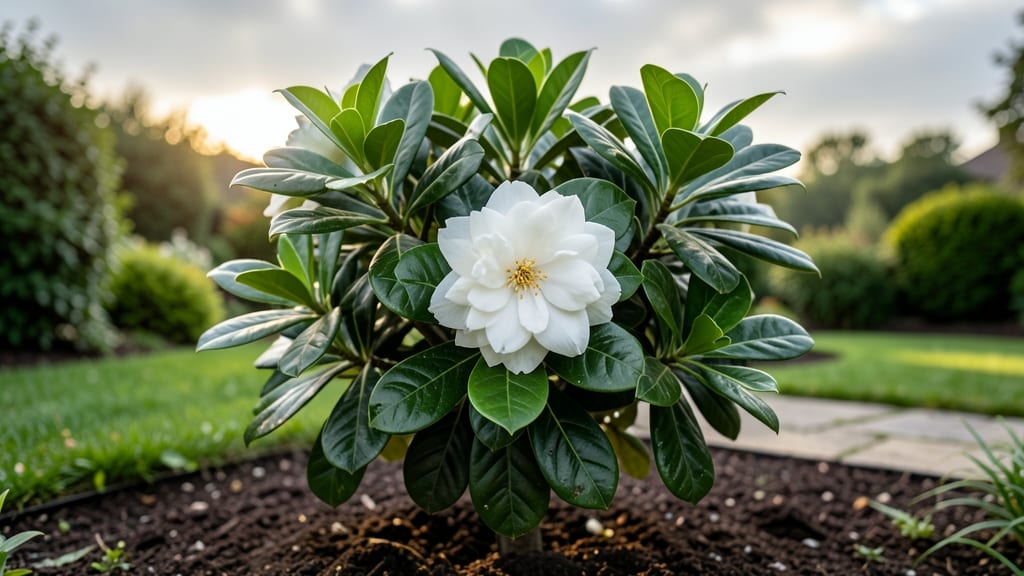
How tall does gardenia grow? These fragrant plants typically reach between 3 and 6 feet at maturity, depending on the variety and care you provide—so knowing their potential size helps you choose the perfect spot for their fragrant blooms.
If you’re dreaming of fragrant, glossy gardenias but wondering whether they’ll dwarf your garden or fit perfectly in a pot, knowing their mature height is key to planning your perfect planting spot.
Most common gardenias, like the beloved Gardenia jasminoides 🌸, reach 4 to 6 feet when grown in the ground, while dwarf varieties stay compact at just 2 to 3 feet—ideal for containers or small gardens.
Below, I’ll break down exact height ranges by variety, share pruning tips to control growth, and reveal the one mistake that makes gardenias grow taller than expected.

Gardenia height ranges by popular varieties: exact measurements and growth habits
If you’re planning your garden layout or dreaming of potted gardenias for your patio, understanding their mature height is essential. Gardenias vary dramatically in size—from compact dwarf varieties that fit in small containers to towering shrubs reaching 6 feet.
Knowing these ranges helps you choose the perfect variety for your space and care routine.
Most gardenias belong to the Gardenia jasminoides species, but even within this group, heights differ based on genetics and growing conditions. For example, the Kleim’s Hardy Gardenia stays shorter than the classic Radicans variety.
Below, I’ve broken down the most popular types with their exact height ranges and growth habits to help you plan.
As you can see, dwarf varieties like 'Kleim’s Hardy' and 'Profusion' are perfect for containers or small spaces, while taller types like 'Veitchii' or 'Fortuniana' thrive as privacy hedges or tropical accents.
The growth rate also matters—faster-growing varieties like 'Veitchii' can reach their mature height in 3–4 years, while slower growers like 'Kleim’s Hardy' take 5+ years.
Spacing is another critical factor. Plant dwarf varieties 3–4 feet apart to avoid overcrowding, while taller types need 5–6 feet of space to develop fully. In containers, choose pots 12–18 inches wide for dwarf varieties and 20+ inches for standard-sized gardenias to accommodate root growth.
Light exposure affects height too. Gardenias grown in full sun tend to stretch taller, while those in partial shade stay more compact. If your gardenia is growing leggy, move it to a shadier spot or prune to encourage bushier growth.
I’ve found that mornings sun + afternoon shade keeps my 'Radicans' at a manageable 4–5 feet.
Soil acidity also plays a role. Gardenias thrive in acidic soil (pH 5.0–6.5). If your soil is alkaline, amend it with peat moss or sulfur to prevent stunted growth.
Poor soil conditions can make even dwarf varieties grow taller as they stretch for nutrients. Always test your soil before planting!
Pruning in late winter or early spring helps control height and shape. For taller varieties, prune back 1/3 of the height to encourage branching. For dwarf types, a light trim after flowering keeps them tidy.
I prune my 'Profusion' every year to maintain its 2–3 foot height and full, bushy appearance.
Remember, gardenias are slow growers compared to other shrubs. Patience is key—don’t expect dramatic height changes in a single season. With the right variety and care, you’ll have a fragrant, perfectly sized gardenia that fits your space beautifully.
Now that you know the height ranges, you’re ready to pick the perfect gardenia for your garden or patio! Whether you want a compact container plant or a tall privacy screen, there’s a variety that’s just right for you. 🌸
How to control gardenia height: pruning tips for bushier blooms and compact growth
If your gardenia is reaching for the sky instead of staying lush and compact, don’t worry—pruning is your secret weapon. With the right techniques, you can shape your plant to fit your space while encouraging bushier blooms and healthier growth.
The key is timing, precision, and knowing which cuts will promote fullness without sacrificing those prized flowers.
Most gardenias naturally grow between 3 to 6 feet tall, but with strategic pruning, you can keep them shorter or encourage a denser form.
Whether you’re working with a standard gardenia or a dwarf variety, the principles remain the same: prune at the right time, use clean tools, and focus on stimulating new growth. Let’s dive into the step-by-step process to transform your leggy gardenia into a thriving, compact beauty.
🌿 Step-by-Step Pruning Guide for Gardenias
-
Step 1: Choose the Right Time
Prune after the first flush of blooms (late spring) or in early summer to avoid cutting off next year’s flowers. Never prune in fall or winter—this is when gardenias set buds for the next season. -
Step 2: Gather Your Tools
Use sharp, sterilized pruners (clean with rubbing alcohol) and gloves—gardenia leaves can irritate skin. A hand saw may be needed for thicker stems. -
Step 3: Remove Dead or Weak Growth
Cut out dead branches, crossing limbs, and thin, leggy stems at the base. This opens up the plant for better airflow and light penetration. -
Step 4: Thin Out Overcrowded Areas
Look for overlapping branches and prune 1/3 of the oldest stems to encourage new growth. This step is critical for bushier blooms and prevents a "skinniness" at the center. -
Step 5: Shape for Desired Height
To reduce height, cut back new growth by 1/3 just above a leaf node (where leaves meet the stem). For compact growth, focus on trimming the topmost stems to redirect energy downward. -
Step 6: Fertilize and Water After Pruning
Apply a balanced fertilizer (10-10-10) and deep water to help the plant recover. Avoid heavy fertilizing in late summer to prevent new growth that won’t harden off before winter. -
Step 7: Monitor and Repeat
Prune again in early summer if needed, but avoid heavy pruning—gardenia responds best to light, regular trims rather than drastic cuts.
Pruning isn’t just about height control—it’s also about encouraging fuller growth. When you cut back leggy stems, you’re signaling the plant to produce more side branches, which means more buds and blooms.
Just remember: never prune more than 1/3 of the plant in one session, or you risk stressing it out. Patience is key—your gardenia will thank you with a denser, more vibrant appearance.
For container-grown gardenias, pruning is even more important since they have limited root space. Regular trims keep them compact and manageable while preventing them from becoming top-heavy. If you’re growing a dwarf variety, like ‘Kleim’s Hardy,’ prune lightly to maintain its 2- to 3-foot height without overdoing it.
One final tip: sterilize your tools between cuts to prevent the spread of bacterial or fungal diseases, which can weaken your gardenia. With these steps, your plant will stay healthy, blooming, and perfectly sized for your garden or patio. Happy pruning! 🌸