
Blooming
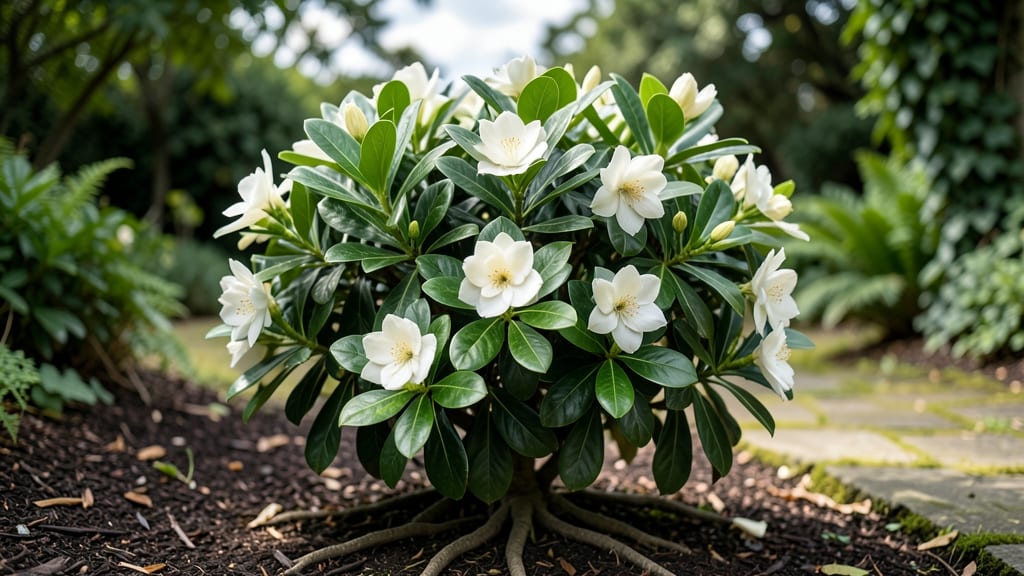
Gardenias bloom once annually in late spring to summer, with some varieties producing occasional fall flowers when given optimal care. The right conditions—like proper pruning, sunlight exposure, and acidic soil—can encourage more frequent blooming.
Most gardenias follow a natural seasonal rhythm tied to daylight changes, with peak blooming typically occurring between May and July. 🌸 However, tropical varieties like G. jasminoides may extend their season into early fall if temperatures stay mild.
The key to coaxing extra blooms lies in mimicking their native habitat—think dappled shade, well-draining soil with a pH between 4.5 and 6.0, and consistent moisture without waterlogging.
What many gardeners don't realize is that over-fertilizing with nitrogen can actually reduce blooms by promoting leaf growth instead. I've found that a balanced 10-10-10 fertilizer applied in early spring, followed by a phosphorus boost during bud formation, makes a noticeable difference in flower production.
The secret? Less is often more—these plants reward patience with their fragrant displays.
💡 In This Article
- Gardenia Blooming Seasons: Climate and Variety Factors
- Maximizing Gardenia Blooms: Pruning and Soil Tips
Gardenia blooming seasons: climate and variety factors
The blooming cycle of gardenias is primarily regulated by photoperiodism—the plant's response to changing daylight hours. As days lengthen in spring, gardenias receive the 12-14 hours of daylight they need to trigger bud formation.
This process is especially pronounced in G. jasminoides, the most common variety, which naturally blooms in late spring to early summer when temperatures average between 65-75°F during the day and 55-65°F at night.
Tropical varieties like G. augusta (also called Cape Jasmine) have a more extended blooming window, sometimes producing flowers from April through October in warm climates.
The key difference lies in their genetic adaptation: tropical gardenias evolved in regions with consistent warm temperatures year-round, while temperate varieties have a more defined seasonal bloom.
For example, in USDA Zone 8, gardenias may bloom from May to July, while in Zone 10, they might continue into September or even October if nights stay above 60°F.
Daylight hours aren't the only factor—temperature plays a crucial role in bud development. Gardenias require a period of cooler nights (55-60°F) after warm days to set buds properly.
This is why gardeners in cooler climates often see fewer blooms: if summer nights dip below 50°F, bud formation can stall entirely. Additionally, gardenias are sensitive to heat stress above 85°F, which can cause buds to drop before opening. 🌡️
Regional climate impacts go beyond temperature. In humid coastal areas, gardenias may bloom more prolifically due to the natural moisture in the air, while dry inland climates require more frequent watering to maintain the 60-70% soil moisture these plants prefer.
For instance, gardenias in Florida's subtropical climate often produce flowers year-round, while those in Arizona's desert conditions may need afternoon shade and daily watering to encourage blooming at all.
Another critical factor is the plant's age. Young gardenias (under 3 years old) focus energy on root and foliage growth rather than flowering. It typically takes 3-5 years for a gardenia to establish enough energy reserves to produce its first significant bloom.
Once mature, however, a healthy gardenia can produce 50-100 flowers per season, with each bloom lasting 5-7 days before wilting.
Understanding these factors helps explain why some gardenias bloom more frequently than others. For example, the G. radicans variety is known for its year-round blooming potential in ideal conditions, while G. fortunata typically produces just one major bloom cycle per year.
The key to encouraging more frequent blooms lies in replicating their native tropical conditions as closely as possible. ✨